

by Oli Anderson, Transformational Coach for Realness
Do Your Opinions & Beliefs Actually Belong to You?
Let me start this article with a simple but potentially uncomfortable question:
How do you know that your opinions and beliefs actually belong to you?
Most people know WHAT they believe about themselves, the world, and how life works but very few have ever examined the reasoning or assumptions beneath those beliefs and WHY they actually believe what they believe.
Instead, they live from a bundle of conclusions they’ve absorbed from their upbringing, their culture, their emotional history, and their unprocessed experiences and these conclusions guide and limit their lives in a way that stops things from being as REAL as they could be.
This is unfortunate because all any of us really want is a taste of REAL LIFE.
An example from my own life of picking up these kind of conclusions is that, when I was a kid, my dad used to throw out this line all the time:
“You can only rely on people to do one thing in life – let you down.”
I didn’t sit there and critically analyse it or anything like that – instead I just absorbed it and through a process of osmosis that sentence became part of how I saw the world.
The consequence of this was that I moved through life for years without really trusting people, expecting disappointment, and keeping my guard up in an imbalanced way – not because it was true but because it was a conclusion about life that I’d inherited.
Later, when I started doing real inner work and actually testing my assumptions, I realised something important:
That belief said far more about my dad’s emotional ‘stuff’ at the time than it did about reality – it wasn’t the truth I assumed it to be but just unprocessed experience confused for the truth.
This article is about how we all carry beliefs like this:
Beliefs about who we are.
Beliefs about what people are like.
Beliefs about what’s possible, what’s ‘safe’, and what we deserve.
It’s also about how we can live out these beliefs as though they’re reality itself because never question them.
Let’s dig a little deeper:

Autopilot vs Awareness: How Your Unreal Opinions Can Take Over Your Whole Life
If we’re not careful, we end up living on autopilot rather than from our real awareness:
Just to be clear, though, autopilot isn’t always a bad thing because – from an evolutionary perspective – it can actually keep us alive.
When you jump out of the way of a car or recoil from a spider before thinking, for example, that’s your nervous system doing its job and jumping to conclusions and making you react in order to keep you around.
Unfortunately, most of the time in the modern world (where there’s way less actual danger than their was in the environment where our nervous system evolved), our psychological autopilot doesn’t protect us from danger but instead just keeps us stuck.
This means that instead of responding consciously to life with presence, we react from old emotional patterns and unexamined beliefs that cause us to defend, justify, and judge and to resist and perform our way through life in order to protect an image of ourselves that feels like “us” (but is really just the ego which keeps us from our actual realness).
The problem with all this is that what we think we’re we’re protecting isn’t real:
This is because a great deal of what we call “our beliefs” is actually just extension of ego which means that when we react from them, we stay locked in a state of unreality.
Free Transformational Coaching Session
Ready to stop holding back and start growing REAL?
Book a free one-to-one coaching session with me – a truthful conversation about where you are, what’s in the way, and the real path forward.
Free. Just coaching (no sales pitch). No obligation. Pick a time that suits you.
The Ego: A Filter, Not the Truth
The ego isn’t some dramatic villain – it’s simply the false self-image we construct in order to cope with life.
It’s who we think we are; not who we actually are and it forms the story we tell ourselves about our worth, our identity, and our place in the world.
The thing about the ego, though, is that it’s not real (even though we treat it that way and try to give it a weight it can never hold) it’s just a FILTER – something that appears to sit between who we truly are and what is actually true.
If we’re not aware of this, then most of our beliefs become nothing more than conclusions that reinforce the self-image this filter creates and so we interpret everything through it, select evidence that confirms it, and reject anything that threatens it.
Instead of discovering truth, we end up defending a character that we think we need to play and that imaginary character quietly runs our life.
The Three Levels the Ego Distorts
In general, the ego blocks our capacity to live in truth at three fundamental levels:
The Self: Who we think we are and the self-image we think we need to live up to.
The World: What we think the world is and what we believe is possible within it (which is often just a projection of our own inner fragmentation – not the truth).
Reality: How life actually works in terms of our capacity and power to be real and move forward in life (which we always can).
If any of these are distorted, we can’t flow with life and we just end up forcing things, struggling unnecessarily (which turns to suffering), and repeating patterns that keep us where we’d rather not be (in a state of unreality and disconnected from life as we spend our days in the Void).
To live a real life, we have to understand these three levels in truth instead of filtering them through ego.
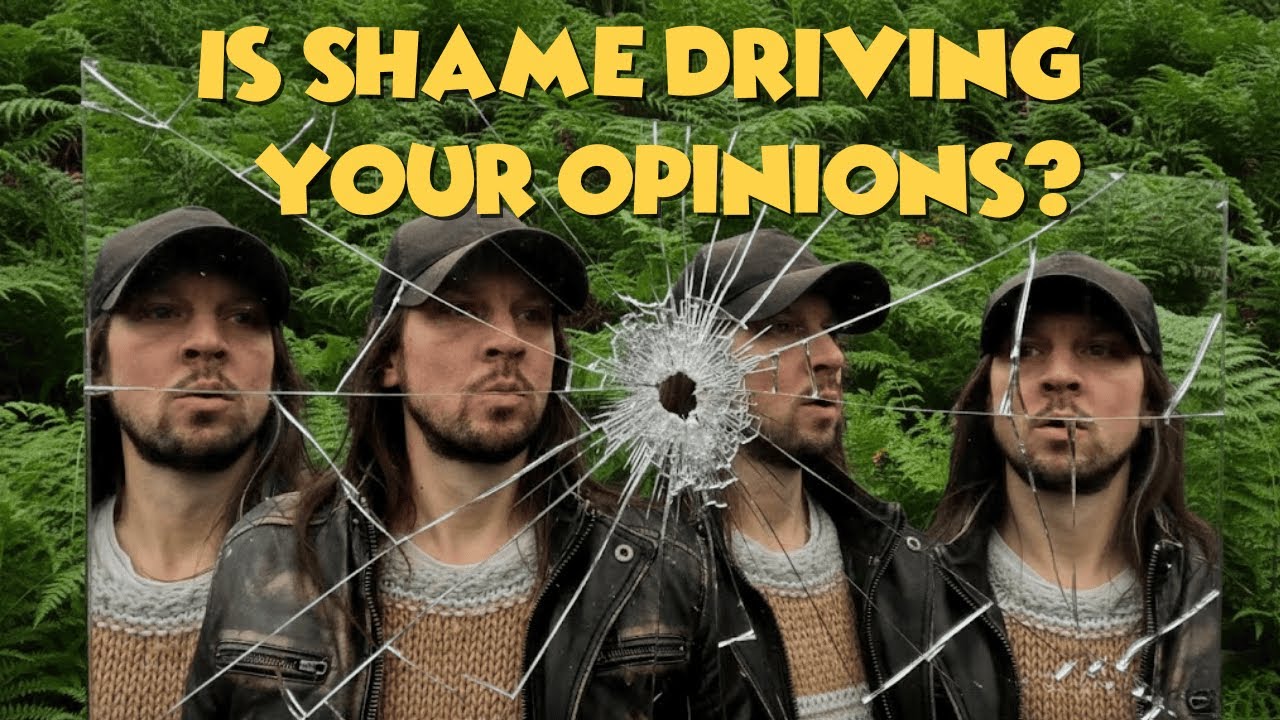
The Root of Ego: Shame
Here’s the part most people don’t want to look at:
The ego is always rooted in shame.
Shame isn’t just embarrassment or guilt – at a deeper level, shame is disconnection from the truth of who we are that creates the feeling that something about us is ‘wrong’, unworthy, unlovable, or unsafe and creates a false self-image aligned with this feeling (for example, “I’m the [unloveable] one“).
From that emotional core, a pattern unfolds:
Emotions → Self-Image (Ego) → Beliefs → Actions → Results
Unresolved emotional ‘stuff’ creates an unreal self-image; that self-image demands a set of supporting beliefs; those beliefs guide (or limit) our actions; those actions determine the results we get in life.
If we’re shame-driven, then our beliefs are never truly ‘ours’ because they’re just mental justifications for emotional blockages.
We don’t believe what is true in this state – we just end up believing whatever protects the identity we’ve built around our pain and our opinions about ourselves, the world, and reality become an extension of this.
Why We Believe What We Want to Believe
Most beliefs are rooted in emotional history, not in reality itself:
This is why why so many people fall into the trap of believing what they want to believe, rather than what is actually true.
This is tragic because only truth can set us free (after initially p*ssing us off and making us miserable as we let go of our cherished illusions).
A general rule in life that’s worth remembering is:
We live up to the self-image we create – not to what’s actually possible for us in reality.
For example:
If you see yourself as unworthy, you’ll unconsciously make choices that confirm that story.
If you see the world as hostile, you’ll interpret neutral situations as threats.
If you see life as something to completely control, you’ll experience constant friction and anxiety (because you’re going against how reality actually works).
Over time, these patterns generate will even generate ‘evidence’ that seems to prove the belief but what you’re really seeing is a self-fulfilling prophecy because you’re not discovering truth – you’re just filtering life through an identity.
The Real Issue: Untested Assumptions
All of this boils down to one thing:
We are walking around with untested assumptions and live according to these in a way that reinforces them.
These untested assumptions operate at three main levels:
Emotional ‘Stuff: Unresolved emotions create silent assumptions about ourselves, others, and life that show up like:
“I’m not enough”.
“People can’t be trusted”.
“If I relax and give up control, everything will fall apart”.
Self-Image: To compensate for that underlying shame, we adopt an identity.
For example:
The Strong One.
The Rebellious One.
The Nice One.
The Independent One (The Lone Wolf).
The [Whatever] One.
Each identity comes with beliefs that must be defended regardless of whether they’re true or not.
Conditioning: We also absorb conclusions our ourselves, the world, and reality from family, culture, religion, the media, and society – not because they’re actually true but because they were repeated over and over again until we started to believe them and take them on board as our own opinions.
The bottom line is that until we excavate these layers, then we’re not living from awareness but from unreal programming.
Real growth begins when we dig beneath our assumptions and find a foundation of acceptance and truth.
Learning to Discern the Real from the Unreal
If you want to grow real, you have to develop one essential capacity:
Discernment – i.e. the ability to tell what’s real from what’s unreal.
Here are two simple indicators:
If You Are Holding Yourself Back, You Are Being Unreal
Whenever you hesitate, shrink away from yourself and life, self-sabotage, or harshly judge yourself, then you’re almost always acting from an untested assumption.
Reality doesn’t require self-rejection and the truth doesn’t demand that you abandon yourself – shame, fear, and ego always do, though.
If You Treat “Good Things” as Ultimate, You Are Being Misled
Money, success, relationships, approval, status, security, etc. etc. etc. – all of these are GOOD things but when you treat them as the ULTIMATE thing in your life, then they start to rule you because you compromise your integrity, betray your understanding of the truth, and live in fear of losing them.
(Which is unreal because you can’t lose anything real).
All of this tells you something important:
Your beliefs about what actually matters are distorted.
The only actual ‘ultimate’ thing is your relationship with life itself in terms of your connection to truth, your capacity for wholeness, and your ability to meet reality without resistance.
If something is making you act in a way that pulls you away from your REALNESS in this way – through fear, control, performance, or self-betrayal – then there’s an emotional block underneath it and that block is generating an unreal assumption and set of beliefs that are screwing your life up.
Digging Down into Unreal Beliefs and Opinions: The Five Whys
One of the simplest and most powerful tools for uncovering your real beliefs is the Five Whys exercise.
This is pretty simple and just involves digging into yourself and your assumptions whenever you notice a strong opinion, emotional reaction, or limitation:
You get started by asking yourself:
Why do I believe this?
Then taking your answer to that question and asking:
Why is this true?
And then:
Why?
Why?
Why?
…until you hit the bedrock.
If you’re honest with yourself, unreal beliefs will almost always collapse into the same place:
Shame
Fear of disconnection, fear of not being enough, fear of losing control, fear of not being loved – in other words: a disconnection from your own realness and an over-identification with the unreal.
This isn’t something to judge yourself for – it’s just something to see in yourself because once you see it, you’re no longer owned by it.

Check out Trust: A Manual in Becoming the Void, Building Flow, and Finding Peace if you’re ready to go deeper into your realness and your real life.
From Belief & Opinions to Knowing Realness
When you strip away untested assumptions, something remarkable happens:
You move from the level of belief to real knowing.
Belief is second-hand, borrowed, and can be argued with; on the other hand knowing is direct, grounded, and doesn’t need defence (because what’s true is just true).
Knowing at this level is simply awareness of your realness – not the story of who you are but the reality of being alive, conscious, connected, and present.
Practical Steps: Returning to What’s Real
Here are some concrete ways to start dismantling unreal beliefs and reconnecting with the truth about yourself, the world, and reality:
Track Emotional Charge
Whenever a belief carries strong emotion like defensiveness, anger, fear, superiority, or a sense of collapse then it’s a signal that ego is involved more than reality actually is.
Ask yourself:
What am I protecting here?
If you’re not protecting anything REAL (which never needs ‘protecting’) then you can let it go.
Write Down Your Core Assumptions
Explore your assumptions about yourself, the world, and reality itself then challenge them:
Is this absolutely true?
Where did I learn this?
Who could I be without this belief?
Use the Five Whys
Take any limiting belief and dig until you reach the emotional root – don’t stop at intellectual answers but find something in your real experience of yourself and life.
Notice Where You Hold Back
Any area where you consistently hesitate, self-sabotage, or feel “not ready” is a doorway into an untested assumption about yourself that’s probably rooted in shame.
Separate Facts from Interpretations
Ask: “What actually happened in fact?” then “What story (fiction) did I tell about it?“.
The story is often ego but the facts are reality.
Re-Orient to the Actual Ultimate (Your Relationship With Life Itself)
Regularly ask yourself (multiple times a day):
Is this moving me towards wholeness or away from it and into fragmentation?
If it’s away, something unreal is running the show – not ‘You’.

The Invitation: Opinions, Beliefs, and The Ego
Identifying with your opinions and beliefs – whether they’re real or unreal – feels safe because it gives you a sense of identity, certainty, and control in an uncertain world but it comes at a cost:
You don’t grow; you don’t see clearly; you don’t live fully because you’re not relating to reality – you’re relating to a filter.
Realness begins when you stop asking “What do I believe?” and start asking yourself “What’s actually true?”
This is all you need to do:
- Uncover the truth
- Live the truth
Don’t just believe what feels comfortable.
Don’t just create opinions based on what protects your self-image.
Don’t assume that life is just supposed to be an extended experience of whatever pain has become familiar to you.
Just focus on what’s REAL (because real always works).
When you find foundation of realness, something shifts:
You no longer need to defend opinions; you no longer need to perform an identity; you no longer need to limit your life based on borrowed conclusions.
Instead, you can move from belief into knowing, from fragmentation into wholeness, and from ego into realness.
And that is where real life begins.
Stay real out there,

P.S. If you’re ready to start living your real life by getting in touch with your realness and DOING something with it then book a free coaching session with me and I’ll help you help yourself to get in the zone.


Personal Revolutions: A Short Course in Realness is a book designed to help you look at your life from the inside-out so that you can stop holding yourself back and go get what you really want.
It contains 166 practical ‘Revolutions’ for awareness and over 8,000 Self-Guidance Questions for you to uncover new insight about yourself, the world, and reality that you can translate into action and start building your real life on the realest possible foundation.

Trust: A Manual for Becoming the Void, Building Flow, and Finding Peace is a book about learning to return to your realness by cultivating trust in yourself and trust in life.
It contains practical exercises and dedicated meditations (Transformational Bridges) to take you DEEP in knowing yourself and life.
This book will answer many of the questions you have growing REAL and flowing towards wholeness. It covers everything from shame to addiction to the unconscious mind and synchronicity (and way more).

Shadow Life is an exploration of the human shadow and the hidden side of our personalities. It looks at the masks we wear, where these masks come from, and how we can take them off.
The book explores how we can better manage our relationships with shame, guilt, and trauma in order to remove the Mask that the world has asked us to wear (and that we forgot we were wearing) so we can live an authentic life with less drama, chaos, or BS whilst we’re still around.

The Flow Builder Journal has everything you need to make the next 21-weeks of your life a turning point.
It has monthly, weekly, and daily (morning and evening) check-ins, tools and reflections to keep you in the zone and keep you flowing with zest and momentum.
If you want to get unstuck and grow REAL then check it out.

Download EGO/SHADOW/TRUST - a free guide to transformation that will walk you through the vital stages of Awareness, Acceptance, and Action with practical strategies to implement right away.


