Oli Anderson

Hi, I'm Oli Anderson - a Transformational Coach for REALNESS and author who helps people to tap into their REALNESS by increasing Awareness of their real values and intentions, to Accept themselves and reality, and to take inspired ACTION that will change their lives forever and help them find purpose. Click here to read my story about how I died, lost it all, and then found reality.

Bored of Myself: What to Do When You Have Nowhere to Go with Yourself

//////

What To Do When You’re Bored of Yourself

There comes a moment in many people’s lives when they look in the mirror and think something along the lines of:

“ Man, I’m bored of myself“.

I don’t mean this in a self-loathing kind of way – just more in a “is this really it?” kind of way:

You’re doing the same routines, having the same conversations, doom scrolling the same social media feeds and, somehow, even when things are ‘fine’, you feel a bit dead and disconnected inside because nothing REAL seems to be happening.

This isn’t depression exactly:

It’s more like a quiet dullness that hums beneath the surface of everything that you do – a sense that you’ve already met every version of yourself there is to meet and that – even though you’ve got your habits, preferences, playlists, and ‘personality’ all neatly arranged – you’ve accidentally built a very comfortable cage for yourself to live in.

If you’re in this space, don’t panic because I promise that you’re not broken or doomed to an empty existence in the Void for the rest of your life:

You’ve simply outgrown the version of yourself you’ve been living as and what you’re actually feeling isn’t boredom but resistance to real growth.

This is actually ‘good’ news because it means there’s something real inside you and it’s getting ready to wake up.

Let’s dig a little deeper:

You'll start to think "I'm bored of myself" when you stop growing into yourself.

The Comfort of the Familiar Self

Let’s start with what’s really going on when you say you’re “bored” of yourself:

When we live from the ego – that familiar, comfortable, “I know who I am” sense of self that’s based on a performance rather than a sense of actual presence within ourselves – then we build routines and habits that make life predictable and as risk free as possible.

This is because the ego loves predictability and wants things to stay the ‘same’ because sameness keeps the unpredictability of reality (the opposite of the ego) at bay.

Here’s the problem with that, though:

Sameness kills your aliveness and stops you from moving with reality as it unfolds around you whilst your ego tries to resist this change.

Human beings are designed to evolve which means that when you’re not growing, you’re decaying, when you’re not learning, you’re looping, and when you’re looping, the feeling of boredom is your system’s way of saying, “This isn’t it” (i.e. “this is UNREAL“).

If you ignore that feeling long enough, you’ll convince yourself that this flatness is just “maturity”, “adulthood”, “just how life gets when you’re older” or something like that but it’s really not – it’s just a signal that your relationship with yourself has gone stale because you’ve stopped expanding into who you’re meant to become from one moment to the next.

You’ve mistaken the ego – the outdated, conceptual and convenient version of you – for the whole story that’s unfurling in the experience of reality itself.

The Real Reason You’re Bored

Imagine your life as a film.

The first few acts were full of discovery:

New experiences, new risks, and new versions of you unfolding but – somewhere along the line – the plot stopped developing and you started to feel a bit lost.

You became the character that had already been written and the director (your ego) started playing it safe.

When that happens, the film of your life stops being art and turns into the same ol’ reruns of a show you’ve seen a few thousand times before:

You know every scene before it happens; you know exactly how you’ll react, what you’ll say, how you’ll justify it.

You might still look ‘successful‘ on the surface of things but inside, you’re just recycling old scripts and living your life on autopilot.

This is why you feel bored of yourself – because you’ve become predictable to yourself.

And there’s nothing more suffocating to the soul than predictability.

Step One: Accept That the Bored You Is Not the Real You

This might sound strange but the version of you that’s bored is not you:

It’s just an echo.

It’s the safe, domesticated version of you that’s been rewarded for being consistent, sensible, and socially acceptable and – to be honest – it probably you through a lot (which is why it still hangs around):

It learned what to say and what not to say, how to survive, how to look respectable, how to stay within the lines and – even though there’s nothing ‘wrong’ with this version and it’s served a purpose – it simply isn’t alive anymore.

It’s just an idea or concept (not an experience of who you are right now in the present).

The real you is dynamic, curious, full of energy for growth which means that you’re not bored because life has stopped being interesting but that you’re bored because you’ve stopped being interested because you’ve mistaken comfort for peace.

To overcome this, you first have to accept that this current ‘You’ is a snapshot, not the whole picture – it’s a costume that inspires you to keep putting on the same old boring performance and the moment you stop defending that costume, you make space for something real to emerge underneath.

Ask yourself:

  • What parts of me have I hidden because they don’t fit the ‘costume’ I’ve been wearing?

  • What truths about myself do I quietly know but avoid admitting?

  • What have I stopped being curious about?

When you can look at those questions honestly, you’ll start to see that the “bored” you isn’t the real you – it’s just the one that’s stopped listening.

Step Two: Meet the Shadow Self

Boredom isn’t just an emotional flatline – it’s a psychological defence because it’s how the ego keeps you from venturing into the unknown parts of yourself and facing reality (because the ego is the opposite of reality).

Behind that surface layer of ego identity lives your Shadow Self – the ‘parts’ of you that were rejected, repressed, or sent into exile because they didn’t fit the neat story you wanted to tell the world in an attempt to avoid underlying shame, guilt, and/or trauma (the Unholy Trinity).

Some of those parts might look ‘bad’ like anger, jealousy, selfishness, lust, or insecurity; others might appear to be ‘good’ like creativity, confidence, passion, or playfulness. In truth it actually doesn’t matter how ‘good’ or ‘bad’ they seem to be because they’re all just REAL and form the basis or your real relationship with yourself in wholeness.

Essentially, whenever you judge those parts as ‘good’ or ‘bad’, you split yourself but when you embrace them as real, you start to heal.

All of this is so relevant to our discussion of becoming bored of oneself because when you start to integrate your shadow life becomes inherently interesting again because every emotion, impulse, or hidden desire you integrate brings new energy back into your system.

This means that you start acting from depth and presence rather than from autopilot and performance as you rediscover the rawness that made you feel alive in the first place.

How to Face the Shadow Self Without Freaking Out

  1. Get curious, not critical:

    When something uncomfortable arises – like envy, frustration, or restlessness – don’t suppress it.

    Instead, ask whatever it is:

    “What are you trying to show me?

  2. Drop the moral labels:

    Your shadow isn’t ‘evil’ – it’s just the ‘parts’ of you you’ve been told not to express for whatever reason so start to view them as information, not as moral failings on your behalf.

  3. Express, don’t act out:

    You don’t have to shout or rage to acknowledge anger – instead, you can write about it, move it through your body, or speak it aloud in a safe space.

  4. Follow the energy:

    Behind every ‘dark’ emotion is the life force of realness itself – if you can feel whatever you feel without judging it, you can redirect it into growth, art, creativity, or purpose

When you make peace with your shadow, you stop being a flat fragmented persona and start being a full-spectrum human being in wholeness.

This is always where boredom dies and you can get your real life back.

Step Three: Commit to Continuous Learning

If you want a life that’s never boring, make a commitment to continuously LEARNING as you go through life:

We only get bored because, at some level, we think we already know everything about ourselves, the world, and reality but – the truth is – we’ve probably haven’t even scratched the surface and that there are always new things to explore – not just intellectually, but also emotionally, physically, and even spiritually.

The fastest way to start dissolving boredom is to ask yourself a simple but powerful question:

“Who am I becoming?“

When you have an answer to that question – even just a rough one – then you can start identifying the skills, knowledge, and qualities you need to grow into that version of yourself.

For example:

  • If you’re becoming more creative, learn a new art form or medium.

  • If you’re becoming more authentic, practise vulnerability in your relationships.

  • If you’re becoming more whole, explore mindfulness, breathwork, or shadow integration.

When you learn, you evolve and when you evolve, boredom can’t exist because you’re constantly becoming someone new and real.

The Paradox of Boredom

Here’s the paradox: boredom is a symptom of fearing the risk of growing real because a world without risk is what the ego craves most.

When you’re living through the filter of the ego, you think you want excitement, but you also fear it because excitement means uncertainty, and uncertainty threatens control.

But control is exactly what’s suffocating you because it keeps you ‘stuck’ where you don’t want to be and in all of the systems and structures that you’ve now become “bored” of…

The truth is that you don’t need to blow up your life completely or run off to live in the mountains or something – you just need to loosen up your old identities, unblock yourself from yourself, and let life back in.

That means doing things that make you slightly uncomfortable:

Starting new conversations, trying new creative outlets, saying “Yes” to things you’d normally avoid, or even sitting still and feeling what you usually numb towards or try and avoid.

The bottom line is actually quite simple:

The more you let go of control, the more reality can move through you, and the more reality moves through you, the more you feel alive without boredom.

Real Action vs. Egoic Distraction

Let’s be clear: “shaking things up” doesn’t mean mindlessly chasing short-term thrills:

The ego loves to pretend it’s changing by rearranging the furniture on the Titanic whilst it sinks:

New job, new hobby, new partner, same inner state.

Real change comes from real action – action that moves you closer to wholeness, not further away from it.

Ask yourself before you make a move:

  • Is this coming from avoidance and resistance or curiosity and openness?
  • Is this expanding me or distracting me?
  • Am I doing this to escape boredom or to evolve beyond it?

When you take real action, every step – however small – feeds your aliveness and you become an active participant in life again, rather than a passive observer.

Personal Revolutions: A Short Course in Realness

Check out my book Personal Revolutions: A Short Course in Realness if you’re ready to truly grow real and to build a solid foundation of purpose in your life.

Putting It All Together: A Practical Reset into Realness

Here’s a simple framework you can use whenever you find yourself bored of yourself:

1. Awareness: Notice the Pattern

Catch the feeling of boredom before it turns into apathy by asking yourself:

  • “Where in my life am I repeating myself and outdated patterns?”

  • “What have I stopped allowing myself to feel or or express?”

Awareness brings the ego’s patterns into light so you can start changing it.

2. Acceptance: Stop Fighting It

Don’t judge yourself for being bored – it’s just a signal, not a flaw.

Accept that the current version of you has reached its limits and that’s okay.

Acceptance always creates space for new growth and gives you a real foundation on which to build.

3. Action: Do Something Real

Choose one small, real action that disrupts the familiar identity of ego that you’re attached to:

It might be starting coaching, taking a creative risk, setting a boundary, or exploring a long-buried interest.

Whatever it is, the point isn’t to ‘fix’ yourself but to re-enter the flow of life.

Repeat this cycle continuously because, each time you do, you’ll find a little more depth, a little more aliveness, and a lot less boredom.

You feel like "I'm bored of myself" because you're holding onto old terrain.

Bored of Myself: The Final Word

If you’re bored of yourself, it’s not a crisis but a crossroads:

It’s just life whispering that you’ve exhausted the chapter you’re in and that it’s time to write a new one.

The only reason it feels scary is because the ego can’t imagine what comes next but that’s the beauty of it: you don’t need to know and can learn to let go and trust the process.

All you need is the willingness to meet yourself beyond who you’ve been (Awareness), to face your shadow (Acceptance), and to learn, grow, and act from something real (Action).

When you do, you’ll discover that you were never really bored of yourself at all – you were just waiting for yourself to show up.

Stay real out there,

Oli Anderson, Transformational Coach for Realness

P.S. If you’re ready to start facing yourself and building a real relationship with yourself so you can take real action then book a free coaching session with me and I’ll help you get in the zone.

Presence vs. Performance: Check Yourself (Before You Wreck Yourself)

////////

Checking In With Your Assumptions, Intentions, and Motives: Are You Living From Presence or Performance?

Sometimes, we can feel all the restless symptoms of the Void even though, on the surface, it seems like we’re doing everything right:

We show up as a ‘good’ or ‘nice’ person; we have the career and the relationship; we may even give to our community in some way….all of these things are, of course, good things but it’s possible to tick every single box in life and to still feel restless, anxious, depressed, stuck, or haunted by that quiet whisper that keeps saying that there’s more.

When that happens and you find yourself going around in circles, then it’s time to start digging deeper because, sometimes, what looks like a ‘good’ life on paper can actually be an unreal one in practice – one built on unreal assumptions, intentions, and motives that don’t actually belong to us.

If that’s the case, then no matter how good we try to be or how much we achieve, something inside will always feel…off because we’ve started to live in performance more than we have our own presence.

Let’s dig a little deeper:

When you tap into your centre you find presence and can grow in integrity and realness.

Why We Do What We Do (Without Knowing Why)

A lot of the time, we do things without really knowing why we do them.

We just kind ‘do‘ them:

We repeat patterns, chase goals, and live according to values that we never consciously chose in the first place all whilst believing that we’re making our own choices.

In reality, though, we’re often just running on the autopilot of the ego, keeping the shadow self at bay and telling ourselves that the resulting friction, frustration, and misery that this brings is just how life is (when it isn’t – all of that is a consequence of being unreal).

The problem with this is that the autopilot doesn’t know realness and instead only knows survival – it’s powered by fear, shame, and conditioning but not by truth.

The end result of all this is that we can end up living out other people’s scripts – for example, our parents’, our culture’s, our religion’s, our school’s, or society’s – all the while thinking that this is just who we are when it’s not.

This is always when the shadow self starts to whisper out to us from beyond the Void because – deep down – part of us knows we’re not being real.

Real vs Unreal

When I talk about being unreal, I don’t mean fake in the shallow sense in which the word is often used – instead, I mean that you’re disconnected from your true source.

Unreal in this context also means that the core assumptions, intentions, and motives driving you don’t belong to you and that they’re borrowed, adapted, or inherited from something external that your ego has mistaken as who you really are.

This could show up anywhere but most commonly:

  • The values you live by might not be truly yours – for example, you might be carrying someone else’s definition of success.

  • The goals you chase might be rooted in fear of being seen as a failure instead of as an expression of something you truly care about.

  • The beliefs you hold might have been absorbed from people who didn’t know who they were either (and so the cycle continues throughout the generations until somebody gets real and breaks the chain).

  • The way you react to emotional triggers might be a replay of old patterns rather than a reflection of who you could actually become in your realness once you’ve faced yourself and life.

And, so, even when your life looks good, it can still feel hollow because, deep down, your why isn’t coming from you or even connected to you in any real way.

Presence vs Performance

If you really want to know whether you’re being real or unreal, there’s one question that will tell you almost everything you need to know:

Are you acting from presence or from performance?

When you’re acting from presence, you’re coming from a state of inner regulation, wholeness, and safety which means that you’re grounded in the moment and don’t need the world to give you anything because you’re already full.

When you’re acting from performance, on the other hand, you’re coming from a perceived lack (of what nobody really knows) and so you feel threatened, incomplete, or unseen.

In this state, your actions are a way to fill the Void and to try and get something from the world that it can never truly give you (because you can only give it to yourself by returning back to the truth).

Presence builds but performance hides.

Presence creates real connection but performance manufactures approval.

Presence is rooted in wholeness but performance is driven by fragmentation.

At the deepest level, this distinction determines whether you’re building something real – a life aligned with your essence – or running away from something unreal, like shame, guilt, and/or trauma (the Unholy Trinity).

How Presence vs. Performance Shows Up in Everyday Life

To make this more concrete, let’s look at a few examples of how this difference between presence and performance shows up in everyday life:

1. The “Nice” Person

Sometimes, we show up as a ‘good’ or ‘nice’ person not because we genuinely are one but because we think it’ll help us win something like approval, affection, belonging, control, or whatever else helps fill the Void (though, ironically, none of these things can fill it anyway).

When this happens, kindness becomes a performance:

We’re not giving because we’re full; we’re giving because we’re empty and we hope giving will make the emptiness go away.

Real kindness, on the other hand, flows naturally when we’re regulated and present and there’s no hidden agenda as we give because love overflows from our own connection to wholeness – not because we’re trying to earn it to compensate for feeling fragmented.

2. The Career Climber

Many of us end up in careers that look impressive from the outside but have little to do with who we really are:

For example, we might be unconsciously trying to please our parents, gain validation, or prove we’re not worthless because of unfaced shame. We might tell ourselves that we “chose” this path, but in reality, it was chosen for us by old emotional debts we’re still trying to pay off (and never can).

The result? ‘Success‘ without fulfilment and achievement without meaning as we keep trying to perform instead of to just ‘be’ and then express something real.

On the other side of the coin, when our work is an expression of our gifts, presence drives it and we start to flow with life instead of against it.

3. The Relationship

Relationships are one of the most revealing mirrors for this dynamic:

If we enter a relationship out of presence, we connect from wholeness and so we’re there to give, to love, and to grow.

If we enter out of performance, though, we connect from lack and so we’re ultimately there to get, to control, or to ‘fix’ whatever we see in others as a projection of the disconnection from ourselves.

This is when lust disguises itself as love, or dependency as devotion and also when the drama begins because two egos can’t create intimacy.

Only two people living in realness can.

4. The Community Hero

Giving to your community is beautiful when it’s an extension of love and purpose but when the giving becomes a stage – when we need everyone to see how great we are – then it’s no longer generosity but self-advertising.

Again, the problem isn’t what we’re doing but why:

Presence gives without keeping score but performance gives to be seen.

Why This Matters

It’s so easy to live our entire lives without ever questioning our assumptions, intentions, and motives even (though it makes things harder overall because we have to live with the pain of the Void).

The ego actually loves it this way because once we start asking why, the illusion begins to crumble and this is always uncomfortable (as I like to say: The truth will set you free (but first it will p*ss you off and make you miserable).

Unfortunately (from the POV of the ego), questioning our assumptions, intentions, and motive is also the only way back to realness because the moment you become radically honest with yourself about why you’re doing what you’re doing, you create a gap between yourself and the performance.

This means that you see the act for what it is and – in that awareness – the act loses power.

This is the beginning of presence and presence is always where realness begins to rebuild itself.

Trust: A Manual in Becoming the Void, Building Flow, and Finding Peace

Check out my book Trust: A Manual in Becoming the Void, Building Flow, and Finding Peace if you want to go as deep as possible into your own realness.

Performance vs. Presence: How to Check In With Yourself

The good news is that reconnecting with realness doesn’t require years of going around in circles with a therapist or making dramatic life changes – instead, it starts with small moments of self-honesty repeated consistently over time.

Here’s a simple process to help you check in with your assumptions, intentions, and motives:

Step 1: Awareness – Pause and Observe

At least once a day, pause before taking a meaningful action like replying to an email, making a decision, posting online, speaking to someone, or literally anything that matters to you and ask yourself:

  • What am I hoping to get from this?

  • What feeling am I trying to avoid?

  • Who am I trying to impress, prove wrong, or please?

  • If no one ever found out I did this, would I still do it?

This isn’t about judging yourself but about seeing yourself clearly.

You might be surprised by what comes up.

Step 2: Acceptance – Don’t Resist What You Find

When you notice that your motive comes from performance rather than presence, don’t shame yourself for it – that’s just the ego trying to stay in control.

Instead, accept that part of you and be grateful for it because it’s been trying to keep you safe in the only way it knows how.

Acceptance always opens the door for real transformation and gives you a real foundation on which to build.

Step 3: Action – Choose Realness

Once you’ve seen the truth and accepted it, you can start to act from a new place of presence.

Ask yourself again:

  • What would my realness ask me to do here?

  • What action would come from wholeness rather than fear?

  • What feels grounded even if it’s uncomfortable?

Then do whatever action reveals itself here – even if it feels strange at first or even if you notice your old patterns trying to resist it.

Over time, these small choices compound and build on themselves exponentially and, before you know it, you’re living from presence more often than from performance.

Within a few weeks, you’ll start to feel lighter, more real, and more you.

Because what you’re really doing is returning to the truth that real always works.

Presence comes from giving up the performance.

Presence vs. Performance: The Final Word

Being real isn’t about being perfect, moral, or endlessly self-improving but about being honest – with yourself first and foremost and then with the world by extension.

Getting back on the path to realness is about checking in with your assumptions, intentions, and motives not with the intention of criticising them but of realigning them with something deeper that can’t be shaken by other people’s opinions, cultural scripts, or your own insecurities.

When you act from presence rather than performance, your life stops being a performance altogether and so you don’t have to prove, chase, or fill the Void anymore.

You just live.

Stay real out there,

Oli Anderson, Transformational Coach for Realness

P.S. If you’re ready to start building a foundation of real presence instead of just performing your way through this life then book a free coaching call with me and I’ll help you start figuring out why you do what you (and what to maybe do instead).

Growing in Integrity as a Man

///////

Cultivating Integrity as a Man by Growing REAL

A large part of growing as a man is learning to step into integrity about oneself and what one stands for:

We live in a world that often rewards performance over principle, appearances over truth, and convenience over conviction but there still comes a point in every man’s life where he starts to realise that that without integrity, he’s lost (no matter how much he’s achieved, accumulated, or convinced others of his worth).

In this article, we’ll explore what it really means to grow in integrity as a man and the definition we’ll use to get started is pretty simple but powerful:

Integrity means that our thoughts, words, and actions all align with our realness as much as possible.

What this ultimately means is that we we’re coming from a place of integrity when we’re facing life from a place of presence and when we don’t let all of the temporary blips and fragments of life pull us away from our purpose and responsibilities in the world.

In short, living with integrity means that we have a real vision (based on real values and a genuine capacity to serve others rather than just being ego-driven), that we break it down into goals, and that we build daily habits which keep us rooted in presence which is the foundation of everything real.

Let’s dig a little deeper:

Integrity as a man comes from calming your mind so that you can stop distorting your view of reality.

Masculine Presence as Stillness

In many of the great traditions, the masculine polarity is seen as pure awareness or stillness in the space in which all life unfolds.

In yoga, they call this “abiding in the nature of the seer”; in Taoism, it’s the uncarved block; in Christianity, it’s the still small voice of God as the Holy Spirit.

Different words, but the same core essence and what it all means in practical terms is that to grow in integrity as a man, you must cultivate stillness within movement:

You can be moving through the world – leading, providing, protecting, creating – and yet inwardly remain unmoved. This isn’t apathy but presence: the awareness behind your thoughts, emotions, and sensations that never wavers no matter what’s happening.

When you cultivate this awareness, you stop being reactive and so you can stop letting every fleeting emotion or opinion pull you out of yourself.

You develop what might be called “witness consciousness” – the ability to observe life rather than be consumed by it and – from this space – integrity naturally follows because your actions start coming from what’s real and responsive instead of merely what’s reactive.

When a man lives like this, people feel it because he’s not performing masculinity; he’s embodying it:

He’s steady, not trying to control everything, and anchored in the middle of it all.

The Lake and the Ripples

In the Yoga Sutras of Patanjali, there’s a metaphor that perfectly captures this dynamic:

Imagine a glass-smooth lake – that’s your lasting awareness.

Then imagine ripples appearing on the surface – those are all of your temporary thoughts, emotions, and experiences.

The mistake most men make is in identifying with the ripples:

This means that they start to believe that they are their thoughts, or they are their feelings and then they get swept up in every wave and wonder why they feel so unstable.

The truth, however is simple but life-changing if you need it at this time:

You’re the the lake – not the ripples.

What this means is that the ripples come and go but the lake remains and so integrity starts when you stop identifying with the ripples and start remembering that you are the awareness in which they appear and are contained.

At the level of the mind, this means recognising that thoughts are something you have, not something you are – they’re just tools, not truths.

At the level of the body, it means recognising that feelings are visitors – just physiological storms passing through on their merry way instead of permanent realities.

Once you see this clearly, life stops being such a fight and you no longer need to control everything – instead, you learn to observe without attachment and act from the stillness beneath all the noise.

This is a key reminder of something that I always love to remind people of on this site, when I’m coaching them, or in my books:

What’s real is always real.

Awareness doesn’t fluctuate – only our attention does and so integrity is the conscious act of returning attention to what doesn’t change.

Principles vs. Feelings

One of the easiest ways to lose integrity is to live according to your feelings.

Feelings are important – they show you where you’re at and what you’re currently learning – but they’re not supposed to steer the ship. They’re weather patterns, not coordinates.

Principles, on the other hand, are more stable and unfluctuating:

They come from a deeper place – the place you touch when you’re still, aware, and present.

This means that they’re discovered, not invented (by the ego like anything in our lives that arises from a lack of awareness).

If you’ve ever looked back on a decision you made in anger, fear, or lust, then you’ll know what it’s like to live from feelings and how short-term satisfaction or relief often leads to long-term regret.

When you make decisions from principle, though, you might face temporary discomfort, but you always grow real.

This is why a man of integrity must define his principles.

(Not just write them down casually in a journal or whatever but live them out).

If you want to get started then you can start by asking yourself:

  • What are the values that make me feel most alive and grounded?

  • What would I stand for even if it cost me something?

  • What do I know to be true even when I’m scared or angry?

In short, your principles are your compass but your feelings are just the weather:

A compass doesn’t change because it’s raining and neither should you.

Nervous System Regulation

It’s easy to talk about integrity in theory but the real challenge is living it out when life hits hard – when stress spikes, when someone triggers you, when things go ‘wrong’…that’s when the nervous system can kick in and ‘integrity’ often goes out of the window.

That’s why nervous system regulation is one of the most practical and powerful skills a man can develop because integrity isn’t just about willpower or morality; it’s about physiology.

When your body’s in a state of fight-or-flight, your prefrontal cortex – the part of your brain responsible for reasoning, principles, and values – goes offline.

And you can’t live in integrity if you’re hijacked by survival mode.

The good news is that regulation can be trained through things like breathwork, movement, cold exposure, or simply conscious awareness, you can learn to return to the centre of that awareness (of the glass-smooth lake) no matter what’s happening around you.

Once you’ve experienced what true regulation feels like – that grounded, expansive sense of ease – then you’ll know where ‘home’ is and how to get back there:

You’ll start to catch yourself earlier when you’re getting pulled away from presence and – over time – you’ll become harder to shake – not because you suppress emotion, but because you feel it fully without losing yourself in it.

That’s integrity on a nervous-system level.

Thoughts, Words, and Deeds

Once a man has cultivated awareness and presence, the next step is alignment:

Integrity essentially means that your thoughts, words, and deeds are consistent with your awareness instead of your ego.

In practical terms this looks like:

  • Thinking thoughts that serve reality instead of distorting it.

  • Speaking words that are true instead of manipulative or performative.

  • Taking actions that align with what you know to be right according to your discovered (not invented) principles – not just what feels convenient or comfortable.

This kind alignment doesn’t happen overnight and is instead a daily a practice but, every time you catch yourself acting from ego and bring yourself back to awareness, you strengthen the muscle of integrity.

Eventually, this becomes your natural state and you don’t have to think about being ‘authentic’ or REAL – you simply are.

Tell the Truth

If you want to live in integrity, then start to tell the truth.

It’s that simple – and that hard.

The Truth has a weight to it which means that you can feel when you’re out of alignment with it:

It shows up as tension, guilt, avoidance, or a sense of fragmentation that leads to friction, frustration, and misery.

This means that the moment you speak or act against you already know is true, then you create a split in yourself…and integrity is about dissolving that split so you can return to wholeness.

A simple way to start building integrity, then, is to start by telling the truth in small things:

Say “no” when you mean no. Say “yes” when you mean yes. Stop sugar-coating your intentions or attempting to manage other people’s perceptions of you.

Every time you tell the truth, you strengthen your connection to what’s real but very time you lie or BS yourself and others – even just a little – you reinforce your connection to what’s false and unreal.

Integrity is simply the process of making the inside match the outside by using the truth to narrow the gap.

Trust: A Manual in Becoming the Void, Building Flow, and Finding Peace

Check out my book Trust: A Manual in Becoming the Void, Building Flow, and Finding Peace if you’re ready to go deep into your realness and a solid relationship with yourself and life.

Practical Steps to Grow in Integrity

Here are some ways you can start aligning with your realness every day so that you can cultivate the kind of integrity we’re talking about:

1. Create space for stillness.

Spend at least ten minutes a day in silence or meditation and let your mind settle and observe the ripples on your lake without reacting. This is where you’ll find the awareness behind it all and realise that you are this awareness.

2. Define your principles.

Write down three to five core principles you want to live by – not ‘borrowed’ ones that you picked up in the world but your own. Ask yourself: “If I stripped everything back, what would still be true for me?”

3. Regulate your nervous system daily.

Breathe deeply through your nose, in and out, slow and steady. Move your body and get some sunlight. Sleep well. The more your body learns regulation, the easier it is to stay in awareness instead of being shaken by the world.

4. Audit your words.

Pay attention to where your words don’t match your truth. Do you overpromise? Hide what you feel? Avoid confrontation? Each moment you tell the truth, you grow stronger.

5. Align your actions.

Take one small action today that embodies your principles (even if it’s uncomfortable). Integrity grows through repetition of real principles acted upon.

6. Reflect every evening.

Before bed, ask yourself: “Did I act from awareness or ego today?” No judgment – just awareness so that you can accept and then ACT in a more real way. Over time, you’ll notice the difference and keep evolving into integrity.

7. Serve something bigger than yourself.

Integrity isn’t self-absorption but self-alignment in service to life. When your goals benefit others as well as yourself, your integrity deepens as your ego dissolves.

Cultivating integrity as a man means stepping into the centre of your being instead of away from it.

Growing in Integrity as a Man: Final Thoughts

Growing in integrity as a man isn’t about becoming perfect but about becoming REAL.

You’ll still make mistakes and you’ll still get caught in the ripples from time to time but each time you do you’ll know how to return to the stillness beneath it all – to awareness, truth, and presence.

This means that you’re growing and refining your connection to reality whilst becoming someone the world can trust (because you trust yourself).

Integrity isn’t just a moral virtue – it’s a state of being:

It’s when who you are on the inside and who you show up as on the outside are one and the same – that’s realness, wholeness, and that masculine stillness to the core.

Stay real out there,

Oli Anderson, Transformational Coach for Realness

P.S. If you’re ready to step up and build a foundation of realness in your life then book a free coaching call with me and I’ll help you get moving.

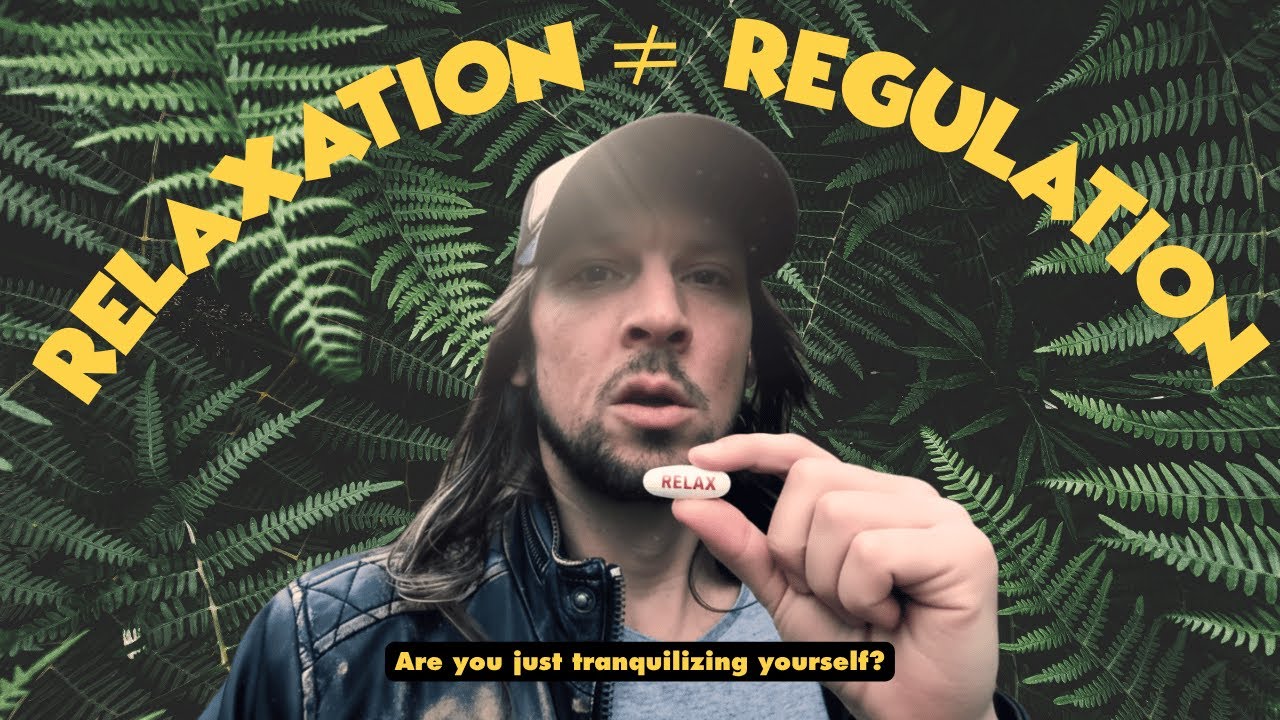
Relaxation vs. Regulation: Why Finding Your Realness Means More Than Just Chilling Out

//////

You’ve Probably Tasted Relaxation but What About Regulation?

As a trained yoga teacher, I often guide my coaching clients through the occasional yin yoga session so they can become comfortable with stillness and whatever it brings up for them.

This is really important when it comes to tapping into realness because so many people fear stillness and what it might reveal to them – this is because when all the familiar activity and noise in our lives comes to a stop, then old emotions start to surface:

Old tension, buried shame, the things we’ve been avoiding – all of this ‘stuff’ begins to move and try to bring itself to our conscious attention. This is why most people spend their lives constantly running away from themselves through distractions, busyness, and endless stimulation.

In one recent session, a client lay in savasana – corpse pose – for ten minutes at the end.

Afterwards they told me with a warm smile:

“I’ve never been this relaxed in my life.”

I smiled and replied:

“You weren’t just relaxed – you just experienced nervous system regulation for the first time in your adult life.”

That moment made me reflect on something crucial which is what the rest of this article is about:

The difference between relaxation and regulation and how the ability to tell them apart can change the entire direction of your personal growth journey.

Let’s dig a little deeper:

Regulation is about riding through what's inside yourself so it can become part of you.

Relaxation: Nice but Limited

Let’s start by saying that relaxation is ‘good’. Really good and we all need it.

What most of us don’t realise, though, is that there’s a hidden trap here:

Relaxation is often used as a tranquiliser – a temporary state of numbed comfort that soothes symptoms of stress without resolving the cause.

When people ‘relax’ what it usually means is that they turn down the noise of their stress while leaving its source untouched.

This means that the deeper issues in their lives that really need to be worked on if they want to minimise stress and friction in their lives as a whole is rarely done.

This makes sense in some ways because the main problem that causes unnecessary stress in our lives is almost always the same:

The ego’s constant effort to control, to appear a certain way, or to suppress unwanted feelings in order for people to uphold a familiar identity for themselves and keep the shadow self at bay.

This is difficult to deal with in the short-term even though it’s always absolutely worth it in the long-term but – because it’s difficult – most people choose to tranquilise it instead of facing it (which is a shame because what you resist persists).

This leads to most people choosing ‘relaxation’ as it serves as a kind of distraction that helps them to unwind around the problem instead of through it.

Common ‘tranquilisers’ that serve this function include:

  • Doom-scrolling through social media to zone out.

  • Meditating purely to “feel good” rather than to see what’s true.

  • Binge-watching Netflix or gaming to escape.

  • Etc. Etc. Etc.

There’s nothing inherently ‘wrong’ with any of these things, of course – the issue is that when they become our main form of rest they just keep us ‘stuck’ where we don’t want to be.

This is because what we’re really doing is giving ourselves a break from all that familiar activity – but not from habitual avoidance.

The Meditation Teacher Who Missed the Point

I once attended a meditation class in a mental health centre where the instructor had clearly read a mountain of books but hadn’t integrated the teachings into her own nervous system:

During the class, a man shared that meditation had made him sad because it brought up feelings about his young daughter who had died.

The teacher’s reply was unforgettable and has haunted me ever since:

“You’re doing it wrong, then.”

Her response revealed something huge about how many people treat inner work – as a way to avoid feeling and ‘spiritual bypassing’:

She was implying that meditation should be about relaxation and pleasure, and a kind of ‘tranquiliser’ against reality.

In truth, though, meditation done ‘right’ is the very opposite:

It invites whatever arises to be seen, felt, and integrated.

A more real response to that man would have been:

Create safety within yourself, breathe, and allow those feelings about your daughter to move through you.

This would have been the beginning of regulation, not avoidance, because regulation isn’t about feeling ‘good’ all the time but about feeling safe enough to feel everything that needs feeling.

Regulation: The Deeper Work

True regulation requires courage because it means facing what’s inside rather than covering it up.

When we regulate, we aren’t tranquilising; we’re processing and we’re trusting and allowing the mind-body system to complete what’s been unfinished.

From a physiological standpoint, the difference is simple but profound:

It all ‘works’ because the autonomic nervous system – which is the ‘part’ of your nervous system that works autonomously and without conscious intervention – has two main branches:

  • The sympathetic branch, which mobilises us into fight or flight (or freeze).

  • The parasympathetic branch, which restores balance, digestion, rest, and healing.

Relaxation techniques aim to activate the parasympathetic system but – in contrast – regulation is about training the entire system to move smoothly and automatically between activation and rest. It’s about restoring flexibility to the system so it can respond appropriately, rather than getting ‘stuck’ in being overly-activated (Sympathetic Dominance where the fight-flight-freeze system is activating too much).

This kind of flexibility is how it’s supposed to be but it’s what prolonged shame, guilt, and/or trauma (a.k.a. the Unholy Trinity) takes from us:

When we experience pain that we couldn’t process at the time, the nervous system gets ‘locked’ into protective modes and so we start to live in a kind of permanent survival mode.

Over time, we start to think that this is just who we ‘are’ and so we start to identify and live as our Sympathetic Personality – the version of us that’s permanently on guard, managing, planning, anticipating, and reacting because of perceived ‘threats’ all over the place (internally and externally).

We think this Sympathetic Personality is who we are – but it’s not: it’s just a mask we start to wear in order to survive.

Regulation is so powerful because it brings us home to something deeper:

To our natural rhythm, where we can feel emotions as energy in motion (e-motion) rather than as threats.

It’s a nervous-system experience of truth and this is where the physiological meets the philosophical because to regulate is to be real with what’s here, in the body, and in the moment.

From Ego to Reality

This is where it becomes existential because if we only ever ‘relax’ then we stay stuck within the parameters of the ego’s dream.

This is because the ego can happily exist ‘relaxing’ in a scented bubble bath, and zoning out with its favourite playlist, but what it can’t handle is sitting still long enough to feel what’s under the surface.

Relaxation can coexist with illusion but regulation requires truth.

In regulation, the breath deepens on its own and the body starts to soften and release tension because it’s safe, not because it’s sedated.

In regulation, the mind quietens because it no longer needs to defend and there’s no forcing or control freakery – just a return to reality.

That’s the essence of REALNESS:

Being with what’s true without needing to distort it.

When my client lay in savasana and said, “I’ve never been this relaxed”, what they really meant was, “I’ve finally stopped fighting myself“.

Their system had, perhaps for the first time, experienced a moment where stillness didn’t equal threat.

That’s the doorway back to real life and flow.

The Cost of Staying in the Sympathetic Personality (Sympathetic Dominance)

Living as the “Sympathetic Personality” has become pretty normal in our world as we all try to survive it:

We’re caffeinated, overstimulated, constantly scanning for danger in emails, messages, and social feeds but we don’t call it anxiety; we call it ambition. We don’t call it avoidance; we call it productivity.

The cost of all this is disconnection – from our breath, from our bodies, from others, and from reality itself.

When we live in this disconnected way, we have to compensate and so we chase pleasure, attempt to control outcomes, and overthink, overdo, and over-explain.

The irony is that all of this striving for safety actually keeps us from it because safety isn’t something you achieve; it’s something you allow – and you can only allow it when you stop running.

That’s why regulation is so transformative:

It’s not passive – it’s the active process of trusting the body to lead you back to truth.

Trust: A Manual in Becoming the Void, Building Flow, and Finding Peace

Check out Trust: A Manual in Becoming the Void, Building Flow, and Finding Peace if you want to go deeper into realness and nervous system regulation.

Practical Ways to Cultivate Regulation

Here’s how to begin integrating regulation into your daily life so that you can live from a foundation of real presence and flow instead of distortion and force:

  1. Set the right intention.

    Before meditation, yoga, or tapping into a general sense stillness, remind yourself:

    “My aim is not just relaxation but regulation”.

    This small mental shift opens the door to awareness rather than avoidance and it reminds your system that whatever comes up is safe to be seen.
  2. Create safety in the body.

    Regulation begins with safety.

    Feel your feet, your body, your breath and take five slow, diaphragmatic breaths – in through the nose, out through the mouth.

    This activates the vagus nerve and signals to the body that it’s safe to soften.

  3. Allow and stay present with sensations.


    When emotions or discomfort arise, resist the urge to label or ‘fix’ them and instead, say silently:

    “It’s safe to feel this”.

    This builds capacity for real presence.

    Remember: regulation isn’t the absence of emotion – it’s the ability to feel emotion without losing yourself in it.

  4. Extend your window of tolerance.


    Stay a little longer in stillness every time you return to it (within limits, of course).

    One more minute in savasana, one more breath before you move.

    Each time you do, you’re teaching your system that stillness is safe and that it’s not a threat.

  5. Bring regulation into daily life.


    Regulation off the (yoga) mat is what matters most.

    Use ordinary moments – for example, waiting for the kettle to boil or walking down the street – as opportunities for check-ins:

    “Where’s my breath? Am I in my body? Can I soften here?”

  6. Check in nightly.


    Ask yourself before bed:

    “When today was I in sympathetic dominance? When did I feel regulated?”

    This reflection helps you see patterns and integrate awareness into action.

  7. Use tranquilising habits consciously.


    Netflix, social media, gaming are all fine when used consciously – just notice your motive:

    “Am I using this to connect, or to disconnect?”

    If it’s the latter, pause and do a small regulation exercise first.

    Make your breaks real, not numbed out escapes.
Regulation returns you to the natural flow of life; relaxation makes you comfortable within the unnatural flow.

Relaxation vs. Regulation: Bringing It All Together

YouTube player

Relaxation is part of healing but it’s not the whole picture – it gives us hints of peace but not the depth of peace that comes from regulation.

Regulation is the bridge between the body and the truth; it’s what allows us to live in reality rather than escaping it.

When you learn to regulate, you stop needing to escape and stillness becomes your home as your breath becomes your ally and your body becomes your anchor into presence.

You’ll stop identifying with your Sympathetic Personality and start living from your regulated self – the version of you that acts from truth instead of tension.

And, really, that’s the essence of REALNESS: living from flow instead of force.

So the next time you think, “I just need to relax”, ask yourself:

“Do I want to numb or do I want to come home?“

Stay real out there,

Oli Anderson, Transformational Coach for Realness

P.S. If you’re ready to build a foundation of regulation in your life and to start building in alignment with your realness then book a free coaching call with me and I’ll help you get moving.

Co-Regulation: The Secret to Real Connection in Relationships

///////

Co-regulation is the Key to Mutual Growth into Realness in Relationships

One of the most common things that happens on a ‘healing’ journey is that one person in a relationship begins to wake up.

What this basically means is that they start doing the ‘work’:

They start looking at their shadow self, regulating their nervous system, taking real action, and learning to live from truth instead of ego. None of this means that they’re trying to become ‘perfect’, just that they’re trying to grow REAL…and that changes everything.

This is all great (to state the obvious) but, sometimes, the person they love isn’t on the same page yet and so they might still be caught in the same old patterns like reacting, shutting down, or trying to control outcomes instead of being present with life.

This doesn’t mean they’re “less evolved”, “not good enough”, or anything like that but what it does usually mean is that their nervous system is still running on survival mode while the other person’s has started to settle into regulation.

This is important to know because when one partner’s nervous system is regulated and the other’s isn’t, the relationship can start to feel uneven:

One person is grounded, present, and calm but the other is in sympathetic dominance – fight, flight, or freeze – which means they’re living from what I call their “Sympathetic Personality”: the version of them that’s reactive, defensive, or disconnected from realness.

This Sympathetic Personality isn’t who they really are – it’s just their body’s temporary way of trying to protect them from danger but the problem is that when one person is in this state, and the other isn’t, the relationship can start to lose its flow.

That’s where co-regulation comes in and that’s exactly what this article is about.

Let’s dig a little deeper:

Co-regulation is about building a foundation of safety so unreal threats lose their power.

What Is Co-Regulation?

Co-regulation is what happens when two nervous systems synchronise and help each other to get into a natural state of presence as they both move toward safety and balance.

It’s something we’re designed to do as human beings – as in it’s literally wired into our biology:

For example, babies co-regulate with their parents through touch, gaze, and sound and as adults we do it through presence, tone of voice, breath, movement, and alignment.

In the context of our relationships this is so important because when two people are co-regulated, they create a container of safety that allows them to relax and connect more deeply.

From that safety, intimacy can grow naturally which is what all relationships are ultimately about.

This is extremely important if you want a healthy, real relationship because without safety, there can be no intimacy.

If one person’s nervous system is stuck in a state of threat, they’ll constantly be scanning for danger, both internally (at the level of their own unresolved emotions) and externally (how they perceive their partner or the world around them).

In short, if they’re stuck in that Sympathetic Personality, their system will interpret closeness as a potential risk rather than an opportunity for connection.

All of this points us towards a very simple fact:

If you want a relationship that flourishes – one that’s alive, open, and full of real intimacy rather than patterns of protection – you need co-regulation.

The Ego and the Nervous System

The more dysregulated our nervous system becomes, the stronger the grip of the ego:

This is because the ego thrives on control, fear, and the illusion of separation.

All of this is the mind’s way of keeping us safe when our body doesn’t feel safe but – when we start creating regulation in the nervous system – the ego doesn’t need to run the show anymore.

Instead, we can relax, we can feel, and we can let go of needing to ‘win’, ‘fix’, or ‘prove’ anything as we instead choose to start participating in the natural flow of life, together.

Co-regulation, then, isn’t just about calming down and feeling ‘relaxed’:

It’s about creating the conditions for truth and connection to emerge as two people enter the same real rhythm in the same field of presence so they can accept themselves and each other as they really are.

My Own Experience with Co-Regulation

Every Saturday night, my girlfriend and I do Yin Yoga together (if you don’t know Yin Yoga is a form of yoga where you hold the poses for a prolonged period of time to create nervous system regulation and presence).

This started organically but it’s really become a kind of sacred ritual for us over time – a weekly return to stillness, connection, and truth as we dim the lights, roll out our mats, and breathe and move slowly together.

The key word here, really, is “together”:

We create space together, we breathe together, and we allow everything to soften together: the body, the breath, the mind, and even our emotions.

Over time, this practice has given us a strong foundation of presence and regulation:

It’s actually quite incredible…we’ve become so co-regulated through it that we can slip into presence quite easily even off the yoga mat (which is really the whole point and one of the reasons I’m a big proponent of the famous saying in yoga to “Take your yoga off the mat”).

In short, we’ve found that the more we anchor into that shared rhythm, the easier it becomes to stay in sync throughout the rest of our lives.

When one of us starts to get activated or stressed, for example, it’s like the other’s nervous system can naturally help bring us both back into balance because we know what it feels like in that REAL space and can more easily return to it as we keep topping up that ‘foundation’ in the yoga sessoins.

This is really the power of co-regulation and why it’s not something you do once; it’s something you build over time.

Of course, Yin Yoga isn’t the only way to do this and there are countless ways couples (or even friends, families, and teams) can consciously cultivate co-regulation.

Below are some of the most effective ones I’ve seen (drawn from somatic work, relationship therapy, mindfulness, and embodied practice)

Co-Regulation Activities to Deepen Connection

Here are several categories of co-regulation, each addressing a different layer of connection — physical, emotional, spiritual, and creative.

You don’t have to do all of them; just choose one that feels right for you in this season of your life and then build consistency.

Somatic & Breath-Based Co-Regulation

These practices help synchronise the body’s natural rhythms – breath, heartbeat, and movement – creating a shared physiological sense of calmness:

  • Partner breathwork: Sit back-to-back (literally touching), breathe naturally, and notice each other’s rhythm until it begins to sync on its own. No forcing is necessary – just awareness.

  • Body scanning together: One person guides the other through a slow scan of the body while both stay present. After the first round you can witch roles. This builds deep empathy and alignment.

  • Hand-on-heart breathing: Sit close and place your hand over your partner’s heart while they place theirs over yours. Breathe together and feel the connection between your chests as you keep breathing deeply (nose breathing is always best).

  • Partner stretching / restorative poses: Simple poses like supported child’s pose, seated folds, or lying side by side help the body soften and align into presence.

  • Cold plunges or sauna together: The shared experience of mild stress followed by recovery can strongly bond the nervous systems and build trust.

Emotional & Relational Co-Regulation

These practices open emotional channels and strengthen limbic resonance (which refers to the subtle way our emotions communicate and harmonise):

  • Eye gazing: Sit in silence and look into each other’s eyes for 2–5 minutes. Let go of expectations and simply see because this breaks down defensive energy and opens the heart.

  • Authentic relating games: Ask real-time questions like, “What’s present for you right now?” or “Tell me something you haven’t said yet”. These bypass surface-level conversation and old, outdated patterns of identifying (ego).

  • Storytelling in turns: Share something personal while the other listens deeply without fixing or interrupting. Then swap roles and do it again. They key is to create container of presence and non-judgement.

  • Gratitude rounds: Each person names what they appreciate about the other (and actually means it). This shifts the emotional tone and strengthens positive attachment.

  • Shared laughter: Watch comedy, play games, or allow yourselves to be silly. Laughter releases tension and floods the body with oxytocin which is the bonding hormone.

Nature & Movement Co-Regulation

Shared movement in natural environments helps both nervous systems anchor into the same sensory rhythm within the context of life’s wider natural rhythms:

  • Walks in nature: Especially barefoot or without distractions. This is powerful because walking side-by-side naturally synchronises gait and breath.

  • Slow dancing: Move intuitively together to music, without worrying about steps. Let your bodies communicate and just do what they need to do (learning to let your body lead instead of your mind).

  • Cooking together mindfully: Engage the senses – smell, taste, touch – whilst working in sync. This is a simple but powerful grounding ritual (and you get to eat afterwards).

  • Gardening or working with earth: Touching soil together and tending to life connects both people to a natural, non-verbal intelligence.

  • Swimming in natural water: Rivers, lakes, the sea, etc. – water has a regulating, almost mystical effect on the body when shared and enjoyed with presence.

Stillness & Ritual Co-Regulation

Stillness amplifies safety and so these rituals create a sacred container that reminds both people of what really matters.

  • Meditating together: Sit in silence and drop into presence. Even without speaking, your nervous systems will begin to align and get into the same flow.

  • Reading aloud or prayer: Shared voice resonance strengthens the vagus nerve (which activates the parasympathetic nervous system and gets us out of fight-or-flight) and brings calm.

  • Evening wind-down ritual: Have tea, dim the lights, light a candle, and talk about the day without devices. This trains the body to associate stillness with connection over time.

  • Music listening: Choose a song and listen in silence, focusing on how it feels in the body.

  • Shared journaling or intention setting: Write side-by-side or read reflections aloud to align your energy for the week ahead.

Creative & Purposeful Co-Regulation

When you create together, your brainwaves sync, your attention aligns, and you enter a shared flow state:

  • Making art or music together: It’s not about skill but about flow. Let intuition lead and create a rhythm together.

  • Building or crafting projects: Anything that requires collaboration naturally fosters trust and rhythm.

  • Working toward a shared vision: When you channel your energy into something meaningful together, the sense of co-regulation expands beyond emotion into purpose itself.
The Co-Regulation Codex workbook leaning against a stone

If you and your partner keep getting stuck in arguments where neither of you can really hear the other, the Co-Regulation Codex for Couples gives you 30 days of practical exercises to calm your nervous systems together first.

How to Make Co-Regulation a Habit

The key to all of this is consistency:

Pick one or two of these activities and commit to doing them weekly – just like my girlfriend and I do with our Saturday yin sessions.

Over time, this creates a baseline of shared safety that starts to bleed into every area of life – your conversations, intimacy, and even how you deal with conflict (and how quickly you get over it by returning to that baseline).

The goal isn’t to force regulation or to ‘fix’ your partner – it’s to create conditions where both nervous systems can naturally find their rhythm again and feel safe together.

Remember: the nervous system doesn’t learn safety through words but through experience which is why taking this kind of REAL ACTION is so powerful.

Co-regulation is about giving each other the same message: we're safe.

The Bigger Picture: Co-Regulation as a Path Back to Wholeness

When two people learn to co-regulate, they’re not just calming each other down or ‘relaxing’ (though these can both be by-products of conscious co-regulation) – they’re participating in the deeper intelligence of life itself.

They’re returning to what’s real.

When you and another person are both regulated, what you’re really experiencing is the Godwave – the natural interplay between two beings who’ve let go of fear enough to trust the moment.

This is the space where love becomes more than a concept and shifts into becoming a felt experience of unity – the merging of two nervous systems, two hearts, and two souls into one field of presence.

Really, this is what co-regulation is all about:

Learning to be with each other, not as fragments fighting for safety, but as whole beings returning to the truth of who we already are.

Try it this week: choose one co-regulating ritual and commit to it together.

Don’t overthink it – just show up with presence.

You might be surprised how quickly your relationship – and your reality – start to feel more grounded, alive, and real.

Stay real out there,

Oli Anderson, Transformational Coach for Realness

P.S. If you’re ready to work on growing real and regulating yourself to build a solid foundation for your life then book a free coaching session with me today and we’ll get you moving in a real way.

The Fear of Being Alone & How to Overcome It

///////

The Fear of Being Alone Means You Have a Fear of Yourself at Some Level

There are few fears as universal but as misunderstood as the fear of being alone:

It’s one of those quiet fears that hides behind constant busyness, endless scrolling, compulsive socialising, or even the desperate need for a relationship that isn’t really working.

At first glance, this fear seems to make sense because humans are social creatures and so we literally need connection.

The problem isn’t that we crave connection, however, but that we’ve forgotten what kind of connection we’re truly craving.

When you can look at it through this lens, you can start to see that the fear of being alone is rarely about the absence of people and is more about the presence of something within ourselves that we’ve been trying to avoid for a long time.

The perhaps brutal truth of the matter is that when we can’t bear to be alone, what we’re really saying to ourselves at some level is “I can’t bear to be with myself“.

That sounds harsh, but it’s actually an invitation and a call to face something REAL within yourself because every time you find yourself running away from solitude, what you’re really running away from is your own shadow self: the emotions, memories, and beliefs that were buried long ago and hidden behind the mask of ego because they were once too painful to face.

This is a tad ironic because all of those emotions you’re avoiding are the very gateway to peace, authenticity, and real connection.

The French philosopher and mathematician Blaise Pascal once said: “All of humanity’s problems stem from man’s inability to sit quietly in a room alone” – and he was right:

Most of our modern anxiety, confusion, and exhaustion stem from our desperate attempts to avoid stillness because in stillness, we meet our truth.

This article will help you figure out a way to meet your own stillness so that you can turn loneliness into solitude and start to grow real.

Let’s dig a little deeper:

In the silence you will find the answers that help you overcome the fear of being alone.

Loneliness Isn’t the Problem — It’s the Path

If you only take away one thing from this article, let it be this:

Loneliness isn’t your enemy; it’s the doorway to your realness and a sense of being whole again.

When you finally stop running away from yourself and allow yourself to feel the loneliness – instead of only thinking about it, analysing it, or dramatising it – then you discover that underneath the discomfort is something astonishingly peaceful.

This peace is your realness emerging and it was there all along, waiting for you to stop running.

The real danger, then, isn’t in being alone but in living a life so full of noise that you never hear your own pure signal calling you back home.

Loneliness vs. Solitude

To go deeper, we need to make some important distinctions – the first one being the difference between loneliness and solitude.

Loneliness is what happens when you spend time alone with your ego and so it’s full of noise, judgment, and meaning-making.

This is because the ego (your familiar way of identifying and the stories that support this) looks at the simple fact that you’re physically alone and turns it into a story:

  • “Nobody cares about me”.

  • “I must be unlovable”.

  • “I’ve failed at life”.

  • “I’m wasting my time”.

In loneliness, you don’t just experience the fact that you happen to be alone – you interpret it.

What this means is that you add meaning to it and that this meaning is usually soaked in unresolved shame, guilt, trauma or fear.

The ego loves this because it thrives on interpretations and drama because that allow it to keep its hold over you (because the ego is the opposite of reality). This is why it’s far easier for the mind to say “I’m broken” than it is to sit quietly and face the raw feeling underneath.

Solitude, on the other hand, is something completely different:

Solitude is what happens when you spend time alone with your realness and engage in the process of becoming even more real.

It’s not about isolation or self-pity but about integration and so, in solitude, you actively use your alone time to tap into the process of becoming whole.

This might mean sitting still in meditation, journalling honestly about your emotions, going for a long walk without headphones, or doing something creative just for the joy of it. On a deeper level, it might even mean finally facing those tears you’ve been holding back for years (which will finally release a lot of the tension that’s caused from holding onto the unreal version of yourself that these tears will start to clear away.

In short, the key difference is that solitude is intentional because you’re not judging the moment but using it to return to what’s real.

Loneliness feels like emptiness.

Solitude feels like expansion.

One drains you.

The other refills you.

Distraction vs. Real Action

Another pattern that feeds the fear of being alone is the addiction to distraction:

This is relevant because when we fear the emotions that rise in silence and ‘aloneness’, we attempt to fill every waking moment with stimulation.

This means that we keep ourselves constantly ‘busy’ but the busier we get – if the actions we take are unreal and disconnected from our purpose – the emptier we feel (which just makes everything worse in the long-term).

This kind of busy-ness isn’t real action; it’s avoidance and resistance disguised as productivity:

You might tick a hundred things off your to-do list, but none of them move you forward in any meaningful way and so you become a “human doing” instead of a human being.

There’s a world of difference between distraction and real action:

  • Distraction is about avoiding pain and attempting to RUN AWAY from the truth about themselves, the world, and reality.

  • Real action is about moving towards purpose and RUNNING TOWARDS the truth about themselves, the world, and reality.

Distraction says “Let’s scroll, binge, or overwork so we don’t have to feel anything” but Real action says “Let’s face the feeling, learn from it, and build something meaningful“.

The difference isn’t always visible on the outside and so it’s possible for two people to be doing the same task but for the energy behind it to be completely different. Like we said, this is because one person is running from themselves; the other is running towards the truth.

When your actions are aligned with your real values, even the mundane moments feel rich with meaning because actual meaning is a by-product of purpose.

When they’re not aligned, even the most glamorous distractions eventually leave you feeling hollow and that lonely feeling never goes anywhere.

Running Away from the Unreal vs. Running Towards the Real

Let’s go a little deeper into the deepest level of this pattern (which we mentioned a little above):

It’s not just that we’re running – instead, it comes down to what we’re running from and what we’re running towards.

When we fear being alone, we’re usually running away from something unreal – for example, a projection of shame, a painful memory, or a false belief/interpretation about what being alone ‘means’.

Here’s the paradox, though:

You can’t outrun what’s unreal (because it’s not real) – you can only dissolve it by facing it and learning to let go.

This means that the real shift you need to make if you want to overcome the fear of being alone is about turning your energy around from running away from the unreal to running towards the real.

Running towards the real means saying things like:

“I don’t want to escape my life anymore – I want to engage with it”.

“I don’t want to numb myself – I want to wake up fully”.

“I don’t want to chase false meaning – I want to live in alignment with the truth.”

This is the path of Realness:

It’s not glamorous and it’s not always comfortable but it’s the only path that leads anywhere worth going because if you wanna get results then you have to be connected to reality (because nothing else ‘works’).

Trust: A Manual in Becoming the Void, Building Flow, and Finding Peace

Check out my book Trust: A Manual in Becoming the Void, Building Flow, and Finding Peace if you want to cultivate a deeper relationship with yourself and life and get into the flow.

Practical Steps: Turning The Fear of Being Alone and Loneliness into Solitude

Let’s get practical and explore how you can move from fear of being alone into a sense of genuine freedom and wholeness:

1. Cultivate Stillness

Start by learning to be still:

This doesn’t mean you have to sit cross-legged for an hour meditating (though you can if you like and it will definitely help). It means pausing throughout your day to feel what’s happening inside you at the level of your emotions and bodily sensations.

The first few times you do this, it might feel unbearable and that’s totally okay because what you’re feeling isn’t loneliness but the backlog of unprocessed emotion that’s been sitting beneath the surface for years waiting for your attention.

Stay with it and breathe through it.

You’re not being punished – you’re being purified and finally returning to reality instead of hiding behind mental and emotional blockages.

2. Drop the Story

Loneliness becomes toxic only when it’s interpreted through the ego’s lens and so the next time you feel lonely, resist the urge to add meaning.

This means that you don’t tell yourself stories about what it means and, instead, describe the feeling in simple, neutral language:

“There’s a heavy feeling in my chest”.

“I notice a sense of emptiness”.

“There’s an urge to distract myself”.

By naming the experience without judgment, you strip it of false meaning and reclaim your power to simply be with what’s real.

Even more importantly, you can make a CHOICE about what to do with these sensations instead of being driven by them on autopilot.

3. Feel Through, Don’t Think Through

You can’t think your way out of loneliness – in fact, too much thinking and identifying with those thoughts is what got you trapped there in the first place.

The only way out is through feeling which means that you let the emotion follow its natural wave of rise, crest, and fall.

When you allow emotions to follow this wave, then they will pass, and – on the other side – you’ll feel a little clearer, a little freer, and a little more real.

Feeling through is what turns the abstract concept of ‘healing’ into something tangible and it’s how loneliness transforms into strength and a foundation of acceptance.

4. Create a Real Vision

Once stillness becomes more familiar, use it as a foundation for creation.

You can start to do this by asking yourself:

  • What kind of person am I becoming?
  • What do I really value?
  • What kind of contribution do I want to make in the world?

Write your answers down and let them evolve over time because vision gives your solitude a sense of direction and turns your alone time into a sacred space for self-alignment rather than self-criticism.

My free 7-day video course is designed to help you put a real vision for your life together: The 7-Day Personality Transplant System Shock for Realness & Life Purpose

5. Build Habits Around Your Vision

A vision is useless without embodiment and real action so break it down into daily habits (small, consistent actions that keep you grounded in what’s real).

Maybe that means journalling every morning; maybe it’s exercising, meditating, or dedicating time to creative work.

Whatever it is, the goal isn’t to fill your schedule but to fill your life with actions that are aligned with who you truly are and give you a solitude foundation on which to keep building.

This is how solitude becomes real power.

There is a sancturay within you where the fear of being alone disappears forever.

The Fear of Being Alone: Final Thoughts – Alone but Never Lonely

The fear of being alone dissolves when you realise that you were never truly as ‘alone’ as you felt and thought yourself to be in the first place:

We can say this because when you touch the deeper layers of your being beneath all the noise and the stories you discover that there’s a presence there that never leaves. You might call it consciousness, life, love, God, or Realness, but whatever you wanna call ‘it’, it’s always there – wating.

This is the same presence that animates everything and when you connect with it, the need to constantly seek validation or distraction fades away.

You stop running.

You stop performing.

You simply BE whatever it is that you are and that you’re becoming.

That’s when aloneness becomes something sacred and shifts into solitude over loneliness:

It’s no longer a punishment but a privilege because it’s a rare chance to come home to yourself, to reality, to what’s real.

In short, the fear of being alone is the fear of meeting yourself but – once you realise that what you meet in that silence is the doorway to peace, wholeness, and truth – you’ll never want to run from it again.

Stay real out there,

Oli Anderson, Transformational Coach for Realness

P.S. If you’re ready to reconfigure your relationship with yourself and start living your real life then book a free coaching session with me and I’ll help you shift gear.

Shaken and Awaken: How Life Can Refine You into Your Own Realness

///////

Sometimes Life Will Shake You But Only Ever To Awaken You

If you find yourself going through ‘it’ right now – whatever “it” happens to be – then take a breath because this article is for you:

The “it” in your life at present might look like loss, betrayal, a crisis of identity, a relationship break-down, health challenges, disillusionment, a job collapse, or simply the gnawing sense that nothing feels solid anymore (because you’re living in the Void).

Whatever the case may be, the end result is the feeling that life is shaking you at your core which is calling into question long-held beliefs, exposing illusions, and testing what you really think about yourself, the world, and even reality itself.

Maybe not the best situation to find oneself in but here’s the ‘good’ news:

If life is shaking you and you’re “going through” something then it means that you’re currently engaged in a process.

This is good (even though it might not seem like it) because it means that you’re not STUCK which is a far worse fate and one where many people find themselves locked behind immovable old identities and trapped forever in the past.

The fact that you’re being shaken is EVIDENCE of change in motion and it shows that something inside refuses to remain stagnant and simply just accept the way that things appear to be.

In other words, “going through it”, means that something is insisting on growth, waking up, and becoming more real.

Sure, what you’re going through might sometimes feel unbearable and at times it may feel like everything is falling apart but it’s just a part of the human condition and the journey of growth into wholeness.

Many great souls, writers and seekers before you have gone through their own storms and come out transformed on the other side and this is the same two-step process you’re currently going through:

  1. Being Shaken
  2. Then Awakened

Let’s dig a little deeper:

You only stay stuck if you resist being awakened by the shake.

What It Means to Be Shaken

To be shaken is to be provoked, dislodged, or confronted in some unexpected way:

It is life’s way of jarring us out of complacency, illusion, auto-pilot, or identity comfort zones and – even though it’s a totally natural process on the journey back from unreal to real – it can rattles our foundations the very core of our being.

When you’re shaken you’ll start to experience these kinds of symptoms:

  • Old beliefs crack: The beliefs you held about yourself, your life, your future, your worth, or how the world is ‘supposed’ to be all begin to fracture as your ideas meet reality itself.

  • Comfort zones become intolerable: The things that once gave you security no longer feels safe or true.

  • You feel raw, vulnerable, and exposed: Long lost feelings that you suppressed or ignored may well surface – like fear, grief, rage, confusion, or despair.

  • Questions arise that can’t be ignored: You’ll start asking yourself some of the bigger questions like: Why am I here? What is real? What is true? What do I really believe? What identity is really mine?

  • A sort of “deconstruction” sets in: You find that the things you built your life around (roles, labels,, and narratives, etc.) may start to crumble or at least begin to feel hollow as you realise they were part of the performance of your life instead of your presence within it.

In that shaking, you might feel disoriented or even betrayed by life itself:

You may ask “Why me?” or “How did I end up here?” but beneath the trembling is a deeper impulse: the impulse toward authenticity and toward waking up to what’s REAL.

The ‘good’ news here is that if you can learn to understand what is going on beneath the surface, then you can switch from a stance of fear or resistance – which often prolongs suffering (because what you resist persists) – and shift into a stance of curiosity, surrender, and real engagement with life as it actually is (as opposed to what your ego needs it to be).

What Is Realness and Why It Can’t Be Lost

One of the foundational truths you must hold on to when being shaken by life in this way is this:

“What’s real is always real.”

(Write that down and stick it on your fridge or something).

This is just a reminder that you can’t lose what is truly yours because what’s ‘yours’ is WHOLE and so can’t be added to our subtracted from.

What this means in practical terms is that the process of being shaken and awakened does not rob you of your essential being or your core realness – instead, it simply exposes and purges what is unreal, fragmented, and false.

You can look at it like this:

  • What’s real about you – your essence, inner consciousness, or AWARENESS – can’t be shaken away no matter how hard you get shaken (though you may forget it for a while, doubt it, or become disconnected from it).

  • What is false and unreal – like your illusions, masks, identities, expectations, and outdated wounded narratives – may fall away, sometimes violently, in the shaking but you only lost a PERSPECTIVE or INTERPRETATION, not the reality of things.

  • The shaking is not evidence that you’re failing but evidence that the illusions are being weeded out.

To trust the process is to trust that you are not being dismantled arbitrarily and to instead choose to believe with patience that you’re being refined instead of defined.

The seemingly broken bits are not your true core because they were borrowed, constructed, and cobbled on so you can let them go.

This is analogous to how, in alchemy, heat and pressure melt impurities so that the refined metal remains or how storms may tear leaves from a tree, but cannot uproot the trunk and roots – unless those are already compromised.

Why Resistance to the Shake Hurts More Than the Shake Itself

Here’s a paradox about this human condition thing we’re all dealing with:

It’s not the shaking that hurts us most but our resistance to it.

When you resist – which means that you choose to cling to the old, panic, deny, push against the pain, hold fast to ego identity, or grasp at illusions – then you turn your own refining process into a battleground and the harder you resist truth, the more painful the friction becomes.

A phrase I always love to throw out there in coaching sessions is that:

“The truth will set you free (but first it will piss you off and make you miserable)“.

(From Personal Revolutions: A Short Course in Realness).

That bluntness comes from acknowledging that truth often demands disillusionment, upheaval, and the dismantling of familiar and comforting lies or illusions.

In other words: misery is often not from the shaking itself, but from trying to hold on to what is no longer alive, no longer serving us, and no longer real (because it never was – it was always just a fragment whereas the truth itself is whole).

When life shakes you, it means that the TRUTH is always sweeping back into your life, and so you might fight to preserve comfort, certainty, identity, or tell yourself stories to avoid feeling the hurt. You might dig in your heels. But every time you resist, you extend the pain, because you prevent the process from doing its purifying work as you cling on to what you thought was instead of what actually is.

What all of this means is that a big part of awakening is learning to lean into the shake – to trust the process, to allow old structures to fall away.

In other words, to let go of trying to control what can’t be controlled and to let life do what life wants to do which is to refine, deconstruct, and illuminate.

The Metaphor of the Tree in the Storm

Here’s a metaphor that can potentially help with all this:

Imagine a grand old oak tree standing in a forest during the autumn. Suddenly, a violent winds arrives and starts shaking the branches and whipping the leaves. Even though the tree loses many leaves, some small branches break, and the canopy thins out, the trunk and roots remain strong, anchored and firm in the earth.

In itself, no tree wills to be damaged by storms but storms reveal what is strong and permanent as opposed to what is frail and superficial. The leaves that fall were not essential; the core remains.

In your own inner life, your relationship with your own realness is like that tree:

The autumn storm is the shaking process and the leaves represent illusions, conditional identities, old stories, and the fragile self-conceptions of the egol.

The trunk and root represent what is real, what is eternal, and what is deeper and more lasting than your day-to-day labels.

If you can stand (or learn to stand) through the storm, you learn a new kind of rootedness – one grounded in realness, not in brittle illusions.

Yes, someday the tree also dies but if it truly wants to flourish whilst it’s here then it depends on resilience, depth, the capacity to let go of what must go, and strength to stay rooted in what is essential.

Awakening: What It Looks Like

If ‘shaking’ is the clearing and cracking open, awakening is what comes after – or occasionally simultaneously – when you begin to live in the light of a more REAL version of yourself.

Awakening is:

  • Greater clarity: You see distortions, illusions, and unhelpful and unreal patterns more clearly and begin to perceive more truth in yourself, the world, and reality itself.

  • Unmasking of false selves: You finally start to drop the roles and masks that no longer serve you.

  • Honesty and integration: You own all parts of yourself (‘light’ and ‘dark’) more fully as you stop hiding the real you in the Shadow Territory behind the mask of ego.

  • Inner alignment: Your actions begin to align more with your deeper values – instead of just with whatever seems ‘acceptable’ or safe.

  • Deeper sensitivity to reality: You sense things more deeply, feel more, and know more (whilst having reality confirm this with actual evidence as you build a sense of flow and start getting results in life).

  • Humility and surrender: You come to accept that you don’t have all the answers and so you become a student of life instead of unconsciously trying to ‘teach’ everybody to see things the same way you do.

None of this means total freedom from pain or challenges but it does mean that you start to respond to these things differently:

As you awaken to your own awareness, the storms still come, but your centre is more rooted and the shaking is less terrifying because you know what is real and what’s not so you can fully trust that process.

How to Engage The ‘Shaken and Awaken’ Process in a Real Way: Practical Steps

You don’t have to be a passive passenger while life shakes you around – instead, you can engage with the process consciously with awareness, courage, and trust.

Here are some practical ways to do that:

1. Name and Acknowledge the ‘Shake‘

The first step is simple but powerful:

Admit to yourself what’s happening.

Say it plainly (“I’m being shaken right now”) and stop pretending everything is fine when it isn’t.

Denial only keeps you trapped in confusion but the moment you name what’s real, you start to reclaim your power and move from unconscious reaction to conscious participation.

2. Breathe, Ground, and Anchor Yourself in Presence

When life feels unstable, your breath is the doorway back to reality because it regulates your nervous system.

What this means is to come into your body. Feel your feet on the ground. Breathe through your nose and into your belly.

Presence is your anchor when everything else is shifting (like that tree staying rooted in the storm and only losing its leaves).

You may not be able to control what’s happening, but you can always come home to yourself in the moment because what’s real is always real.

3. Watch the Story You’re Telling Yourself

Most of our suffering doesn’t come from reality itself but from the story we tell ourselves about it.

What this means is that you need to pay attention to your inner narrative:

“This shouldn’t be happening”

“I’ve failed”

“It’s all falling apart.”

(All of these are just examples of self-limiting beliefs that stop you growing with life and force you to work against it).

Ask yourself if the stories you’re telling yourself are actually true:

Are they helping you or hurting you?

Learning to see through your own mental commentary stops you from adding unnecessary layers of pain to an already difficult process.

4. Choose Curiosity Over Battle
Instead of fighting what’s happening, start asking better questions. What is this showing me? What truth is being revealed? What am I resisting? When you approach your situation with curiosity, you stay open to discovery. When you approach it with resistance, you stay stuck in friction. Curiosity opens doors; battle closes them.

5. Practise Surrender and Letting Go

Letting go isn’t the same as giving up (though a lot of people fall into the trap of thinking this is the case) – instead, it means trusting yourself and life enough to release your grip on what’s no longer serving you:

Maybe it could be a role, an expectation, a relationship, or a self-image but – whatever it is – allow it to fall away whilst reminding yourself that what’s real is always real and that the things that can’t stay will leave anyway (letting go instead of holding on simply makes their departure less painful).

It’s through letting go like this that space is created for what’s more real to (re)emerge and for you to find a solid foundation on which to build your life.

6. Find Support

Nobody awakens alone so seek out the people who can help you stay rooted in the truth (not your interpretation of it but an actual experience of it) – friends, mentors, coaches (*cough*), counsellors, spiritual companions.

In short, you want to be around those who value honesty over comfort whilst remembering that iron sharpens iron.

The process of being shaken can feel isolating but you are not meant to carry it all on your own and the right kind of company helps you stay awake rather than collapse into despair.

7. Cultivate Practices That Connect You with Realness

Make time each day for things that bring you back to your centre:

This might be silence, journaling, meditation, time in nature, mindful movement, creative expression, or reading something that redirects you towards the truth.

These are not distractions but disciplines that anchor you in your own pure signal rather than all the noise.

8. Integrate Through Small, Real Actions

As insights arise, don’t just keep them in your head….make sure that you act on them – even in small ways (because action is the only ‘cure’ for anything).

Speak truth where you once stayed silent. Make one brave decision that aligns with your deeper values. Just do something as long as it’s real and not ego.

Embodiment matters and real growth happens through action, not just awareness (with acceptance thrown in between for good measure).

9. Embrace the Mystery

You won’t understand everything as it happens and that’s okay because we’re not capable of understanding everything even if we want to.

Some lessons only reveal themselves in hindsight so stay humble and open and just keep learning and moving with what’s in front of you.

As the old saying goes, life is not a puzzle to be solved but a mystery to be lived and so the more you relax into that truth, the less you’ll feel the need to control every outcome.

10. Reflect on What Remains True

Finally, keep returning to what is unshakeable in you:

Check in with yourself regularly:

What has stayed the same through all of this? What still feels real?

These reflections help you distinguish between what’s passing away and what’s eternal whilst reminding you that – despite everything – something within you remains steady, alive, and whole:

Your realness.

Example: A Mini Illustrative Story

Let me share a small parable to help all this sink in (this is turning into a pretty long article):

Imagine someone named Anna who built her identity around being successful, admired, and in control.

Her life was going perfectly until the bottom fell out and she lost her job, her relationship shattered, and she fell ill. Everything she thought ‘defined’ her seemed gone.

At first she resisted and ended up fighting depression, scrambling to re-establish control, denying the emptiness of the Void, and clinging to old patterns. All this resistance serverd to do, though, was to deepen her suffering.

One day she paused and finally admitted to herself:

“I am being shaken from my ideas about myself (ego)”.

To deal with this, she began to implement practices in here life like breathwork, writing, quiet time in nature, and allowing herself to feel grief and fear.

She asked questions: “What was I using to hold myself up?”, “What identities are no longer true?”, or “What is deeper than all this right now?”

Slowly, she began to see that her true value was not in success or role but in BEING itself:

She discarded illusions and reoriented her life around deeper values like connection, service, and meaning.

Of course, she didn’t become unshakable – the storms still came because they always do – but now she stood more solidly in her realness, and fewer illusions threatened to uproot her.

Her “awakening” was not spectacular or some momentous event – it was quiet, subtle, and mostly internal – but it changed everything about how she lived forever.

Why This Matters for Yourself, The World, & Reality

Why invest in going through this whole process of the shake and awake instead of dodging or denying it?

Well, it’s because:

  • You become more real, more authentic, and more present instead of being a ‘performer’ hiding behind a mask.

  • You gain deeper wisdom (understanding about how reality ‘works’) because you learn from life, not just from ideas or concepts.

  • You inspire others who witness your integrity and by extension become more real in their own lives.

  • You become less vulnerable to false identities, external validation, and projection.

  • You contribute to a world that needs people who have tasted something REAL so they can make the world more real.

In short: the shaking is not a punishment, but a portal and the conduit through which deeper truth flows as you reach the awakening.

Trust: A Manual in Becoming the Void, Building Flow, and Finding Peace

Check out Trust: A Manual in Becoming the Void, Building Flow, and Finding Peace if you’d like to go deeper into your own realness and a sense of flow in your life.

Some Cautions (Pitfalls to Watch Out For)

  • False acceleration: Trying to force awakening before the shake is done is always a mistake because you may skip essential stages of grieving, deconstruction, or integration.

  • Spiritual bypassing: Trying to pretend everything is fine, bypassing the pain, or acting like you’re always ‘healed’ even when you’re wounded inside.

  • Rushing into new identities: You don’t want to try and build new houses while the foundations are unsettled. Give the shake its full space to clear the ground before you build.

  • Isolation: Going solo without mirrors, counsel, or safe companionship can lead to distortion and despair so try to find somebody to walk by your side (not above or below you).

  • Loss of boundaries: In the name of openness, you may surrender your boundaries and get entangled in unhealthy dynamics because you think you’re so ‘spiritual‘ (or whatever) that you can handle things you don’t need to handle.
If you let go of what you think you are then you'll become awakened to your realness.

Shaken & Awaken: Some Closing Encouragement

If you are “going through it” – right now, today as you read this – if life is shaking you to your bones – I want you to know this:

You are not lost. You are doing the very work of becoming more real.

The ‘shaking’ is not your enemy but your refining and the ‘awakening’ is not a promise of a smooth life, but of a more real life.

In the storm, plant your roots deeper and let the wind do its work:

Choose curiosity over panic, surrender over resistance and trust that what is truly yours cannot be taken away because what’s real is always real so let life carve away the illusions, so you may stand more fully in your realness.

Stay real out there,

Oli Anderson, Transformational Coach for Realness

P.S. If you’re currently going through it and you want to learn to discern the real from the unreal and take action that changes your life for the best then book a free coaching call with me.

Stuck in Shadow Work: How to Move Beyond Perpetual Shadow Work Into Realness

///////

How to Do Shadow Work Without Getting Stuck in the Shadow Territory

Shadow work is often framed as one of the most essential processes on the journey toward healing, integration, and alignment with one’s deeper purpose and realness.

This is because when it’s done in a way that’s aligned with reality, then it has the potential to help us become more whole, more real, and more capable of taking real action that reflects our true potential.

Here’s the catch, though:

Many people fall into a trap where “doing shadow work” becomes an identity in itself and so it becomes a never-ending loop of excavating pain without ever truly integrating, embodying, or moving forward and so – instead of ‘healing’ – it just leads to becoming stuck in what I’ll call the Shadow Territory.

This article is for the seekers who have lingered too long in this territory and who find themselves constantly poking and prodding old wounds without making any meaningful progress in their lives:

I want to help you understand why this happens and offer concrete, practical steps so that your shadow work truly serves you and your life instead of holding you prisoner to the unfaced aspects of yourself.

Let’s dig a little deeper:

Shadow work isn't about seeing problems but about seeing opportunities to become more real.

The Reality of Shadow Work: What Shadow Work Really Is (and Is Not)

First, let’s clarify exactly what it is that we’re talking about when we say “Shadow Work”.

The truth is that Shadow Work isn’t about indulgent nostalgia or endlessly dwelling on past wounds (though it’s often sold as this in the spiritual bullsh*t communities):

Though facing and integrating the past is one component, real shadow work is about uniting past, present, and future into a coherent whole, so that what was exiled into darkness can be welcomed back into the light of conscious life.

This means that true integration at this level supports taking aligned action and moving toward your real-life purpose.

When shadow work is over-romanticised – or reduced to a kind of suffering aesthetic – it becomes possible for people to confuse stagnation for depth which is when you’ll hear people say things like, “I’m just doing my process / doing my shadow work” as though that gives you permission not to move.

The way to tell the difference between actual shadow work and this kind of stagnation is pretty simple, though:

If the result is more confusion, more rumination, and more stuckness, then you’re not actually healing (which is what real shadow work is supposed to help you do) – you’re PERFORMING it.

In the deeper sense, shadow work is about making parts whole so that you can live more fully:

It’s not about battening down broken pieces forever but about retrieving your exiled self and all of its ‘stuff’ and bringing it into integration so you can live from the newly expanded foundation of ACCEPTANCE beneath you.

Why People Get Stuck in Shadow Work

Below are the key dynamics I often see in people who become stuck in the Shadow Territory – understanding these really is the first step into shifting back into your realness if you’re dealing with this problem:

1. The misconception: Shadow = “all ‘bad’ things”

One of the most pervasive myths about the shadow is that it contains only repressed, ugly, shameful, or ‘negative’ aspects of ourselves like anger, envy, guilt, self-loathing, hatred, or brokenness.

While it’s true those energies may dwell there in the Shadow Territory, that is not all that’s there:

If you treat the shadow as a morgue of villainous parts, you’ll tend to dredge up only the painfully negative, reinforcing the very ego that sent those parts into exile in the first place (if you don’t know, the ego and the shadow are in a constant battle for dominance in our lives – check out this article about this Shadow Dance: The SHADOW DANCE: The Uncomfortable Truth About Why You’re ‘Stuck’).

This just opens up a vicious loop because it means that the more you “look into your shadow”, the more you affirm the negative, and so the more you believe yourself broken. What’s actually happening here is that you end up recycling the ego’s story instead of dismantling it so you can replace it with something more real (the ‘stuff’ in the Shadow Territory that’s waiting to resurface in your life).

What’s actually true is that the shadow also houses disowned gifts, strengths, and potentials – i.e. all of the things you have hidden because they were inconvenient, too threatening, or too unsupported in your upbringing or social context. This means that in the shadow might dwell your capacity to trust, your self-belief, your real creative gifts, your deepest values, and the seeds of your future goals.

When people only focus on digging up the pain, they never rediscover the treasure but when they begin to face and integrate the good shadow aspects, they start reclaiming the building blocks for a more grounded, embodied, real life.

2. Overfocus on past + present (through ego-filtered lens)

Another direct path into shadow work stuckness is this:

People confine shadow work only to the past and the present but in a past and present that have been filtered through ego-reinforcing narratives.

This means that the shadow work isn’t being done from a place of real presence but only ever serves as a kind of re-enactment of the same stories that come from being detached from one’s natural state of realness: “I feel worthless, I feel abandoned, I feel flawed”, etc. – all of which keep the ego on replay.

This just means that when you look into your past, you discover ‘evidence’ of your current low feeling in the present (which is really just the ‘present’ your ego is showing you – not the actual present moment).

In this state, you end up identifying with those emotions, replaying the same griefs, justifying them, and thereby reinforcing your identity as being ‘wounded’.

That is not healing, though – it’s just endlessly looping and running around in circles whilst giving the illusion of going somewhere (because you’re doing all that ‘Shadow Work’).

Thankfully, the way forward here is pretty simple:

What’s missing is a future orientation – a sense of where you want to go, who you want to become, and how you can channel what you uncover down their in the Shadow Territory in service of that direction.

The bottom line is that without this kind of horizon, shadow work remains rootless, murky, and disconnected from life and you’ll spend the rest of your life doing it without getting anywhere.

3. Romanticising pain & attachment to suffering

Another big psychological trap is to romanticise pain and to treat it as a badge of depth or as a signature of being “artistic” or “spiritual” or whatever.

Essentially, you may unconsciously hold on to your pain because it gives you a kind of identity or because you feel it makes you more ‘interesting’ or ‘significant’ in some way.

There’s can also be an unconscious attachment to the one who caused the pain:

What this means is that – in some cases – by not letting go, you maintain a connection, however painful, with people from your past which provides a kind of predictability and familiarity.

When all this is going on, even when a breakthrough wants to emerge, you resist it because letting go signals change, risk, and stepping into unknown territory (which people lost in the ego fear more than anything because their natural capacity to TRUST themselves and life is buried in the Shadow Territory somewhere).

All of this leads to you staying in the ‘comfort’ of your (now) familiar pain – even if it’s hurting you deeply.

How to Move Out of the Shadow Work Stuckness – 7 Practical Steps

Here’s a roadmap for shifting out of the stuck shadow work cycle into a process that’s more dynamic, integrative, and alive.

None of these steps are something that you do just one time and then you’re ‘done’ – instead, they form a spiral you can keep returning to and going deeper into the process of removing layers of fragmentation and becoming more whole.

Here we go:

1. Recognise and name the loop

The first step is always AWARENESS and so you first need to become aware that you’re stuck in your own shadows:

A good step is to jot down how often you cycle through revisiting the same wounds or complaints and then pay attention to naming the narratives (e.g. “I’m unlovable,” “I’ll always be broken,” or “I’m not enough” etc.).

Recognising the pattern is often half the battle because once you’ve recognised it you can start to detach and remove the power it has over you (when you just let it run on autopilot).

You might journal:

“Here’s how I tend to replay childhood abandonment in my relationships…” or “I keep thinking that I’m inadequate because of past rejection”.

Be honest and accept the core facts at this stage:

You’re stuck in a loop which means you’re not progressing or moving forward.

2. Invite curiosity, not judgment

When you turn to the shadow, bring the attitude of a gentle explorer instead of some kind of judge or prosecutor.

You don’t have to ‘prove’ to yourself (or anybody else, for that matter) how wounded you are – instead, you simply ask:

What’s been exiled? What parts of me haven’t had a voice?

Then let these parts speak.

Other useful questions might be:

“What am I hiding from? What’s afraid to be seen? What is this pain trying to tell me?”

Sometimes, when you lean into the fear, a small flicker of a resource or gift might surface.

3. Search for the ‘good‘ parts in the shadow

Like we said, this is often neglected because the common misconception is that the shadow is only the ‘bad’ stuff.

This being the case, it’s essential once you find something painful to ask yourself:

“Could there have been something beautiful or valuable related to this that’s been disowned?”

For example:

  • If you found a fear of trusting others, did you also bury your capacity to trust deeply?
  • If you found shame about being seen, was there a quality of bravery or authenticity you suppressed?
  • If you found guilt or over-responsibility, did you bury your ability to hold responsibility or care deeply?

Begin to reconnect with these gifts and even if they feel faint right now, then attend to them by naming, them, writing them down, and speaking to them.

Start re-anchoring your identity not only in the wounded parts but in the reclaimed seeds of yourself and your realness lost to the Shadow Territory.

4. Cultivate healthy tension with the future

Begin to imagine – or to reimagine – the possibility of your real future:

This doesn’t have to be a grand, fully formed vision – instead, you can start with a seed image, a phrase, or a feeling:

What kinds of life would feel real to you? What is meaningful? What are you longing for?

From that imagined future, relate backward into your shadow work by asking how the ‘parts’ you’ve found can serve this future and carry you towards it.

If I re-integrate this gift, what could it help me build?”

This gives the shadow direction which is what it needs to become ‘unstuck’.

In short, you’re converting raw emotional material into something creatively generative and so the shadow is no longer just wounded memory but becomes fuel for growth (if given an orientation to be channelled into through real action).

5. Take small embodied steps

Shadow work can get overly cerebral and ‘think-y’ if you stay stuck in the mind, memories, or emotions.

This is why, eventually, you’ll need some kind of somatic and embodied practice.

Some examples might be:

  • Movement, dance, or bodily awareness (notice where shock, tension, sadness reside in the body).

  • Imagery, art, or poetry to give shape to what you cannot express in words and allow the unconscious mind to do most of the work.

  • Rituals of release (write a letter you don’t send or bury something symbolically).

  • Affirmations or mantras that gradually invite you toward the reclaimed parts (“I am worthy of trust,” “I am worthy of being seen”)

  • Micro actions aligned with your future gaze (e.g. a small creative project, a new habit, or a step toward a longed-for direction).

These steps are your way of testing whether your shadow work is working – i.e. whether it leads into life or keeps carrying you away from it.

There are loads more Shadow Work exercises on this page: 100 Shadow Work Exercises: Making the Unconscious Conscious & Growing Real

6. Cultivate capacity for paradox

A huge cause behind staying ‘stuck’ is demanding clarity or purity too quickly:

You may want to say things to yourself like “I need to heal this completely before moving on” or “I have to be totally safe before initiating a new direction” but, actually, shadow work and growth often require living with paradox:

  • You can feel pain and still move toward joy.

  • You can integrate dark aspects while stepping into light.

  • You can hold uncertainty as you lean into what you long for.

Let the tension between your present wounds and your future possibility be a womb for transformation instead of a barrier.

You don’t need to solve everything perfectly or completely – you just need to stay engaged with integrity and curiosity and keep moving forward (towards that vision).

7. Seek transformative support & structure

Because it’s easy to get lost, many people benefit from external support and structure:

  • A coach or other type of guide familiar with shadow integration.

  • Group work or community where you can share safely.

  • Accountability systems (journaling, weekly check-ins, shadow practice routines).

  • A curriculum or container that helps you move in strategic steps instead of just free roaming through the Shadow Territory with no direction.

This kind of structure helps prevent the drift into endless rumination and ensures that your shadow work is anchored in transformation.

What It Looks Like When You’re Moving Through the Shadow Territory, Not Stuck and Living in It

Here are a few clues that your shadow work is serving you rather than keeping you captive in your own Shadow Territory:

  • You feel a gradual strengthening of self-acceptance instead of further diminishment.

  • You start to use insights in your life and take real action: relationships shift, boundaries shift, and you take tangible steps toward your real dreams (not your ego’s dreams but those of your own realness).

  • You begin to experience a sense of coherence – your past pain, your present truth, and your vision begin speaking to one another and feeding into the same path forwards.

  • You make choices from deep responsiveness in the moment – not from reactivity or wound reflex.

  • You feel a greater sense of freedom and so you’re so longer beholden to despair, guilt, shame, or past identity and even though they may visit from time-to-time, they don’t rule you.

In short, the shadow becomes resource and not something keeping you jailed within yourself.

An Example (Composite, for Illustration)

Let’s imagine “Maya” – somebody who has been doing shadow work for years but feels stagnant:

She keeps journaling about her abandonment by her father, about her anger, and about how loyalty got twisted into co-dependency.

Despite all this ‘work’, she doesn’t feel any freer and so she still self-sabotages, still doubts her gifts, and still hesitates to bring her creative ideas into the world.

Here are some things that Maya might do to shift from unreal to real:

  1. Recognise the loop: She notices her favourite journaling prompt leads to the same narrative: “I was never enough” and reinforces her ego ‘stuff’.

  2. Invite curiosity: She asks, “What if there was something else buried here instead of just pain?”

  3. Search for the gift: She realizes that beneath her abandonment wound lies a disowned capacity for deep loyalty, for steadfastness, and for emotional sensitivity.

  4. Cultivate future orientation: She allows herself to imagine a future where she uses her sensitivity as an asset – maybe to write, to counsel, or to help others feel felt so they can become free in their own relationships with themselves.

  5. Embodied step: She begins a small creative project – a piece of writing or a painting, let’s say – and starts to allow whatever emotion she’s feeling and direct the energy into building something real.

  6. Hold paradox: She lets emotions arise without needing them to fully dispatch; she doesn’t demand perfect healing before she writes.

  7. Structure and support: She joins a small group of other artists, shares pieces of her work, asks for feedback, and signs up for coaching to help her stay accountable as she keeps growing forward.

Over time, Maya begins to feel that her pain has not disappeared completely but she has noticed that it’s no longer the driver of her life as a whole; her gifts begin to emerge through the cracks and she starts offering them to the world in small ways that make her more real and integrated over time.

Trust: A Manual in Becoming the Void, Building Flow, and Finding Peace

Check out my book Trust: A Manual in Becoming the Void, Building Flow, and Finding Peace if you’re ready to face your shadow once and for all and start living your real life.

Obstacles You’ll Likely Face (And How to Meet Them) as You Become UNSTUCK

  • Fear of losing your identity: You may resist integration because your identity as “the wounded one” (or whatever) feels deeply familiar. Practice saying to yourself: I can hold my suffering without making it the whole of me.

  • Overwhelm: Diving into shadow deepens intensity so use boundaries to protect yourself: time limits, grounding practices, breaks, and self-care rituals, etc.

  • Comparisons or spiritual one-upmanship: Don’t measure your shadow work against others. You’re growing your path and they’re growing theirs.

  • Perfectionism or demand for total clarity: Accept that clarity comes in increments and trust in the unfolding without thinking it will ever reach a perfect state of completion.
Your shadow work pain is part of the process - not the end of the journey.

Final Thoughts: From Shadow Work to Realness

Shadow work needn’t be a life sentence:

The people who remain stuck are those mistaking stagnation for process, those focusing only on the negative, those filtering the present through ego stories, and those lacking a vision of what’s possible.

On the other hand, hen you reclaim both the painful and the precious from your shadow, when you bring your longing and direction into the mix, and when you take small embodied steps, you begin to transcend stuckness once and for all.

This is not about rejecting the shadow or pretending it’s gone:

It’s about welcoming it into your lived reality and uniting it with present awareness and future possibility. In doing so, you become more real, more capable, and more free to act from a place of realness.

If you’re ready to move past playing in your wounds and instead begin to build from the raw materials of your inner world, you’re in the right place.

The work is beautiful, yes, but it is meant to take you places – not keep you in the same ones.

The shadows are calling – not to trap you, but to guide you home to your realest self.

Stay real out there,

Oli Anderson, Transformational Coach for Realness

P.S. If you’re tired of being ‘stuck’ in your own shadows and not getting anywhere then book a free coaching session with me and I’ll help you start taking real action.

Feel Alive Again in Your 40s, 50s, and Beyond

///////

It’s Not Too Late to Feel Alive Again – You Just Need to Get Real

There’s a semi-famous lyric by John Mellencamp in his song Jack & Diane that says something like “life goes on, long after the thrill of living is gone“.

It’s pretty catchy but it can also be depressing as hell because it sums up the way many people feel as they get older and tap into the basic fact that – somewhere between the school runs, those endless spreadsheets, and the steady grind of daily life – the thrill does seem to fade.

Something that can make this fading seem even more unholy and difficult to live with is the fact that we live in a youth-obsessed culture that worships wrinkle-free faces and filters:

We’re told that ‘ageing’ means a decline of some sort, that the best years are behind us, and that we should do our best to hide it our inescapable relationship with this natural process as though it’s something we should be ashamed of…

This is why so many people end up trying to soften the blow with Botox, fast fashion, or a carefully curated “lifestyle” on social media.

Here’s the truth, though:

All of that is just noise and bullsh*t.

When you stop trying to outrun time and start facing reality and your own realness then you’re finally free to discover something powerful which is that your ‘later’ years can be the best years of your life but only if you’re willing to get REAL.

Let’s dig a littler deeper:

You can start to feel away again by returning to the path you lost.

The Real Reason Life Feels Flat

When we’re young, we run on instinct and hormones, we’ve got energy to burn, and – even though we don’t really know who we are or what we’re doing – we chase things with a fire in our bellies:

Nights out. Careers. Partners. Possessions. Experiences.

The problem is that most of all of this unfolds on autopilot:

We mistake movement for meaning, we say “yes” to things because everyone else is doing them, and we have a natural capacity to fill any silence in our lives with activity (though not necessarily real activity that makes us more real).

Fast forward twenty or thirty years and the natural ‘high’ of youth has worn off:

The job that once felt like progress now feels like a prison; the relationship that started with fireworks has devolved into something that’s more about routine and responsibility or maybe it even ended and now you’re lying awake wondering if you’ll die alone, half-scrolling through dating apps that make you feel even worse (mainly because the top 20% of people on those apps get the most attention).

The thing is, though, is that it’s not that life has lost its colour and this is “just the way it is” – it’s more that over the years you’ve disconnected from what’s real but have told yourself that this is normal.

The Four Stages of the Realness Journey As We Age

If we zoom out and look at life as a process of awakening back to our own realness, then we can see that there’s a pattern most people follow – whether they’re aware of it or not.

It essentially unfolds through four general stages (though we can get ‘stuck’ in the ‘Midlife’ stage when we start to forget about this process and think being numb and empty to life is how it’s supposed to be):

  • Youth – Energy without wisdom.

    We’re fuelled by instinct and curiosity but we haven’t yet learned how to direct our energy with purpose. In this state, we feel alive but there’s an undercurrent of chaos and scattered attention and energy.

  • Midlife – Comfort without aliveness.
    At this point, we’ve usually built stability in the form of a career, a home, and a routine but in the process, many of us have lost touch with the spark that once drove us. At this stage, comfort replaces curiosity and security replaces growth (then we wonder why we don’t feel “alive”).

  • Awakening – Awareness of disconnection.

    This is the point where we start to see the gap between who we really are and the role we’ve been playing. It can feel uncomfortable and even frightening but it’s also the first sign that we’re waking up. At this stage, we have a choice – keep doing the familiar things that have led to us feeling unreal or wake up by taking real action that will shake us back to life again.

  • Return – Reconnection through truth.

    When we stop resisting reality and start living from truth, then life regains its meaning and the fire returns – not as a wild blaze of youth, but as a steady, sustainable flame that keeps us growing real as we show up and serve others.

These stages mirror the journey of every human being who has ever moved from unconsciousness to awareness, from performance to presence, or from illusion to realness. It’s ultimately about taking ourselves from uncontrolled wholeness (Youth) to controlled fragmentation (Midlife) to realness (Return).

The Conveyor Belt and The Void

For many people in their forties, fifties, or beyond, life starts to feel like a conveyor belt:

You wake up, make coffee, commute, work, return home, and then repeat.

There’s comfort in the routine, but there’s also quiet despair because somewhere deep down, you know this isn’t the full story and that life doesn’t need to be this way.

At some point – if you’re lucky – you start to wake up.

This essentially means that you start to become AWARE of the ‘gap’ between the unreal you that you’ve been performing as (ego) and the real you that’s observing all this madness beneath the surface:

You realise you’re not using your time or your gifts in a way that feels meaningful and you can feel the gap between who you really are and the role you’ve been playing to keep life running smoothly.

This gap is what I call The Void and it’s the space you have to live in when there’s an inner split from your self that has disconnected you from the truth (and by extension self-acceptance).

In The Void, you can still function, you can even succeed by society’s standards, but you don’t feel alive. You feel disconnected.

The tragedy is that most people stay there because of fear which usually can be seen as F.E.A.R (“False Evidence Appearing Real):

This shows up as a fear of what might happen if they stop pretending, along with the shame, guilt, and/or trauma and old wounds that prevent them from trusting themselves and life and so looping in the same unreal patterns for years.

This is a shame because the only thing keeping people in these loops is themselves… You can get off the hamster wheel whenever you like.

You Haven’t Lost Your Fire – It’s Just Hidden from View

Here’s the truth:

Your energy, passion, and spark haven’t vanished with age…they’re still there but they’re buried beneath layers of outdated identity, conditioning, and belief systems that no longer serve you.

When you’re younger, your energy flows naturally because you haven’t yet built the walls that block it but – as life happens with all its heartbreak, disappointment, and failure – you add more and more layers of resistance and unreality as you start to protect yourself.

To do this, you build the ‘ego’ to survive and – though it might work for a while – it eventually starts to suffocate you as it keeps your realness locked in the shadows.

This is good news because it means that to get fired up again, you don’t need to chase your youth or fake enthusiasm:

You just need to remove what’s unreal.

When you do, energy starts to flow again naturally.

Real Energy Comes from Real Action

The feeling of being fired up and letting yourself feel alive again doesn’t come from forcing yourself to be positive or setting surface-level goals.

Instead, it comes as a by-product of living in alignment with what’s real for you.

When you take action on your real goals – the ones that resonate with your deeper values and the truth – energy starts to move through you again as you unblock the natural drive towards wholeness that already lives within you but that gets blocked by the ego and its mental chatter. You stop waiting for motivation to appear and instead create it by showing up for what matters.

It’s not about making huge leaps overnight but about shifting your trajectory day-by-day as you shift into a real process over an unreal one:

Every day, you’re either moving towards reality or away from it and where one direction leads to freedom and feeling alive again, the other leads to fatigue and the slow fading into emptiness.

Two REAL Things to Focus On: Your Time and Your Gifts

If you want to feel alive again, start by focusing on two simple but powerful things that will put you back on your own real path:

How you use your time and how you use your gifts.

1. Time

Time is your most valuable resource (along with your energy and attention) and so every moment has an opportunity cost which means that you can either CHOOSE to spend it performing (ego) or being real.

Ask yourself:

  • Am I present in what I’m doing right now or am I trying to resist life?
  • Am I using my time to build something real or am I just filling it to avoid discomfort?

When you start using your time consciously and stretch into acting on it – with presence and purpose – your life starts to regain colour.

2. Gifts

Your gifts are your natural strengths, talents, and personal qualities – the parts of you that connect effortlessly with others and make a difference.

The simple truth is that when you use them, you grow and when you don’t, you stagnate.

Ask yourself:

  • Where am I hiding my real gifts because of fear, shame, or doubt?
  • What do I love doing that also adds value to others?
  • How can I express more of my true self in what I do every day?

As you invest your time and gifts into something real, your energy returns:

It’s not instant (because it took you a long time to become ‘stuck’ and you have to undo the damage and change path) but it’s inevitable because reality always gives back what you put into it.

Or, as I like to say:

Real in, real out; unreal in, unreal out.

Trust: A Manual in Becoming the Void, Building Flow, and Finding Peace

Check out my book Trust: A Manual in Becoming the Void, Building Flow, and Finding Peace if you want to go deeper into the principles of realness and bringing yourself back to life.

YouTube player

Practical Steps to Get Fired Up & Feel Alive Again

Here are a few ways to start shifting from autopilot to aliveness over time:

  1. Take stock of what’s real:

    Sit quietly and ask yourself, “What in my life feels real and what feels like a performance?” – be brutally honest but tender with what you find and rest-assured that awareness is always the first step.

  2. Feel what you’ve been avoiding:
    Most people try to think their way out of discomfort but this never works so don’t. Instead, let yourself feel it because emotions are signals from reality trying to get your attention.

  3. Create a small, real goal:
    Something that stretches you but doesn’t overwhelm you like a project, a trip, a conversation, or a new habit. The point is to start moving in the direction of your realness in a way that keeps you in the stretch zone and doesn’t put you in the panic zone.

  4. Invest in your body:
    The body is the container for your real energy so move it, nourish it, and breathe into it. When your nervous system feels safe, your energy flows more freely.

  5. Connect deeply:
    Spend time with people who are real and make time for conversation that comes from truth because they’ll recharge you more than any amount of distraction ever could.
You can feel alive again by learning to value your time properly.

Feel Alive Again: Reality Is the Fountain of Youth

The beauty of getting older is that you’ve lived enough to see through the illusions and so – deep down- you already now what’s real and what’s not so you don’t need to play games anymore.

The only question is whether you’ll have the courage to live from that knowing.

If you do – if you start showing up with presence, using your time and gifts wisely, and letting go of the performances that once kept you ‘safe’ – then you’ll discover something profound:

You don’t need to chase youth (or anything else) to feel alive again – you just need to come home to your realness.

Because real always works.

Stay real out there,

Oli Anderson, Transformational Coach for Realness

P.S. If you’re on a quest to feel alive again and you could use some guidance and accountability then book a free coaching call with me and I’ll help you make a shift in trajectory.

Bodily Tension: What It Means

///////

From Body to Being: How Bodily Tension Shapes Who You Are

Most people try to ‘fix’ themselves by thinking differently and so they work on things like changing their mindset, positive affirmations, or mental reframing.

All of these things can help us but they don’t always realise that the mind follows the body.

When we do understand this basic premise (that the mind follows the body) then we can help ourselves even more.

It goes like this:

Body → Emotions → Thoughts → Vision

What this means in practical terms is that your body carries unprocessed sensations and signals, those sensations create emotions, those emotions influence your thoughts, and those thoughts feed into your vision – the way your ego interprets what’s possible for you in life.

This is really important to understand because:

If your body is tense, your emotional world will feel restricted.

If your emotions are restricted, your thoughts will be defensive or limited.

If your thoughts are limited, your vision for life will be small and shaped by fear, self-protection, or survival rather than the REALNESS of trust, flow, and love.

That’s why if you want to be real, you can’t just work from the neck up and try and figure it all out with your mind:

Instead, you have to work with the whole system mind, body, and being and the best way to start is through awareness (followed by acceptance and then action).

Let’s dig a little deeper:

Bodily tension is often a metaphor that is trying to speak to you.

Why You Can’t Think Your Way Out of Bodily Tension

The body stores everything that the mind tries to avoid:

Every time you bite your tongue, hold back tears, or swallow anger, the energy of that emotion doesn’t just ‘disappear’ – it just moves deeper into the body and waits for you to feel it.

(Which is why, as the famous book title says, “The body keeps the score”).

Over time, this builds up like sediment in a river and so the flow of energy – your natural state of aliveness and realness as you move towards wholeness – becomes blocked.

You might call this sensation “stress”, “anxiety”, or “feeling stuck” but – at the root – it’s the same thing: your body’s wisdom is trying to get your attention so you can process what needs processing.

This is why no amount of mental effort or positive thinking will fully free you….no matter how hard you try – because if your body is still operating in survival mode, the mind will follow.

The key, then, is to reconnect with your body and relearn its language so you listen to it and see what’s actually going on for you.

A Simple Practice to Release Bodily Tension: The 5 Daily Pauses

You don’t need to sit in a cave for years or twist yourself into a yoga pretzel to do this work (although that might be fun in some ways) – instead, you can make a lot of progress by starting small and just shifting your focus a little.

Here’s one of the most powerful, practical exercises you can do:

Stop five times throughout your day and ‘check in’ with your body and listen to what it has to tell you.

Set reminders if you need to or set an anchor (like every time you get an email or see a certain number or something)…

Each time, all you need to do is simply pause and ask yourself:

“What am I feeling physically and emotionally right now?”

That’s it.

You don’t need to try and change anything. You don’t need to judge what you find. You just need to notice.

(This works because so many of us have unresolved bodily tension purely because we haven’t stopped to notice it).

The first few times, your mind might catch yourself saying “Nothing – I feel fine” and that’s normal because we’ve all be conditioned over the years (as we identify with a performative version of ourselves – a.k.a the ego) to ignore subtle sensations.

But the more you do this, the more your awareness sharpens and you can start to understand the body’s language:

You start to notice the tightness in your jaw when you’re trying to control things, the heaviness in your chest when you’re people-pleasing, or the tingling in your stomach when something excites or frightens you.

Over time, this simple act of pausing rewires your relationship with yourself because you stop being the tension and start observing it and – from this stronger foundation – you can stop reacting from emotion and start responding to it.

This is the beginning of emotional intelligence because you’re not just operating from a fragmented place in your head but from a place of wholeness that starts from the body up.

The Body’s Language: From Temples to Toes

Below is a quick guide to what different areas of tension in the body often represent. None of this is medical advice – it’s symbolic, experiential, and based on patterns observed through embodiment work and real human awareness. Use it as a mirror, not a manual.

The body doesn’t lie but it does speak in symbols and so these associations are invitations to listen, not to diagnose – if a description resonates, explore it; if it doesn’t, let it go. What matters isn’t following a map but learning to create and understand your own map based on your own situation.

Let’s get into it from the temples to the toes (full body):

Temples and Head

Tension here often signals mental overload because of rigid attachment to old identities (the ego is usually operating in the pre-frontal cortex), overthinking, control freakery, and analysis paralysis.

Basically, the head gets tight when we’re trying to “figure life out” instead of trusting it.

Ask yourself: “What am I trying to control with my mind that my realness already knows and accepts?”

Jaw

A clenched jaw reflects suppressed expression.

It’s what happens when we’ve held back words of truth, failed to express our real emotions, or simply hidden our real opinions too many times. It’s also linked to unspoken anger.

Ask yourself: “What truth am I afraid to voice?”

Neck and Shoulders

This is where most people carry the weight of responsibility and expectations because we quite literally “shoulder” the burdens of ourselves and others. Tension here can mean we’re trying to hold life up on our own rather than trust it to hold us.

Ask yourself: “What weight am I carrying that isn’t mine?”

Chest

A tight chest is the sign of a guarded heart and can reflect grief, fear of vulnerability, or years of shutting down emotionally to stay safe. It’s also linked to a lack of regulated breathing which is unfortunate because our breathing patterns determine the quality of our life (based on how it affects the nervous system).

Ask yourself: “What would happen if I let myself breathe freely again?”

Solar Plexus (upper abdomen)

This is your centre of power and self-worth and so, when this area feels tight or heavy, it’s often because we’re doubting ourselves or suppressing our realness of will. It’s the classic case of a “gut feeling” we’ve ignored too many times making us know about it.

Ask yourself: “Where am I giving my power away in an unreal way?”

Stomach

The stomach is where we “stomach” life (surprise, surprise…):

It’s the emotional digestion centre and so tightness, fluttering, or nausea here can signal anxiety, worry, or resistance to reality.

Ask yourself: “What part of life am I refusing to digest and face the reality of?”

Lower Abdomen

Linked to creativity, sexuality, and flow, tension here often means repressed emotion or shame around desire, pleasure, or expression. It can also show up when we’re disconnected from our inner child which is our sense of curiosity and play.

Ask yourself: “Where am I not allowing myself to fully be alive?”

Hips

The hips are one of the body’s main emotional storage units – especially for sadness, shame, and old trauma. When we avoid feeling deep emotions, they settle here and that’s why deep hip-opening stretches (in yoga etc.) can trigger tears or release.

Ask yourself: “What old emotion is waiting to move through me and how can I let it go?”

Thighs

Tight thighs often reflect pushing forward and the drive to achieve, perform, and prove. For this reason, they carry the energy of striving and control.

Ask yourself: “What am I chasing that’s adding tension to my life?”

Knees

These represent humility and flexibility and so stiff knees can often point to pride, stubbornness, or an unwillingness to bend.

Ask yourself: “Where am I resisting flow or inevitable change?”

Calves

Tension here can show a fear of moving forward as though the body is pumping the brakes. You might feel it when stepping into the unknown or after prolonged stress.

Ask yourself: “What am I afraid of stepping into?”

Feet

Your feet ground you and so tension, restlessness, or coldness here often symbolises disconnection from the Earth and from reality itself.

Ask yourself: “Am I standing on solid ground within myself?”

(In all these cases it’s also simply possible that you’ve just been either neglecting or working out these areas too much but even if the cause is physical it will eventually lead to emotional effects).

From Frozen to Flowing

When you start noticing tension, don’t rush to fix it because that’s just another way of resisting what’s real.

Instead, all you need to do is feel into it.

Tension is not your enemy – it’s your teacher because it’s your body’s way of saying, “Something in you is ready to be seen now”.

The moment you fully allow the sensation without judgement or stories (which are usually just projections), it begins to change which is the beginning of real healing because you’re no longer a victim of your body; you’re an active participant in its unfolding.

And here, again, is the magic:

As the body releases, the emotions release; as the emotions release, the mind quiets; and as the mind quiets, your vision expands and you start living from wholeness, not fragmentation.

Trust: A Manual in Becoming the Void, Building Flow, and Finding Peace

My book Trust: A Manual in Becoming the Void, Building Flow, and Finding Peace will help you to develop a real sense of flow in your life and to regulate your nervous system for realness.

The REAL Practice: Awareness → Acceptance → Action

Working with tension isn’t just about feeling better – it’s about growing REAL:

You can apply my realness pathway to this work:

  1. Awareness:
    Start by noticing your physical sensations throughout the day. No interpretation, no fixing – just awareness (“I feel tight in my chest”).
  2. Acceptance:
    Let it be there without labelling it as it as ‘good’ or ‘bad’ and just seeing it as real. This step teaches your nervous system safety which means that it’s okay to feel whatever it is. Over time, this dissolves resistance.
  3. Action:
    Once you’ve listened, take aligned action. This might mean breathing deeper, stretching, journaling, resting, or having an honest conversation. The key to remember is that action becomes real when it flows from presence, not tension.
Bodily tension is showing you how to tap back into your own wisdom.

Bodily Tension: What Happens When You Keep Listening

The more you practise this, the more fluent you become in the body’s language and so you can start catching the subtle whispers before they turn into shouts:

  • You’ll feel emotions move through you instead of staying stuck.
  • You’ll sense when your ego tries to take control and so you can soften into responsiveness instead of reactivity.
  • You’ll begin trusting life again, not because everything’s perfect, but because you’re present enough to meet it as it is.

The end result isn’t just a relaxed body but a real life because you live in a body that flows – allowing for a mind that trusts, a heart that opens, and a spirit that leads.

Stay real out there,

Oli Anderson, Transformational Coach for Realness

P.S. If you’re ready to start changing your life and growing real then book a free coaching call with me and I’ll help you find presence so you can take real action.

1 … 13 14 15 16 17 … 56