Oli Anderson

Hi, I'm Oli Anderson - a Transformational Coach for REALNESS and author who helps people to tap into their REALNESS by increasing Awareness of their real values and intentions, to Accept themselves and reality, and to take inspired ACTION that will change their lives forever and help them find purpose. Click here to read my story about how I died, lost it all, and then found reality.

Identifying With Your Opinions is Destroying You

/////

Do Your Opinions & Beliefs Actually Belong to You?

Let me start this article with a simple but potentially uncomfortable question:

How do you know that your opinions and beliefs actually belong to you?

Most people know WHAT they believe about themselves, the world, and how life works but very few have ever examined the reasoning or assumptions beneath those beliefs and WHY they actually believe what they believe.

Instead, they live from a bundle of conclusions they’ve absorbed from their upbringing, their culture, their emotional history, and their unprocessed experiences and these conclusions guide and limit their lives in a way that stops things from being as REAL as they could be.

This is unfortunate because all any of us really want is a taste of REAL LIFE.

An example from my own life of picking up these kind of conclusions is that, when I was a kid, my dad used to throw out this line all the time:

“You can only rely on people to do one thing in life – let you down.”

I didn’t sit there and critically analyse it or anything like that – instead I just absorbed it and through a process of osmosis that sentence became part of how I saw the world.

The consequence of this was that I moved through life for years without really trusting people, expecting disappointment, and keeping my guard up in an imbalanced way – not because it was true but because it was a conclusion about life that I’d inherited.

Later, when I started doing real inner work and actually testing my assumptions, I realised something important:

That belief said far more about my dad’s emotional ‘stuff’ at the time than it did about reality – it wasn’t the truth I assumed it to be but just unprocessed experience confused for the truth.

This article is about how we all carry beliefs like this:

Beliefs about who we are.

Beliefs about what people are like.

Beliefs about what’s possible, what’s ‘safe’, and what we deserve.

It’s also about how we can live out these beliefs as though they’re reality itself because never question them.

Let’s dig a little deeper:

Your opinions are often just conclusions that look like knowledge of the truth.

Autopilot vs Awareness: How Your Unreal Opinions Can Take Over Your Whole Life

If we’re not careful, we end up living on autopilot rather than from our real awareness:

Just to be clear, though, autopilot isn’t always a bad thing because – from an evolutionary perspective – it can actually keep us alive.

When you jump out of the way of a car or recoil from a spider before thinking, for example, that’s your nervous system doing its job and jumping to conclusions and making you react in order to keep you around.

Unfortunately, most of the time in the modern world (where there’s way less actual danger than their was in the environment where our nervous system evolved), our psychological autopilot doesn’t protect us from danger but instead just keeps us stuck.

This means that instead of responding consciously to life with presence, we react from old emotional patterns and unexamined beliefs that cause us to defend, justify, and judge and to resist and perform our way through life in order to protect an image of ourselves that feels like “us” (but is really just the ego which keeps us from our actual realness).

The problem with all this is that what we think we’re we’re protecting isn’t real:

This is because a great deal of what we call “our beliefs” is actually just extension of ego which means that when we react from them, we stay locked in a state of unreality.

The Ego: A Filter, Not the Truth

The ego isn’t some dramatic villain – it’s simply the false self-image we construct in order to cope with life.

It’s who we think we are; not who we actually are and it forms the story we tell ourselves about our worth, our identity, and our place in the world.

The thing about the ego, though, is that it’s not real (even though we treat it that way and try to give it a weight it can never hold) it’s just a FILTER – something that appears to sit between who we truly are and what is actually true.

If we’re not aware of this, then most of our beliefs become nothing more than conclusions that reinforce the self-image this filter creates and so we interpret everything through it, select evidence that confirms it, and reject anything that threatens it.

Instead of discovering truth, we end up defending a character that we think we need to play and that imaginary character quietly runs our life.

The Three Levels the Ego Distorts

In general, the ego blocks our capacity to live in truth at three fundamental levels:

The Self: Who we think we are and the self-image we think we need to live up to.

The World: What we think the world is and what we believe is possible within it (which is often just a projection of our own inner fragmentation – not the truth).

Reality: How life actually works in terms of our capacity and power to be real and move forward in life (which we always can).

If any of these are distorted, we can’t flow with life and we just end up forcing things, struggling unnecessarily (which turns to suffering), and repeating patterns that keep us where we’d rather not be (in a state of unreality and disconnected from life as we spend our days in the Void).

To live a real life, we have to understand these three levels in truth instead of filtering them through ego.
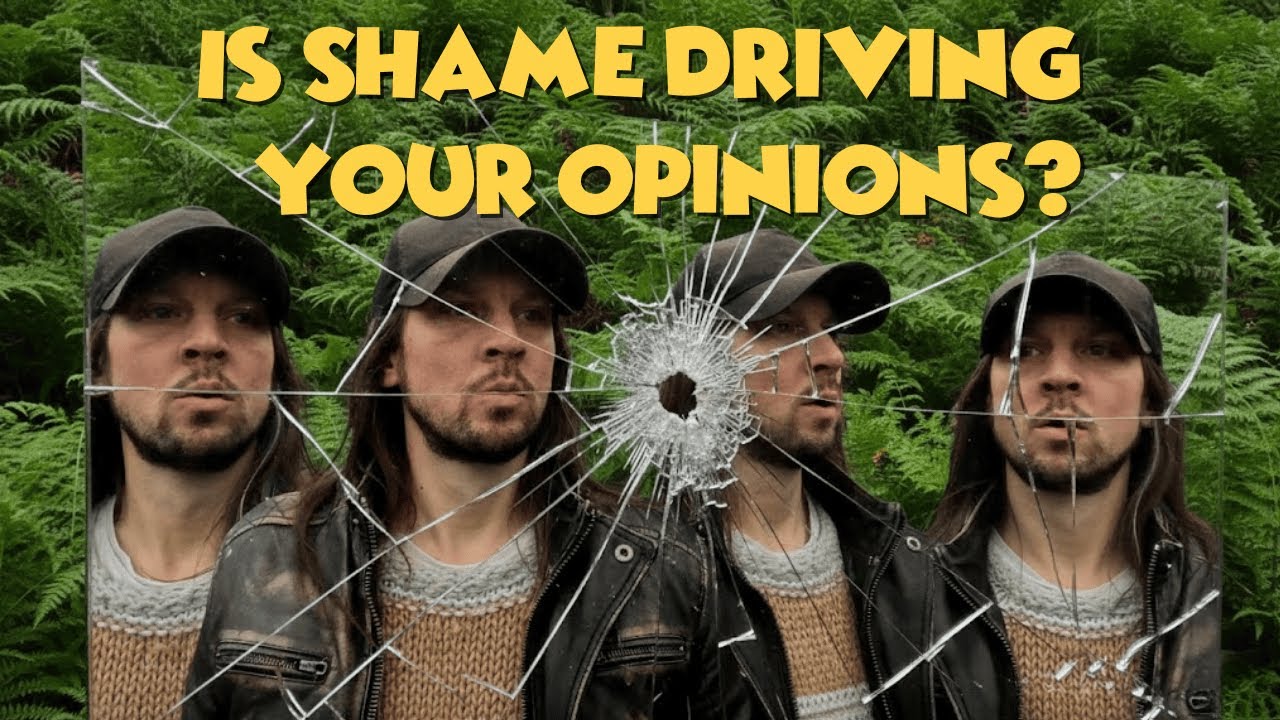
YouTube player

The Root of Ego: Shame

Here’s the part most people don’t want to look at:

The ego is always rooted in shame.

Shame isn’t just embarrassment or guilt – at a deeper level, shame is disconnection from the truth of who we are that creates the feeling that something about us is ‘wrong’, unworthy, unlovable, or unsafe and creates a false self-image aligned with this feeling (for example, “I’m the [unloveable] one“).

From that emotional core, a pattern unfolds:

Emotions → Self-Image (Ego) → Beliefs → Actions → Results

Unresolved emotional ‘stuff’ creates an unreal self-image; that self-image demands a set of supporting beliefs; those beliefs guide (or limit) our actions; those actions determine the results we get in life.

If we’re shame-driven, then our beliefs are never truly ‘ours’ because they’re just mental justifications for emotional blockages.

We don’t believe what is true in this state – we just end up believing whatever protects the identity we’ve built around our pain and our opinions about ourselves, the world, and reality become an extension of this.

Why We Believe What We Want to Believe

Most beliefs are rooted in emotional history, not in reality itself:

This is why why so many people fall into the trap of believing what they want to believe, rather than what is actually true.

This is tragic because only truth can set us free (after initially p*ssing us off and making us miserable as we let go of our cherished illusions).

A general rule in life that’s worth remembering is:

We live up to the self-image we create – not to what’s actually possible for us in reality.

For example:

If you see yourself as unworthy, you’ll unconsciously make choices that confirm that story.

If you see the world as hostile, you’ll interpret neutral situations as threats.

If you see life as something to completely control, you’ll experience constant friction and anxiety (because you’re going against how reality actually works).

Over time, these patterns generate will even generate ‘evidence’ that seems to prove the belief but what you’re really seeing is a self-fulfilling prophecy because you’re not discovering truth – you’re just filtering life through an identity.

The Real Issue: Untested Assumptions

All of this boils down to one thing:

We are walking around with untested assumptions and live according to these in a way that reinforces them.

These untested assumptions operate at three main levels:

Emotional ‘Stuff: Unresolved emotions create silent assumptions about ourselves, others, and life that show up like:

    “I’m not enough”.

    “People can’t be trusted”.

    “If I relax and give up control, everything will fall apart”.

    Self-Image: To compensate for that underlying shame, we adopt an identity.

    For example:

      The Strong One.

      The Rebellious One.

      The Nice One.

      The Independent One (The Lone Wolf).

      The [Whatever] One.

      Each identity comes with beliefs that must be defended regardless of whether they’re true or not.

      Conditioning: We also absorb conclusions our ourselves, the world, and reality from family, culture, religion, the media, and society – not because they’re actually true but because they were repeated over and over again until we started to believe them and take them on board as our own opinions.

        The bottom line is that until we excavate these layers, then we’re not living from awareness but from unreal programming.

        Real growth begins when we dig beneath our assumptions and find a foundation of acceptance and truth.

        Learning to Discern the Real from the Unreal

        If you want to grow real, you have to develop one essential capacity:

        Discernment – i.e. the ability to tell what’s real from what’s unreal.

        Here are two simple indicators:

        If You Are Holding Yourself Back, You Are Being Unreal

            Whenever you hesitate, shrink away from yourself and life, self-sabotage, or harshly judge yourself, then you’re almost always acting from an untested assumption.

            Reality doesn’t require self-rejection and the truth doesn’t demand that you abandon yourself – shame, fear, and ego always do, though.

            If You Treat “Good Things” as Ultimate, You Are Being Misled

              Money, success, relationships, approval, status, security, etc. etc. etc. – all of these are GOOD things but when you treat them as the ULTIMATE thing in your life, then they start to rule you because you compromise your integrity, betray your understanding of the truth, and live in fear of losing them.

              (Which is unreal because you can’t lose anything real).

              All of this tells you something important:

              Your beliefs about what actually matters are distorted.

              The only actual ‘ultimate’ thing is your relationship with life itself in terms of your connection to truth, your capacity for wholeness, and your ability to meet reality without resistance.

              If something is making you act in a way that pulls you away from your REALNESS in this way – through fear, control, performance, or self-betrayal – then there’s an emotional block underneath it and that block is generating an unreal assumption and set of beliefs that are screwing your life up.

              Digging Down into Unreal Beliefs and Opinions: The Five Whys

              One of the simplest and most powerful tools for uncovering your real beliefs is the Five Whys exercise.

              This is pretty simple and just involves digging into yourself and your assumptions whenever you notice a strong opinion, emotional reaction, or limitation:

              You get started by asking yourself:

              Why do I believe this?

              Then taking your answer to that question and asking:

              Why is this true?

              And then:

              Why?
              Why?
              Why?

              …until you hit the bedrock.

              If you’re honest with yourself, unreal beliefs will almost always collapse into the same place:

              Shame

              Fear of disconnection, fear of not being enough, fear of losing control, fear of not being loved – in other words: a disconnection from your own realness and an over-identification with the unreal.

              This isn’t something to judge yourself for – it’s just something to see in yourself because once you see it, you’re no longer owned by it.

              Trust: A Manual in Becoming the Void, Building Flow, and Finding Peace

              Check out Trust: A Manual in Becoming the Void, Building Flow, and Finding Peace if you’re ready to go deeper into your realness and your real life.

              From Belief & Opinions to Knowing Realness

              When you strip away untested assumptions, something remarkable happens:

              You move from the level of belief to real knowing.

              Belief is second-hand, borrowed, and can be argued with; on the other hand knowing is direct, grounded, and doesn’t need defence (because what’s true is just true).

              Knowing at this level is simply awareness of your realness – not the story of who you are but the reality of being alive, conscious, connected, and present.

              Practical Steps: Returning to What’s Real

              Here are some concrete ways to start dismantling unreal beliefs and reconnecting with the truth about yourself, the world, and reality:

              Track Emotional Charge

                Whenever a belief carries strong emotion like defensiveness, anger, fear, superiority, or a sense of collapse then it’s a signal that ego is involved more than reality actually is.

                Ask yourself:

                What am I protecting here?

                If you’re not protecting anything REAL (which never needs ‘protecting’) then you can let it go.

                Write Down Your Core Assumptions

                  Explore your assumptions about yourself, the world, and reality itself then challenge them:

                  Is this absolutely true?

                  Where did I learn this?

                  Who could I be without this belief?

                  Use the Five Whys

                    Take any limiting belief and dig until you reach the emotional root – don’t stop at intellectual answers but find something in your real experience of yourself and life.

                    Notice Where You Hold Back

                      Any area where you consistently hesitate, self-sabotage, or feel “not ready” is a doorway into an untested assumption about yourself that’s probably rooted in shame.

                      Separate Facts from Interpretations

                        Ask: “What actually happened in fact?” then “What story (fiction) did I tell about it?“.

                        The story is often ego but the facts are reality.

                        Re-Orient to the Actual Ultimate (Your Relationship With Life Itself)

                          Regularly ask yourself (multiple times a day):

                          Is this moving me towards wholeness or away from it and into fragmentation?

                          If it’s away, something unreal is running the show – not ‘You’.

                          If your beliefs and opinions are an extension of the shame inside you then you'll find yourself in a kind of living hell.

                          The Invitation: Opinions, Beliefs, and The Ego

                          Identifying with your opinions and beliefs – whether they’re real or unreal – feels safe because it gives you a sense of identity, certainty, and control in an uncertain world but it comes at a cost:

                          You don’t grow; you don’t see clearly; you don’t live fully because you’re not relating to reality – you’re relating to a filter.

                          Realness begins when you stop asking “What do I believe?” and start asking yourself “What’s actually true?”

                          This is all you need to do:

                          1. Uncover the truth
                          2. Live the truth

                          Don’t just believe what feels comfortable.

                          Don’t just create opinions based on what protects your self-image.

                          Don’t assume that life is just supposed to be an extended experience of whatever pain has become familiar to you.

                          Just focus on what’s REAL (because real always works).

                          When you find foundation of realness, something shifts:

                          You no longer need to defend opinions; you no longer need to perform an identity; you no longer need to limit your life based on borrowed conclusions.

                          Instead, you can move from belief into knowing, from fragmentation into wholeness, and from ego into realness.

                          And that is where real life begins.

                          Stay real out there,

                          Oli Anderson, Transformational Coach for Realness

                          P.S. If you’re ready to start living your real life by getting in touch with your realness and DOING something with it then book a free coaching session with me and I’ll help you help yourself to get in the zone.

                          Discipline & Realness: How to Cultivate Discipline in a REAL Way

                          ////

                          Why Choosing the Real Path of Discipline is the Only Way to Grow into Who You Actually Are

                          “Discipline” is one of those words that can either make people nod with quiet respect or recoil as if they’ve just been told to wake up at 5am and eat cold porridge for the rest of their lives.

                          For some, it’s a word that feels like freedom but for others it sounds like more of a punishment.

                          This article is about the truth about discipline, how to be real about it, and how it can change your life for good:

                          The bottom line is that if you’re serious about transformation and becoming more real, more whole, and more aligned with what actually matters to you, then discipline isn’t just a nice option – it’s absolutely essential.

                          This isn’t because life is ‘meant’ to be hard and so we have to force ourselves against it and it’s definitely not because we should be harsh with ourselves:

                          It’s because growing real requires us to move against the gravitational pull of what is easy, familiar, and unreal (a.k.a. the ego).

                          We’re going to explore what discipline actually is, what it’s not, and how you can begin to cultivate it in a way that supports your realness rather than crushing your humanity because discipline – when understood properly – is not about control but about alignment.

                          Let’s dig a little deeper:

                          Discipline is ultimately about learning to master yourself through real action.

                          Why Discipline is Unavoidable If You Want to Grow Real

                          If we want to transform our lives and grow into our realness, then it requires discipline:

                          Not the kind that comes from self-punishment (which is always driven by underlying shame) or fear, but the kind that keeps us aligned with our vision even when it’s uncomfortable, inconvenient, or emotionally challenging.

                          It’s important to understand that real growth isn’t an automatic process and so it doesn’t just happen because we keep living. Instead, it happens because we keep making better, more real choices – over and over again – especially in those moments when it would be easier not to.

                          Discipline is the key to making these REAL CHOICES because it’s what keeps us showing up for our lives when our old habits, emotions, and conditioning are pulling us in a direction we don’t really want to go in.

                          In other words, discipline is what allows us to stay oriented towards truth rather than slipping back into familiar patterns of resistance, reactivity, and fragmentation.

                          If realness is about living in alignment with what is true about ourselves, the world, and reality, then discipline is the muscle that allows us to embody that alignment in a consistent way.

                          Without discipline, realness remains a philosophy but with discipline, it becomes a way of life.

                          The Two Selves: Why Inner Conflict is Built Into Being Human

                          The reason discipline is essential is because every human being is – at the very least – two human beings in competition with one another.

                          Every wisdom tradition has named this in different ways but they all point to the same inner dynamic:

                          Some speak of the higher and lower self.

                          In the Bible, we hear of the spirit and the flesh.

                          In the philosophy of realness, we talk about realness versus ego.

                          This is not metaphorical or merely theoretical – it’s deeply experiential and we can all recognise the feeling of wanting two different things at once:

                          There’s a ‘part’ of us that knows what’s ‘right’, true, and aligned and then there’s a ‘part’ that just wants comfort, familiarity, distraction, or emotional protection.

                          Your realness is who you are when you’re aligned with the truth about yourself, the world, and reality – it’s the ‘part’ of you that can participate fully in life rather than hiding from it and that allows you to move towards wholeness, connection, and flow.

                          Your ego, by contrast, is who you’ve become conditioned to think you are because of underlying emotional ‘stuff’ like shame, guilt, and/or trauma and your fear of facing these things combined with outdated biological wiring and erroneous social programming.

                          You’re ego isn’t ‘evil’ and you can’t ‘kill’ it (because it’s not real – it’s just an idea you treat as being real) but it is reactive, defensive, and attachment-based which stops you from growing and flowing with your own life.

                          The ego is the “lower” self not because it’s bad but because it operates at a lower level of awareness:

                          It’s focused on protection, control, validation-seeking, and avoidance of the truth which is why it keeps us fragmented (which means we’re split between what we know is real and what feels emotionally safer in the moment).

                          Your realness allows you to be present in your own life but your ego pulls you away from it.

                          Why Discipline Matters in this Inner Battle

                          Understanding this distinction is crucial when we talk about discipline and how to cultivate it:

                          Your realness will consistently invite you to grow, expand, and move towards your deeper vision and so it will call you into truth, responsibility, creativity, and connection.

                          Your ego will consistently pull you back into what is familiar, emotionally comfortable, and socially conditioned even if it no longer serves you.

                          The whole point of discipline is to ensure that you take the actions and embody the qualities that support your growth into deeper realness rather than giving in to your ego and its desire to keep you in a state of fragmentation and unreality.

                          The reason this takes discipline is simple:

                          The ego runs on autopilot and so it follows habits, emotional patterns, and conditioned responses without you having to ‘do’ anything – it’s always ‘easier’ in the short-term to live from the ego because it requires no conscious effort (in the long-term it messes your life up, though, because you end up being detached from yourself and your life and living in the Void).

                          Discipline is what allows you to step out of the ego’s gravitational pull and get your real life back – it’s what enables you to interrupt old habits, question illusions, and choose differently.

                          At first, this requires effort but as you realign with reality and move back into flow, what once felt hard begins to feel natural and you develop a state of effortlessness that carries you deeper into yourself and life.

                          Discipline is not about forcing yourself to be something you’re not – it’s about returning to what you actually are.

                          What Discipline Really Is: Choosing the Real Over the Unreal From Moment to Moment

                          At its core, discipline is about consistently making the real choice over the unreal choice by focusing on what matters the most (discipline, focus, and consistency are always a winning combination).

                          That means two fundamental shifts in how you live your life:

                          1. Living by vision and principles rather than feelings

                          When you lack discipline, you allow our moment-to-moment feelings to dictate your actions:

                          If we feel tired, we stop; if we feel insecure, we hide. If we feel bored, we distract ourselves. If we feel emotional discomfort, we resist and go into hiding.

                          Discipline is not about ignoring or suppressing feelings but about CHOOSING not to be ruled by them:

                          It’s about knowing what your vision is – your values, how to embody them, who you’re becoming, what you stand for, and what’s real for you – and choosing in alignment with that, even when your emotions are pulling you in different directions.

                          Your feelings are information that change from one moment to the next but your vision is a compass that doesn’t change what it’s pointing towards (your realness).

                          Without discipline, feelings pull you off course; with discipline, feelings are acknowledged, allowed, and then integrated into conscious choice.

                          2. Living for the long term rather than the short term

                          Discipline is also about choosing what serves your future self rather than what gratifies your present self (not that you shouldn’t be present but be present with your realness, not your ego):

                          The ego lives for immediate relief, comfort, and stimulation; realness lives for meaning, growth, and alignment.

                          This doesn’t mean becoming rigid, controlling, or joyless – it just means making choices from the awareness of who you’re becoming as you go deeper into expressing your realness.

                          Sometimes, this might look small and pretty ‘ordinary’ – like choosing whole foods instead of the cream bun, going for the walk instead of scrolling, or getting up and doing the work instead of waiting for “motivation”.

                          These are all actions that are aligned with where you want to be taking yourself – they’re votes for the future version of you that you know is (even more) real.

                          Discipline is Not Suppression of Emotions or Desires

                          One of the biggest misunderstandings about discipline is that it requires denying or suppressing our emotional feelings or desires.

                          It absolutely doesn’t.

                          Suppression is always an ego strategy that creates fragmentation by pushing parts of ourselves away. It leads to emotional tension, burnout, and disconnection from our inner life.

                          Real discipline, on the other hand, is about acceptance and choice:

                          What this means is that you allow your feelings to be whatever it is that they are by listening to what they have to teach you, feeling them fully, but also recognising that you are not your feelings (they’re just something you have – not that you are) and that you can choose to act from your deepest vision and purpose.

                          Discipline essentially says:

                          “I honour what I feel but I choose what I become“,

                          This is not coldness – it’s emotional maturity.

                          From Effect to Cause: Discipline and Responsibility

                          Discipline is also about taking literal responsibility for your own growth:

                          This means moving from living in effect (“life happens to me”) to living in cause (“I participate in life and make things happen”).

                          You are not omnipotent and you can’t control everything but you’re not powerless either which means that you can always take responsibility for how you show up within what is given or presented to you.

                          In a practical way, you can take responsibility for three fundamental areas of your life that will keep you growing real:

                          1. Action

                          Discipline means knowing your vision, your goals, and your habits and acting accordingly without waiting to “feel like it” or waiting for “motivation” to magically show up out of nowhere.

                          Motivation is unreliable because feelings change but discipline is devotion to what is real (and what’s real is always real).

                          If you wait for the perfect emotional state, you’ll probably never move but if you act in alignment with your vision, your emotional state will often follow.

                          Real action is not about intensity but about consistently aiming at the things you know will take you where you want to be.

                          2. Qualities

                          Discipline is not just about what you do – it’s also about who you’re becoming.

                          If your realness is asking you to express yourself in a way that’s more compassionate, more patient, more grounded, more courageous, or more [whatever else] then discipline is about nurturing those qualities deliberately.

                          This might mean choosing presence instead of reactivity, listening instead of defending, or creating instead of consuming.

                          Qualities like this are all inner disciplines, not just behavioural ones, because they affect your relationship with yourself and life from the inside-out – you’re not just building habits; you’re shaping your character.

                          3. Skills

                          Realness must be embodied in the world and this almost always requires skills of some kind:

                          If your vision involves writing, you need to practise writing.

                          If it involves creating video content, you need to learn editing.

                          If it involves leadership, you need to develop communication and emotional intelligence.

                          Discipline is the willingness to be a beginner and then to practise, refine and to grow into the version of you that can do what you need to do.

                          The Deeper Truth: Discipline as Devotion to Reality

                          At its deepest level, discipline is knowing what you want in your realness and then making choices accordingly without suppressing your feelings but by transmuting them into real action.

                          This isn’t about becoming rigid or inhuman but about becoming integrated and whole in yourself and life:

                          When your body, your emotions, your mind, and your actions begin to move in the same direction fragmentation becomes wholeness and you’re no longer fighting yourself because you’re actually participating in life.

                          Trust: A Manual in Becoming the Void, Building Flow, and Finding Peace

                          Check out my book Trust: A Manual in Becoming the Void, Building Flow, and Finding Peace if you want to go deeper into figuring out your realness and how to flow with it.

                          How to Cultivate Discipline Without Becoming A Robot

                          Discipline doesn’t grow through self-hatred or force but through clarity, compassion, and commitment.

                          Here are some practical ways to begin embodying discipline as realness rather than robotic control freakery:

                          1. Clarify your real vision

                          Discipline without vision becomes empty willpower and so it will just take you around in circles:

                          Ask yourself some questions to start digging into your own realness and the real purpose that stems from it:

                          • Who am I becoming when I’m most real with myself and life?
                          • What does a life of wholeness look like for me?
                          • What values do I want my actions to express?

                          Write down your answers and return to them in a few days to see if you still feel the same way.

                          Let your vision become something you feel in your body, not just something you think about.

                          Discipline is essentially loyalty to your vision and you acquire that loyalty by really knowing what it is that you want.

                          Check out my free 7-day course if you want to make strides in uncovering your vision: The 7-Day Personality Transplant System Shock for Realness and Life Purpose.

                          2. Define your principles

                          Principles are the bridge between vision and action.

                          Examples might include:

                          • “I choose truth over comfort”.
                          • “I act in alignment with my long-term growth”.
                          • “I respond rather than react”.

                          When emotions are strong or decisions feel unclear, return to your principles because they always give structure to your freedom.

                          Check out this article to go deeper: Personal Practical Philosophy and Code of Conduct: The Return to Truth

                          3. Start with one real habit

                          Discipline is built through small, embodied commitments carried out consistently over time so get started by choosing one habit that clearly aligns with your realness:

                          • Daily writing
                          • Morning movement
                          • Breathwork or meditation
                          • Honest reflection
                          • Skill practice
                          • Whatever

                          Make it simple but also make it non-negotiable – not because you “have to” but because this is who you actually WANT to become.

                          4. Practise choosing in emotional discomfort

                          This is where discipline is forged:

                          When you feel resistance, boredom, fear, or self-doubt, don’t suppress it but feel it, acknowledge it, and then ask yourself:

                          “What do I choose in my realness choose here?”

                          Then choose that.

                          5. Reflect weekly

                          Once a week, review your own progress by journalling.

                          Here are some basic prompts to get you started:

                          • Where did I act from realness?
                          • Where did I default to ego?
                          • What did I learn about myself?

                          Reflection transforms discipline from mechanical effort into conscious growth and allows you to keep going deeper over time.

                          If you really want to get serious about journalling and transforming your life over the next 21 weeks then check out my Flow Builder journal.

                          Discipline is about knowing where you're going instead of being lost in your feelings.

                          The Real Reward of Discipline

                          The reward of discipline isn’t external success – though that may certainly come – no, the real reward is integration.

                          You begin to trust yourself because your actions match your values; you feel grounded because you’re no longer at war with your own potential; you experience flow because you’re aligned with what is real.

                          The FACT is that discipline doesn’t make you less huma but it does make you more whole.

                          If you want to grow real, discipline is not something you “try to have” – it’s something you become one real choice at a time.

                          Stay real out there,

                          Oli Anderson, Transformational Coach for Realness

                          P.S. If you’re ready to grow real and start committing to yourself and life through real action then book a free coaching session with me and I’ll help you put yourself in the zone.

                          Find Real Purpose and Start Taking Real Action (The Quickest Way)

                          /////

                          How to Find Real Purpose so You Can Take Real Action, Overcome Anxiety and Depression, and Live Your Actual Life

                          Most people don’t feel ‘lost’ because they lack talent, opportunity, or intelligence but because they don’t have a real purpose that they’re actually devoted to:

                          The bottom line is that without a sense of real purpose everything else becomes noise which means that life starts to feel like something that’s happening to you rather than something you’re consciously participating in.

                          Living like this just ends up making you drift, over-think, overanalyse or get distracted in endless scrolling and planning even though nothing ever truly moves.

                          This article is about cutting through the noise so you can grow real:

                          Not by giving you empty motivational slogans but by showing you how to reconnect with what’s already real in your life and start acting from there.

                          Many of the problems that haunt us in the modern world – like anxiety, depression, feeling stuck, feeling flat, or wondering what the point of it all is – are often not the fundamental problem but the symptoms of something deeper:

                          They’re all symptoms of taking ourselves out of the natural flow of our lives by losing contact with a real purpose.

                          When you have a real purpose, you’re not constantly asking, “What should I be doing with my life?” or “What’s the point in anything?” because you already know the direction you need and want to be moving in.

                          This doesn’t mean that everything is ‘easy’ or comfortable – it just means that whatever happens, you have something to orient yourself around so that you’re able to direct your FOCUS on something that actually matters to you.

                          It also means that you have a vision, goals, and habits that keep you building momentum and that you’re able to keep growing deeper into realness rather than circling inside your own head and your own ego.

                          This isn’t about inventing a dramatic identity for yourself or anything like that:

                          It’s about stripping away the ego distortion and the stories that keep you shrinking from yourself and life, taking yourself out of a state of distraction and resistance, giving up control freakery or false ‘safety’, and starting to act on what you already know to be true.

                          If you’re ready to start uncovering your purpose, then this one’s for you.

                          Let’s dig a little deeper:

                          Your real purpose isn't just about being busy - it's about having a direction.

                          Why a Lack of Real Purpose Feels So Heavy

                          When people say they feel lost, what they usually mean is that their identity has detached from any sense of real direction:

                          They may be busy, ‘successful‘ on paper, or constantly “working on themselves” and doing all kinds of deep “inner work” but if they’re not moving towards anything that actually matters to them then it’s all just a big performance and they’ll always be feeling like they’ve lost themselves to the Void.

                          The truth is that human beings simply aren’t designed for aimless motion and that we’re designed to move towards something. When that is missing, the mind and nervous system start to freak out.

                          Two of the most common symptoms of not having a real purpose are anxiety and depression:

                          Of course, these are complex experiences and can sometimes have biological causes but for many people, they are also deeply connected to how they’re choosing to live in either a real or unreal way:

                          Anxiety: Often arises because we’re taking action that supports our ego rather than our realness.

                          The ego is the image of ourselves we try to live up to and protect – for example, how we want to be seen, what we think we ‘should’ be, or the version of ourselves that feels acceptable (which means we often limit ourselves for external validation, etc.).

                          When we organise our lives around this image instead of around truth, we create constant internal friction for ourselves as our unreal self-image keeps colliding with reality itself.

                          This collision is experienced as anxiety: tension, restlessness, or a general hum of background fear.

                          Depression: Often appears when movement and growth have stalled.

                          Human beings are meant to evolve and so emotionally and psychologically, we’re closer to sharks than houseplants which is just a fancy way of saying that if we stop moving, something in us begins to die (when some breeds of shark stop moving they die).

                          When there’s no real purpose pulling us forward, we flatten and stop feeling alive:

                          This is because whenever we stop stretching into our edge (the place where our familiar identity meets reality itself), we stop feeling truly alive.

                          This is why once a real purpose is restored, many depressive symptoms begin to loosen:

                          It’s because growth returns and we’re once again in contact with something that asks something REAL of us.

                          Really, almost everything comes back to this.

                          Mentally: Much of our negative and unreal thinking exists because there’s no clear direction in our lives.

                          When there’s no sense of real purpose, the mind defaults to the past, to problems, to self-criticism, and to endless analysis.

                          This is ‘bad’ news because what we focus on grows (and so if we keep focusing on our problems, we just get more problems – if we focus on our purpose, we can grow into that instead).

                          A mind without a purpose becomes a machine for recycling what already hurts.

                          Emotionally: Blockages build because we’re not facing what’s actually happening inside ourselves.

                          A real purpose gives us a reason to face ourselves and also gives emotional pain somewhere to go which means that – instead of being something we avoid – it becomes something we can transmute into growth and action.

                          Physically: When there’s no direction, motivation collapses and so we stop looking after the basics:

                          Sleep becomes erratic; movement drops off; nutrition becomes an afterthought, etc. etc. etc.

                          A real purpose changes this because it demands energy and so you begin to care for your body – not out of vanity or discipline but because you need the capacity to show up for what matters.

                          This is why purpose is something that’s nice to have – it’s essential for structural integrity in your life:

                          Without it, the whole system starts to fragment.

                          Real Purpose Is Not a Label But a Direction

                          One of the biggest myths is that purpose is something you have to “find” in the abstract – as though it’s some magical hidden object that will just fall out of the sky one day and answer all of your questions and doubts about life.

                          People wait for clarity to hit them like a lightning bolt and to give them certainty about who they’re supposed to be but this kind of waiting is often just another form of ego avoidance that’s keeping people from REALNESS that’s already (and always) there.

                          The truth of the matter is that real purpose isn’t a job title or a personality trait but a direction of movement that’s aligned with what’s already real in you.

                          When you’re devoted to this real direction, taking action becomes much simpler because it’s no longer about protecting an image or avoiding discomfort but about moving in the only way that actually makes sense.

                          The rest of this article is about starting to figure out your purpose so you can take real action and put yourself back into the flow, instead of remaining stuck because your identity is built on habits, beliefs, and stories that no longer serve you.

                          The process of doing this doesn’t require years of endless searching.

                          In fact, you can get started in two simple steps:

                          Real Purpose Step One: Identify the Three Areas That Already Matter

                          The first step is not to invent a new life but to look at the three main areas of your life that are already important to you – even if you are not moving forward in them in the way you want.

                          These might include:

                          • Your career or contribution to the world
                          • Your relationship with yourself
                          • Your physical health and fitness
                          • A creative project
                          • Your spiritual or inner life
                          • Your relationships
                          • Something you care about in the world (your core values)
                          • Etc. Etc. Etc.

                          Don’t overthink this (and you can always change whatever three areas you focus on at a later date) – just know that if something consistently pulls at your attention, frustrates you, or feels unfinished in some way, then it matters to you and it’s worth doing more with.

                          Write down three areas that you know, honestly, are significant for you – not what should be important but what already is.

                          Real Purpose Step Two: The Six-Month Question

                          Now comes the question that cuts through all the ego distortion and BS:

                          “If I only had six months left to live, what would remain incomplete or unfinished in each of these areas?”

                          This is not a morbid exercise but a reality-based one:

                          When time feels unlimited, we drift and postpone or tell ourselves we will get to whatever it is that we really want to be doing “someday” (which is unfortunate because – as the old saying says – someday never comes).

                          This is one of the most effective ways the ego keeps us stuck: by acting as though there’ll always be more time (when in reality every day is another step towards the end).

                          When time is limited, the truth becomes obvious so in each of your three areas, ask yourself about how you’re using your time at present:

                          • What would I regret not having said, done, or created?

                          • Where have I been avoiding what I know matters?

                          • What have I been distracting myself from?

                          You have to be honest here because it’s not about impressing anyone but about seeing clearly and raising your own AWARENESS of yourself, so you can ACCEPT yourself, and then take real ACTION.

                          What you’ll find is that your real priorities reveal themselves immediately and you’ll see where your time, energy, and attention haven’t been aligned with what actually serves you.

                          Once you see this, you’ll also see see what action needs to start happening – not someday but NOW.

                          Creating Real Purpose: Why This Works

                          The question about what you’d do if you only had six months left to live bypasses the stories your ego tells you about who you are and what’s ‘reasonable’ or ‘acceptable’ and goes straight to the jugular of what’s actually real for you (when you stop hiding from yourself behind ego)..

                          We become ‘stuck’ because our identity limits our vision and causes us to act as though we have all the time in the world and we make decisions that protect comfort, familiarity, or self-image rather than truth.

                          When you remove the illusion of endless time, you step out of this unreal way of thinking because you stop living according to “What feels safe?” and start living according to “What actually matters?”.

                          This shift is the beginning of real over unreal action.

                          Going Deeper into Real Purpose: Vision, Goals, and Habits

                          Once you have clarity on what would be unfinished in those three areas, you can begin to structure your life in a way that turns insight into movement.

                          This starts by looking at each area through three powerful and interrelated lenses:

                          1. Vision: What would your things look like in a given area if you were living in alignment with what is real? Not perfection or fantasy but the clearest possible picture of what you’re moving towards and who you’re becoming.

                          2. Goals: What would need to happen over the next six to twelve months to move you meaningfully in that direction? You don’t need a long list of goals – just one or two that actually matter and will have the highest impact.

                          3. Habits: What are the small, daily or weekly actions that would make those goals inevitable if you were consistent? Which habits will allow you to grow into the person you need to become to attain your vision?

                          This is where purpose becomes embodied:

                          Vision gives you direction.

                          Goals give you structure.

                          Habits give you traction.

                          Without habits, purpose stays theoretical – when you commit to them, you start living it and can feel REAL (instead of anxious, depressed, or whatever else you don’t wanna be).

                          How Real Purpose Restores Flow

                          When you start acting from real purpose, something subtle but powerful changes:

                          Mentally, your focus shifts and so instead of obsessing over the past or your perceived flaws, your attention moves towards what you’re building.

                          Problems still exist, but they are contextualised and so they become part of a process rather than the whole story.

                          Emotionally, whatever is unresolved in you begins to surface but now it has somewhere to go.

                          Fear, shame, and resistance are no longer just internal noise and instead they become material for growth which means you can face them not because you ‘should’ but because your purpose requires it.

                          Physically, your behaviour starts to align:

                          You move more, you care about regulation, and you start to eat in a way that supports energy rather than numbing you out – not because you’re trying to be ‘disciplined’ but because you’re committed to something that demands your presence.

                          This is what it means to return to the flow – not a constant feeling of ease but a state of alignment where effort is meaningful and resistance is informative rather than paralysing.

                          Ego Versus Realness in Action

                          At the root of being ‘stuck’ in your own life is a simple conflict:

                          Are you living to protect an image or are you living in the service of what’s actually true?

                          The ego wants certainty, approval, and comfort..

                          It wants to avoid looking foolish, failing, or being exposed.

                          For all these reasons, it keeps you planning instead of doing and analysing instead of committing.

                          Realness is different:

                          It’s grounded in what’s actually happening rather than how you want things to appear.

                          This means that when you act from realness, you might feel some fear, but you’re not governed by it and you don’t let it command you because you’re not trying to be something you’re not because you’re responding to what you know is REAL in you already.

                          Anxiety often dissolves here because the internal conflict disappears as you’re no longer forcing yourself to live in a way that contradicts your own truth.

                          Depression often loosens too because movement return, you tap back into the process of growing real, and you’re no longer holding yourself in a state of stasis because your ego got in the way.

                          Real Purpose: A Practical Example

                          Imagine one of your three areas in the exercise above is your creative work:

                          Without purpose, you may think about it constantly while doing very little or you might compare yourself to others, worry about whether it’s “worth it” or wait until some magical day when you feel confident enough.

                          You ask yourself the six-month question:

                          If I had six months left, what would remain unfinished?

                          And perhaps the answer is simple:

                          I would never have shared what I know I am capable of creating.

                          This is your signal to start living up to the capabilities of your essence and to start expressing (sharing) it.

                          Your vision might be: to express something true and meaningful through your work.

                          Your goal might be: to complete and publish one real piece of work within the next three months.

                          Your habits might be: ninety minutes of focused creation five days a week – no negotiation.

                          This isn’t about becoming famous or validated but about about living in alignment with what you know matters.

                          The same logic applies to your health, your relationships, your inner life, or anything else:

                          Your real purpose isn’t abstract and it becomes concrete the moment you stop wasting your life and commit to real action.

                          Trust: A Manual in Becoming the Void, Building Flow, and Finding Peace

                          Check out my book Trust: A Manual in Becoming the Void, Building Flow, and Finding Peace if you want to devote yourself to realness and building flow through action.

                          Why Waiting for Certainty Keeps You Stuck

                          Many people delay giving themselves permission to live their real lives because they want to be ‘sure’ before they act.

                          They want the plan to be perfect, the identity to be clear, the outcome to be guaranteed but all of this is just ego disguised as ‘caution’ or ‘preparation’.

                          Realness does not offer certainty because reality itself isn’t certain – instead, it offers direction and then you learn by moving.

                          The secret is knowing that clarity always emerges through action – not before it.

                          If you’re waiting until you feel ‘ready’, you’ll probably be waiting for the rest of your life!

                          The quickest way to find your purpose is not to think harder about who you are but to start acting on what you already know matters – even if you feel afraid, uncertain, or imperfect.

                          Purpose is revealed through devotion to your realness.

                          You real purpose comes from injecting your being into your doing.

                          Real Purpose and Returning to What’s Real

                          The key point to all of this is this:

                          We become ‘stuck’ because our identity is limiting our vision and this causes us to live as though time is never going to run out and as though we can postpone what matters – as though protecting comfort is more important than honouring truth.

                          When we step away from this unreal way of thinking, we step away from ego distortion and so we stop asking how to look right and start asking how to live REAL instead.

                          When that happens, action becomes simple.

                          (Not easy…REAL).

                          If you feel lost, you do not need a new personality or anything extreme – you just need a direction that’s rooted in what already matters to you and the courage to act on it.

                          Look at the three areas of your life that are already important.

                          Ask the six-month question.

                          Tell yourself the truth about what you’ve been avoiding and then choose one concrete action that aligns you with what is real.

                          Don’t wait for motivation or certainty – just MOVE.

                          It’s how you become yourself again.

                          Stay real out there,

                          Oli Anderson, Transformational Coach for Realness

                          P.S. If you’re ready to find real purpose and to put yourself in the zone then book a free coaching session with me and I’ll help you get moving right away.

                          How the Algorithm Hijacks Your Nervous System and Ego

                          ///////

                          Staying Real in a World that’s Designed to P*ss You Off and Make You Feel Shame

                          By the time you’ve finished reading this article you should feel angry, annoyed with the world, and be carrying a faint but familiar sense of shame about yourself.

                          Oh, wait – that’s the exact opposite of how you should feel.

                          If that reaction sounds ‘normal’, though, then it’s probably because much of the online world is designed to make you feel that way.

                          Not accidentally. Not incidentally. Deliberately.

                          This article is about how algorithms hijack your nervous system and your ego by poking at your underlying shame and insecurity in order to extract the only two things they really care about: your time and your engagement.

                          It’s about how much of what we consume online is engineered not for truth, depth, or growth but for unnecessary emotional provocation and arousal. We’ll also be talking about how to break the cycle and stay REAL in a world that profits from keeping you fragmented and stuck in The Void.

                          Have you ever noticed how we now live inside a permanent atmosphere of rage, outrage, comparison, and performative certainty?

                          A world of thumbnails designed to trigger, headlines designed to polarise, and comment sections that feel more like battlegrounds than conversations?

                          None of this is a cultural accident but the mechanical outcome of how algorithms work because what gets rewarded is not what is most true or most useful but what keeps you ‘hooked‘.

                          The result is a digital ecosystem that sells your ego back to you in endless forms and then invites you to fight, defend, compare, and perform inside it.

                          This article is about stepping out of that trap so you can grow REAL and go live your actual life.

                          Let’s dig a little deeper:

                          The algorithm sucks you in by playing on the conflicts that already exist in your mind.

                          The Algorithm and How it Opens Up an Ego Vortex

                          If you spend any amount of time on social media or YouTube, there’s a very high chance that the algorithm is eventually going to try and piss you off.

                          What this means is that it’s going to present you with content designed to irritate, alarm, shame, or provoke you in some way and – if you’re not paying attention – you’ll allow this to happen and will find yourself scrolling through what I call an Ego Vortex.

                          This is not because “they” hate you or because there is some grand conspiracy (not necessarily, anyway) – it’s because algorithms are designed to maximise your time on the platform and your engagement with what you see.

                          These two things TIME and ENGAGEMENT are what get monetised and so hijacking your inner life, your nervous system, and your sense of self are simply the means to that end for many content creators.

                          The bottom line is that in order to capture your attention, the algorithm needs to arouse your emotions because calm, present, and integrated human beings do not click, comment, share, or argue very much – only the emotionally triggered ones do.

                          One of the most effective ways to achieve this goal is for creators to use RAGEBAIT:

                          This is highly-effective for farming time and engagement because most people are unconsciously shame-driven and rage is what happens when that shame is poked in some way.

                          Essentially, we all carry an emotional reservoir within us which is often filled with the accumulated residue of fear, guilt, unmet needs, suppressed anger, and unexamined beliefs and so, when ragebait squeezes us, what comes out is not created by the content itself but is a reflection of what is already there.

                          In other words, the algorithm does not insert something new into you – it simply presses on the places that are already tender in order to keep farming your time, energy, and attention (which just so happen to be the most valuable assets you have).

                          How Ragebait Pulls You In & Makes You a Slave to the Algorithm

                          There are a few consistent ways in which online content tries to pull you into the ego vortex:

                          Anger and Outrage: Which means that you’ll be given endless reasons to be furious about what ‘they’ are doing, what “people like that” believe, or what the world is supposedly becoming. These pieces rarely offer solutions, context, or complexity because their function is not to help you act in a real way but to keep you emotionally activated.

                          Fear and Threat: In the form of content that amplifies danger to your safety, your values, your family, or your future – again without any meaningful path forward (a major theme here is that all of this ragebait-y content is problem-focused, not soluton-focused). Fear is a powerful attention magnet and so when you’re afraid, you stay alert and keep watching (which is exactly what they want).

                          Moral Judgement: This is any content that gives you reasons to feel superior, righteous, or smug. In short, you’ll be shown ignorant, immoral, or corrupt people so that you can feel like one of the “good ones”. This feels good in the short-term because it masks the shame you carry but it’s profoundly addictive because the ego loves to feel clean by making others dirty.

                          “Us Versus Them”: This kind of content involves the creation of neat camps, tribes, and identities that promise belonging while giving you a ready-made target for your rage. Complexity is collapsed into slogans, people become symbols, and reality becomes a battlefield of positions rather than a shared human experience (but at least it masks your shame and keeps you watching again)!

                          These types of content aren’t just ‘bad’ because they’re feeding on your time, energy, and attention, but because they activate your fight-or-flight response:

                          Ragebait like this pushes your nervous system into sympathetic dominance (which means your nervous system can’t relax when it needs to) and when this happens your vision narrows, your capacity for nuance drops, and your desire to react impulsively increases.

                          In this state, you’re no longer responding from your REALNESS but from ego-defence:

                          This means that you end up engaging with with the content not because it is true but because it feels as though your identity is under threat.

                          This is how they ‘get’ you because when the sympathetic nervous system flares up, so does the ego and you stop relating to reality as it is and start relating to a story about who you are and what must be ‘protected‘ (even though the truth doesn’t need protection).

                          Shame, Comparison, and the Algorithm

                          Algorithms also ‘understand’ something else about human psychology which is that most people carry a deep, often unacknowledged sense of shame and insecurity. If this is prodded, time and engagement follow.

                          This is why so much online content is built around comparison, exposure, and polarisation:

                          You’re shown ‘perfect’ bodies, lifestyles, achievements, relationships, and opinions that invite you to measure yourself against an impossible standard and then you’re encouraged to feel either superior or inferior, visible or invisible, validated or rejected.

                          The emotional fuel behind all of this is the same:

                          Shame.

                          Shame is always the sense that you are not ‘enough’ as you are and that you have no choice but to perform, compete, or defend your place in the world in order to be worthy of being ‘seen’ in some way.

                          The algorithm does not need you to be miserable all the time – it only needs you to be unsettled enough to keep scrolling which is why it keeps drip-feeding you this ‘stuff’.

                          YouTube player

                          Fragmentation as a Business Model

                          In short, a vast amount of social media and online content is not helping you grow real or move towards wholeness – instead, it’s encouraging you to cling to your fragmentation and so it literally rewards and reinforces the very states that keep you unreal:

                          It keeps you in sympathetic dominance, locked in alertness and perceiving ‘threats’ all over the place that don’t even exist.

                          It trains your mind to be reactive rather than reflective.

                          It causes you to cling to your ego and your identity as something that must be defended at all costs.

                          All of this keeps you away from your Shadow Self – the unintegrated parts of yourself that require honesty, humility, and presence to face.

                          This is unfortunate because without facing the shadow, you can’t become who you really are in your realness and you can only become more skilled at performing who you think you’re ‘supposed‘ to be instead. This means that you’ll always be stuck in the Void and life will always feel unreal.

                          There is also a great deal of so-called (toxic0 “positive” content that’s just as unreal as ragebait because it bypasses rather than integrates and that tells people what their ego wants to hear in order to sustain itself – for example, that they’re already perfect without having to look at what is unresolved, that discomfort is something to be avoided rather than understood, that real transformation can be reduced to affirmations and slogans.

                          Whether the content is negative or “uplifting”, the common thread is the same if it leaves the ego intact and the nervous system dysregulated.

                          The only way forward is to TURN IT OFF.

                          This isn’t About Blaming Technology

                          None of this means that social media, YouTube, or the internet itself are bad (personally, I love the internet and my life would be nowhere near as real without it):

                          The issue is not the existence of algorithms but our unconscious relationship to them; if you’re not CONSCIOUSLY choosing what you consume, then something else is choosing for you.

                          A simple rule of thumb is this:

                          If something is repeatedly pissing you off or making you miserable, there is a good chance you are being grifted. Not necessarily for money but for attention and so your outrage (and/or shame) is the product.

                          The deeper problem is not what is on your screen but what inside you is being used as leverage and so understanding your own relationship with yourself and improving it is where you have the greatest power to get out of the Ego Vortex.

                          Purpose as the Antidote to Algorithmic Outrage and Shame

                          The truth is that people only buy into the cycle of being sucked into the Ego Vortex and becoming outraged and filled with shame when they lack purpose.

                          When you don’t know why you’re here or what you’re moving towards, your attention becomes easy to hijack and you drift into whatever is loudest, most emotional, or most validating.

                          On the other hand, when you know your purpose, your time, energy, and attention become precious and you begin to ask yourself a different question:

                          Does this help me move towards what is real for me or does it simply keep me busy being someone I am not?

                          The most powerful act of rebellion in an attention economy is not outrage but direction.

                          Trust: A Manual in Becoming the Void, Building Flow, and Finding Peace

                          Check out my book Trust: A Manual in Becoming the Void, Building Flow, and Finding Peace if you want to start growing real and regulating your nervous system for wholeness.

                          Staying REAL: Practical Steps for Overcoming Slavery to the Algorithm

                          Breaking the cycle doesn’t require anything dramatic like deleting every app or retreating from the modern world:

                          Instead, it requires conscious choice and learning to notice what’s happening in your body and mind as you engage with information so that you know when to CHOOSE from from wholeness rather than fragmented impulses and autopilot reactions to things.

                          Here are some practical ways to begin:

                          The first step is to pay attention to your nervous system.

                          The moment you feel that tightening in the chest, that rush of heat, that urge to react or prove something, pause and ask yourself what state you’re in:

                          If you’re in fight or flight, you are not seeing clearly and you’re being pulled into the Ego Vortex.

                          Second, interrogate the emotional hook by asking what the content is trying to arouse in you:

                          What is this content trying to make me feel? Anger? Fear? Superiority? Inadequacy?

                          If the primary effect is emotional arousal rather than understanding and awareness, then you’re probably being played.

                          Third, watch for shame triggers like comparison, exposure, and polarisation which all feed the same underlying wound.

                          When you notice yourself shrinking, posturing, or hardening inside, recognise that this is not about truth but about identity and outdated ego patterns (that are keeping your Shadow Self at bay).

                          Fourth, practise conscious consumption:

                          What this means is CHOOSING content that deepens your relationship with yourself and life rather than narrowing them.

                          To grow real, you need to find content that invites reflection rather than reaction and that offers context and real-world application instead of endless commentary.

                          Fifth, return to the body:

                          The ego lives in abstraction but you experience your realness by tapping into sensation.

                          This is why things like breath work, movement, cultivating stillness, and honest emotional contact with yourself all bring you out of your head and into wholeness. A regulated nervous system is far harder to manipulate and so always aim to prioritise coming from a place of regulation first and foremost.

                          Sixth, commit to your purpose:

                          Clarify what you are actually here to do, create, or embody and let this become the filter through which you use the internet.

                          The more anchored you are in your real vision, goals, and habits, the less attractive the ego vortex becomes.

                          Finally, be ruthless about what you give your attention toL

                          Your time is literally your life and so every click is a vote for the kind of world you want to live in and the kind of person you’re becoming.

                          Do you want to be REAL or unreal?

                          The algorithm is always designed to show you a mental model of life - not life itself.

                          Conclusion: Realness in a Fragmented World

                          The algorithm doesn’t want you to tap into your realness because it can’t monetise it.

                          This is why it wants your reactivity, your insecurity, your outrage, and your endless identity games because those keep you engaged.

                          This goes against the truth of life itself which is that you’re not here to be a data point but that you are here to become (even more) real.

                          Living in a real way means moving out of shame and into truth, out of fragmentation and into integration, and out of reaction and into presence.

                          It means recognising when your nervous system is being hijacked and choosing, again and again, to return to what is actually happening rather than what is being performed on your screen.

                          Stay real out there,

                          Oli Anderson, Transformational Coach for Realness

                          P.S. If you’re ready to find your purpose and grow real so you can step away from all the unreality the world is attempting to call you into then book a free coaching session with me and start taking real action.

                          Humanity Is NOT Awakening (But You Can Still Grow Real)

                          ///////

                          The Myth of Collective Awakening & How It Holds Us Back From REALNESS

                          I’m getting older which is definitely better than the alternative (as far as I can tell) but which has also given me the ability to see cultural patterns and themes that pop up, make predictions, and then never lead to anything.

                          I’ve also been involved in self-help, psychology, and so-called ‘spiritual‘ circles for long enough to see ideas come back around in new clothing, with new language, new influencers, and new promises, but always with the same emotional flavour underneath.

                          One idea that has been astonishingly consistent over the years is the notion that humanity is on the cusp of awakening:

                          As these stories like to go, we’re apparently just about to cross a tipping point where – once we do – we’ll enter a new era of abundance, purpose, harmony, peace, or whatever combination of words best expresses your personal version of the coming Golden Age.

                          Technology will save us, consciousness will expand, old systems will collapse, love will prevail and – if we can just hang on for a week or two longer – the world will finally become what it’s ‘supposed’ to be.

                          This article is about why this idea of collective ‘awakening’ is usually not wisdom at all but the ego projecting its own denial and resistance out into the world:

                          What it actually is is just a way of creating a psychological bubble to live in so that we can keep avoiding our own emotional ‘stuff’ while still feeling superior, hopeful, or special.

                          Ironically, growing real as individuals (what this whole site is about) is the only thing that can actually move any of us in the direction of what the Golden Age promises (though probably not the Golden Age itself): more peace, more purpose, more trust, more coherence – not because of some mystical collective awakening, but because people can only wake up at the level of the individual and when individuals change how they relate to themselves, it inevitably changes how they relate to one another.

                          That is where anything genuinely transformative has always begun and why accepting that REAL ALWAYS WORKS is one of the best things you can do for yourself and the world.

                          Let’s dig a little deeper:

                          Humanity doesn't magically awaken in a passive way but when individuals actively change their thinking.

                          Awakening & The Nature of a Fragmented World

                          One thing we have to understand – if we want to be honest with ourselves about reality – is that fragmentation, conflict, uncertainty, and things going ‘wrong’ are built into the fabric of human experience and always will be.

                          This isn’t because of anything demonic, cosmic, or ‘evil’ but because we are finite, embodied, emotionally conditioned creatures living on a planet of limited resources, competing needs, and radically different interpretations of the reality we’ve found ourselves sharing (though the average person treats their interpretations as reality itself).

                          We are not omniscient, we don’t and can’t see the whole picture, we don’t agree on what matters, and we don’t experience reality in the same way.

                          We’re shaped by biology, culture, trauma, family systems, and the stories we tell ourselves in order to survive which means that disagreement and misunderstanding are inevitable.

                          When you add fear, shame, status-seeking, and the human tendency to avoid emotional pain to the mix then it becomes almost miraculous that cooperation happens at all.

                          The fantasy of some coming “Golden Age” is usually based on the idea that human beings are going to become some kind of permanently enlightened species, and that the basic fabric of reality itself will somehow shift as a result and so conflict will dissolve, uncertainty will vanish, systems will finally work perfectly and life will become smooth, harmonious, and frictionless.

                          That might sound nice but it’s not the spiritual maturity it might look like – instead, it’s just the ego in a halo and the ancient belief that, one day, we’ll all be so awake that we effectively become omniscient and omnipotent: able to know everything, control everything, and therefore never be challenged by life again.

                          None of this is what ‘Awakening’ could ever really mean because the only thing we can awaken to is REALITY and reality means that we embrace and accept our limits (instead of trying to be omniscient and omnipotent because of underlying shame) so that we can work with life instead of against it.

                          These ‘Golden Age’ dreams of awakening are just what escape looks like dressed up as ‘enlightenment’.

                          The Irony of Perfection & How It Contradicts ‘Awakening’

                          The irony is that this quest for Golden Age perfection – which to the ego simply means never being confronted, threatened, or emotionally exposed – actually destroys the very qualities that make us human. in the first place:

                          Growth, creativity, intimacy, courage, humility, and compassion only exist because life is uncertain, because we don’t have total control, and because we’re forced to meet our limitations again and again until we either grow through them or accept what’s just ‘inevitable’ in our lives.

                          If everything were ‘perfect’ in the way the ego imagines, there would be no edge to reality where we can actually confront and find ourelves:

                          No aliveness, no depth, no need for trust, no need for love, even – instead of being living beings in relationship with a dynamic world; we’d simply be insulated operators inside a closed system (which is exactly what the ego is when you think about it).

                          This is why so many ideas about collective “awakening” fall apart when examined closely:

                          They’re not about meeting life as it is but are about constructing a version of reality where the ego never has to be challenged.

                          Real peace does not come from controlling the world until it stops threatening us but from accepting the truth about ourselves, the world, and reality itself so that we can build on something solid (because truth is the only thing we actually can build anything lasting on).

                          Only when we embrace that it is what it is can we move from force into flow, from fear into trust, and from fragmentation into wholeness.

                          The Golden Age of Awakening: An Ancient Pattern in Modern Language

                          The idea of a coming into a sweeping and all-encompassing awakening is not new – in fact, it’s one of the oldest narratives known to humanity (probably because human beings have always wanted to escape from the challenges that life brings).

                          Every era rediscovers it, repackages it, and announces that this time it is finally happening:

                          For example, we could argue that in the time of Jesus the language of the “Kingdom of Heaven” served a similar psychological function to modern talk of a spiritually awakened humanity and a transformed world, a new way of being, and an end to suffering as we know it.

                          The crucial difference between what Jesus said and modern ‘New Age’ (etc.) interpretations, though, is not in the promise, but in the path:

                          Jesus didn’t teach humanity how to engineer a perfect system or how to bypass its own limitations but instead taught surrender, humility, love, and the relinquishing of control. In other words, he pointed inward, not outward and spoke about a transformation of being, not a utopia of circumstances.

                          Most modern awakening narratives quietly reverse this and so they speak about inner consciousness, but they’re emotionally invested in an outer result of a world that finally behaves in a way that no longer threatens the ego (instead of growing through ego and finding a foundation of realness instead).

                          This is not transcendence but spiritualised control freakery and wishful thinking (which is why so many of the modern gurus talking about ‘awakening’ etc. talk about how you can manifest having all of your needs met without any effort and things like that).

                          When Insight the Insight of ‘Awakening’ Becomes Dogma

                          Typically, those who speak most passionately about humanity awakening are people who have had a genuine epiphany in their own lives where something has shifted, they may have seen through a layer or tow of illusion, or they’ve experienced a release from a previous identity, addiction, trauma pattern, or worldview.

                          This, of course, is great (for them) but problems start to arise when personal insight is unconsciously inflated into universal truth and so what was once a breakthrough becomes a dogmatic doctrine.

                          In these cases, the door that they walked through to return to reality (which was always there waiting because what’s real is always real) is treated as the ONLY POSSIBLE DOOR for everybody else.

                          “This is the truth”, the ego whispers to itself, “This is the way and if everyone could just see what I see, the world would be healed”.

                          That’s not awakening, though – it’s just the ego getting excited about it’s own sense of certainty.

                          It’s for this reason that so many prophecies, spiritual movements, and ideological revolutions so often become dogmatic:

                          They’re not pluralistic; they don’t honour the irreducible complexity of human life, and they only offer a single lens through which everything must be interpreted (again: a reminder that interpretations of reality are not reality).

                          In doing so, they increase fragmentation rather than dissolve it because reality itself – in our experience as human beings in fragmented bodies on a fragmented planet – is not one-dimensional.

                          Whenever someone tells you that humanity is waking up into one interpretation of the truth, what they’re really saying is that the world should conform to their own psychological resolution.

                          There’s a name for that and it’s not “The Truth”:

                          It’s projection.

                          Awakening isn’t a Natural Flow

                          The deepest problem with the idea that humanity is somehow just going to spontaneously go through an ‘awakening’ is that it contradicts how reality actually works because it treats awakening as a passive, evolutionary inevitability as though consciousness automatically matures over time simply by ‘existing’.

                          The truth of the matter, though, is that psychological and spiritual development don’t work in the same way as biological ageing and so we don’t become more integrated simply because years pass.

                          In fact, many people become more defended, more rigid, and more fearful as life confronts them with loss, limitation, and uncertainty.

                          (If consciousness automatically matured then there wouldn’t be any old people out there who are assholes).

                          If awakening were automatic, trauma would heal itself, shame would dissolve on its own, and defensive ego identities would gently fade away and lose their grip but history offers no evidence of this.

                          What we see instead is that without conscious work and EFFORT to let go of the ego and to face our own ‘stuff’, then human beings tend to repeat the same patterns of projection, domination, avoidance, and fragmentation (only with better psychological tools and coping mechanisms as they get older).

                          Real awakening is not something that just ‘happens’ to us (unless God decides to strike you with lightning or something) – it’s something we CHOOSE to do when we reach the end of what the ego can offer and decide to finally face reality rather than try to escape it.

                          In my coaching work (and in my books), this always unfolds in the same underlying structure, even though the details are unique to each person:

                          Awareness (Deconstructing the Ego): Seeing the stories, identities, and beliefs we’ve mistaken for reality itself (and our own realness).

                          Acceptance (Integrating the Shadow): Meeting the Shadow Self and all of the emotions, wounds, and disowned parts of ourselves that we have been running from.

                          Action (Trusting Ourselves and Life): Living from what is real rather than what is just safe or familiar by creating a real vision and moving towards it through real action.

                          None of this can occur without effort (though it eventually becomes effortless as we learn to get into the rhythm of our own realness instead of the ego) because it requires courage, humility, emotional honesty, and sustained practice.

                          It often begins when the old ways stop working and we are no longer able to maintain our illusions and so we can say that awakening is about letting go of untruths instead of seeking some ‘Golden Age’ that supports everything untrue that we have an emotional need to believe in.

                          Getting REAL: Looking at the World We Actually Live In

                          When we tell ourselves that humanity is simply and passively “waking up”, we stop looking honestly at the world as it is.

                          This is unfortunate because the world, at the moment, is not becoming more integrated and whole but becoming more polarised, more reactive, more identity-driven, and more psychologically fragmented.

                          Look at how politics is increasingly tribal, at how narcissism is openly rewarded (thanks, social media!), or how online culture amplifies outrage, comparison, and performative morality.

                          Look at how people have stopped tolerating uncertainty and are clinging harder to certainty and illusion — not because they’re ‘evil’ but because reality is emotionally painful when we’ve been away from it for a while and the ego’s primary function is to protect us from pain.

                          As the old saying goes, though:

                          What goes up must come down.

                          What this means is that all unreal structures – personal (ego) and collective (society and its systems) – eventually reach the end of the line and shadows rise when they can no longer be repressed.

                          Whether personal or collective any kind of crisis can force what has been avoided into consciousness and so – in this sense – periods of collapse do wake people up but, even then, awakening does not happen at the level of “humanity” but at the level of individuals who choose to meet themselves honestly when their old identities no longer hold.

                          Many others will go the other direction and cling even more tightly to what is familiar, because clinging is how the ego manages fear.

                          The long and short of all this is that there’ll never be a moment when the whole world exhales in unison and becomes enlightened because that image belongs to myth – not to life itself.

                          Why This Is Actually Good News

                          So let’s get to how you can make all this practical:

                          Even though this may all sound a little bleak it’s anything but because it places transformation back where it belongs: in your own hands.

                          The bottom line is that if we stop waiting for a collective awakening, then we’re finally free to focus on the only thing that has ever truly been within our influence which is stepping up and growing real in our own lives.

                          This means that we stop outsourcing responsibility to some imaginary future, stop spiritualising avoidance, and stop hiding in visions of what the world might become so we can start engaging with what’s actually here (which means we’re building on a foundation of reality, not empty imagination).

                          The fact is that the only way the world changes is through people who are willing to face themselves – not in theory, not in slogans, but in the nervous system, in relationships, and in the choices we make when fear, shame, and control are triggered.

                          Reality does not respond to fantasies of perfection – it responds to truth.

                          Trust: A Manual in Becoming the Void, Building Flow, and Finding Peace

                          Check out my book Trust: A Manual in Becoming the Void, Building Flow, and Finding Peace if you’re ready to go deeper into your own realness and taking action that carries you forward.

                          What Growing Real Looks Like in Real Life

                          If ‘awakening’ isn’t a collective event but an individual journey, then the question becomes a practical one:

                          What does it actually mean to live in a way that’s real?

                          Here are the foundations (based on the Awareness, Acceptance, and Action model I use with my clients):

                          1. Practise Awareness: Deconstruct the Ego

                          Begin noticing the stories you tell about yourself, the world, and about reality itself – especially the ones that justify your fear, your avoidance, or your sense of inferiority/superiority (really, the same thing).

                          Ask, repeatedly: Is this true or is this just what I need to believe to feel safe?

                          Awareness is not about self-criticism but about honesty because you can’t wake up from a story you’ve never questioned.

                          2. Cultivate Acceptance: Integrate the Shadow

                          Everything you resist within yourself will control you from the Shadow Territory:

                          Emotional pain, shame, grief, anger, vulnerability – none of these things are obstacles to awakening but are the doorway to it so instead of trying to transcend your humanity, learn to embrace it.

                          Acceptance doesn’t mean indulgence but just means allowing what is actually there to be seen, felt, and understood so that it no longer needs to be defended against.

                          3. Take Real Action: Trust Yourself and Life

                          Insight without embodiment is just another form of escape and so Real Action means making choices aligned with what you know to be true, even when it is uncomfortable.

                          This might include things like speaking honestly, setting boundaries, or letting go of identities that no longer fit your relationship with yourself and reality.

                          Trust is not blind faith in a perfect outcome but the willingness to meet reality without armour because you know how to do your best (trust yourself) and forget the rest (trust life).

                          4. Relate to Others Without Dogma

                          There is no single ‘correct’ way to be human which is why we can say that growth is pluralistic:

                          When you stop trying to convert others to your interpretation of the truth and start meeting them as they are, fragmentation dissolves naturally.

                          5. Measure Progress by Integration, Not Ideals

                          You’re not becoming more awake because your beliefs sound more spiritual – you’re becoming more awake when you’re less reactive, more present, more honest, and more capable of love in the midst of uncertainty.

                          That’s honestly the only metric that matters.

                          There is no final and concrete way for mass awakening. There is only individuals tuning into reality.

                          The Final Word on ‘Awakening’: The End of the Illusion Is the Beginning of Something Real

                          Humanity is NOT awakening in the way the myths and ideals might suggest:

                          There will never be a final tipping point where all conflict dissolves and the world becomes psychologically seamless.

                          The story of ‘collective awakening’ isn’t wrong because it is too hopeful; it’s wrong because it is rooted in the ego’s refusal to accept the nature of being human in the first place.

                          Luckily, something far more powerful is always available: the possibility that you can wake up to what is real in your own life.

                          When enough individuals stop hiding from themselves, stop projecting their denial onto the future, and start living from truth rather than fear, the world changes in the only way it ever can which is from the inside out.

                          Not through a Golden Age.

                          Through realness.

                          Stay real out there,

                          Oli Anderson, Transformational Coach for Realness

                          P.S. If you’re ready to go through the stages of Awareness, Acceptance, and Action so that you can live your real life then book a free coaching session with me and I’ll help you get moving right away.

                          Remember to Forget: Memory Isn’t Truth

                          //////

                          Remember to Forget the Unreal So You Can Remember Your Realness (and Take Real Action)

                          We live in a culture obsessed with remembering the past as though our memories are the actual truth:

                          Photographs, journals, social media timelines – everywhere you look, you’re being reminded to remember even though, paradoxically, the most important memories are often the ones you’ve long forgotten because of your programming and conditioning, while the things you cling to most – like the way that you’ve been ‘wronged’ by the world, your failures, and the stories you tell yourself about yourself – are the ones you really need to let go of.

                          This article is about a simple but potentially life-changing idea:

                          Memory is not truth.

                          What we remember is filtered, distorted, and frequently hijacked by the ego and until we learn to forget the unreal, we’ll always remain separated from our realness.

                          Let’s dig a little deeper:

                          Learning to remember to forget is the best way to lighten your load.

                          Remember to Forget the Unreal and Focus On Your REALNESS

                          A simple but powerful step that we can take on our journey into growing real is to take the radical act of remembering to forget.

                          This may sound contradictory but it is actually profoundly simple:

                          Most of us need to forget a great deal of what we remember whilst simultaneously remembering a great deal of what we have forgotten.

                          The bottom line is that – for many of us – our minds are cluttered with old programming, egoic conditioning, and the residue of shame, guilt, and trauma (the Unholy Trinity).

                          These are the things that make us see ourselves as less than we truly are, or – even worse – to see ourselves as only a story or character we inhabit rather than an actual living presence in the world.

                          When I look back, I can remember myself in my twenties imagining that I was some kind of brooding poet type – even though I don’t even like poetry that much (go figure).

                          Looking back now, it’s clear I wasn’t cultivating depth or artistry but that I was replaying memories that no longer served me and telling stories about myself to myself that reinforced my shame and discomfort (instead of stepping up and growing through it).

                          Over the years, through conscious self-reflection and shadow work, I started to remember what was actually real instead.

                          The difference has honestly been staggering and now life – after a lot of effort to battle my own illusions – feels effortless in a way it never did before.

                          I’m no longer burdened by the memories and narratives that caused me to shrink away from myself and life and instead I’m present and actually real.

                          It’s mainly because I learned to remember to forget.

                          The Trap of Unreal Memories

                          So many of us are making ourselves miserable by holding on to memories that do nothing for us or the world:

                          We remember people who ‘wronged’ us, keeping score long after the offence is irrelevant; we remember our ‘failures’ – using them as evidence to give up before the next attempt; we remember moments of powerlessness and allow them to define our identity.

                          These memories are not just harmless reflections of the past – they’re active barriers to presence that prevent us from stepping into our potential and living fully in the now.

                          We get ‘stuck’ and start to doubt ourselves and life (instead of trusting both) because the mind, when caught in these loops, becomes a prison, replaying the same unreality until it feels like the truth.

                          Of course, the past is undeniably real and so trauma, loss, and disappointment leave imprints on our nervous system and, sometimes, these experiences literally freeze us up – leaving us trapped in emotional patterns long after the events themselves have passed.

                          Here’s the crucial point, though:

                          While we can’t erase what happened, we can CHOOSE how we remember it and can make a conscious choice to stop feeding the ego’s distortions and start engaging with the reality that empowers us instead of illusions that cause us to start fading away.

                          Practical Memory Shifts to Remember to Forget

                          The act of learning to remember to forget is not about denial or erasure but about conscious redirection.

                          Take a look at these examples:

                          • Instead of remembering who ‘wronged you, remember that you have the capacity to heal relationships or to walk away with dignity.

                          • Instead of remembering your ‘failures‘, remember the lessons they taught you and the courage it took to continue. Try again or try the next thing.

                          • Instead of remembering your powerlessness, remember all the times you felt real and actually alive.

                          The golden rule that’s always worth remembering (literally always) is simple:

                          What’s real is always real.

                          This truth about life doesn’t depend on the ego and its distortions because the ego is the opposite of reality and so the only thing worth remembering is reality itself – the parts of you and life that are untainted by fear, shame, and the repetitive stories of the mind.

                          The Ego, Memory, and ‘Stuckness’

                          The ego thrives on unreal memories that keep us locked within ourselves:

                          This is why it uses our recollections to create a fragmented sense of self that is separate, inadequate, and reactive.

                          When we’re lost in the past like this, we’re not actually living – we’re performing and so we endlessly relive episodes of shame, nostalgia, resentment, or regret, believing these stories define us.

                          In doing so, we disconnect from what is real and immutable within us (because what’s real is always real).

                          When we forget reality, we become stuck and so the choices that we make become reactions to memory rather than conscious engagement with life.

                          The best way to break free, is to train ourselves to reclaim control over two things:

                          Our thoughts and our focus.

                          Let’s take a quick look at both of these now:

                          Directing Your Thoughts

                          Most people assume their thoughts are real, inevitable, or trustworthy but the truth is that most thoughts are just repetitive, recycled loops of old programming (some studies suggest that 80% of what the average person thinks every day is the same thing).

                          For this reason, observing thoughts without identifying with them is the first step to reclaiming your mental freedom.

                          This is because when you learn to do this, you learn to create a space to CHOOSE your response rather than automatically reacting.

                          Once you observe, you can begin directing your thoughts into your real life instead of the life that’s just an extension of your old emotional ‘stuff’ and your conditioning.

                          Start to question your own thoughts:

                          Which thoughts serve my realness? Which thoughts are echoing a past I no longer need? Etc.

                          By choosing what to entertain and what to release, you uncover the real impulses waiting quietly beneath the noise (impulses the ego had buried in shadow territory) so you can actually start acting and living in a REAL way.

                          (My free Thought Log tool can really help you with this step: Hamster Wheel Thought Log).

                          Directing Your Focus

                          Focus is equally powerful because – as the old saying says – where attention goes, energy flows (or, the way I like to say it to my clients: what you focus on grows – if you focus on the problem you get more problem).

                          There are two crucial dimensions for directing focus:

                          1. Focus on solutions, not problems: Problems are only obstacles if they dominate your attention so learn to shift focus to actionable steps and opportunities instead of feeding frustration.

                          2. Focus on your vision, not the past: Being present allows you to navigate the landscape of life effectively, and so – when you can engage fully with the now – you can make choices that bridge today with your desired future.

                          Having a vision still requires presence because without being fully present, you can’t navigate towards your goals and without some kind of direction, there’s nothing to shift your focus onto.

                          YouTube player

                          Practical Steps for Remembering Your Realness

                          The path from being lost in the past to stepping fully into realness is straightforward, but it requires practice and – most importantly – real action.

                          Here are some actionable steps so you can take this article off of the page (screen) and into your life:

                          1. Regulate Your Nervous System

                          Your ability to choose and respond rather than react on autopilot (based on old programming etc.) is ultimately dependent on your nervous system.

                          This is because trauma, stress, or chronic tension keep you locked in sympathetic dominance (fight-or-flight mode) and so you just see ‘threats’ everywhere which stop you from acting from your realness.

                          Techniques for regulation include:

                          • Breathwork: Deep, slow breathing reduces physiological stress and restores clarity (especially nose breathing which is how we’re designed to breath).

                          • Nature immersion: Walking barefoot on the grass, swimming in water, breathing fresh air, or simply sitting under trees reconnects you to reality.

                          • Yoga or gentle movement: Helps release stored tension and integrates body awareness (especially yin yoga).

                          A regulated nervous system creates a foundation for conscious memory work which allows you to observe without being overwhelmed, choose without distortion, and act without ego interference.

                          2. Clarify Your Vision

                          A vision is more than just a ‘wish’ or something that you’d ‘like’ from your life – it’s a living, actionable map of your desired future.

                          The short-version of getting started is start by:

                          • Defining a vision based around your values that excites and challenges you.

                          • Breaking it down into measurable goals.

                          • Establishing daily habits that align with these goals.

                          With vision as your compass, past memories no longer dictate your journey – instead, they become resources, lessons, or curiosities instead of obstacles.

                          My free 7-day course will help you remember to forget and to gain clarity on your vision: The 7-Day Personality Transplant System Shock for Realness & Life Purpose.

                          3. Practice Memory Discipline

                          Memory can be trained, just like any other skill and the best approach is to start small:

                          • Each morning, recall one real, empowering experience from your past and carry its energy into the day.

                          • When negative memories arise, ask yourself: Does remembering this serve me? If not, let it go (the Sedona Method is great for this).

                          • Before bed, reflect on one thing you’re grateful for in the present and one step that you took toward your vision.

                          Over time, this creates a default orientation toward reality rather than egoic distortion.

                          4. Step into Cause, Not Effect

                          Being real means choosing to operate from a space of CAUSE OVER EFFECT:

                          Effect is reactive and driven by the past and external circumstances but Cause is creative and rooted in presence, clarity, and aligned action.

                          In Effect life “just happens” to you but in Cause you can play an active role in making things happen (whilst also accepting that you can’t control everything).

                          When you forget what’s unreal and remember what’s real, you step into cause which means that you act from your realness, rather than the stories that have been projected onto you.

                          Personal Revolutions: A Short Course in Realness

                          Check out Personal Revolutions: A Short Course in Realness if you want to step into your realness and let go of the effects of the ego distorting the past.

                          The Transformative Power of Learning to Remember to Forget

                          The process of learning to remember to forget isn’t just an intellectual exercise but something that can actually transform your life:

                          You’ll stop carrying unnecessary baggage; you’ll stop repeating patterns that don’t serve your growth; you’ll open space for joy, creativity, and deep connection.

                          Realness is presence, clarity, and choice:

                          By consciously forgetting what binds you to ego and remembering what aligns with reality, you step fully into your own power so you’ll no longer act not out of fear or habit, but out of alignment with what is always true.

                          When you make this shift, something: extraordinary happens:

                          Life flows with less friction, relationships become more authentic, challenges become opportunities, and the person you see in the mirror isn’t just a collection of memories, but a living embodiment of possibility, courage, and truth.

                          Remember to forget so that you can find freedom.

                          Remember to Forget: The Final Word

                          Memory is NOT truth:

                          It’s a tool that can either enslave us to ego distortion or guide us toward realness.

                          To live our real lives, we need to cultivate the art of remembering to forget which means letting go of the memories that no longer serve and reclaiming the ones that reconnect us to what is real.

                          Forget the grudges, forget the failures, forget the times you felt powerless, and instead CHOOSE to remember the lessons, the successes, the strength, and the presence that never left (because what’s real is always real).

                          Regulate your nervous system, clarify your vision, direct your thoughts and focus, and step into cause.

                          In doing so, you don’t merely survive your way through life but you become AWARE of your actual life.

                          The bottom line is that the world may try to distort your memories but you have the power to reclaim them because you have the power to remember what matters and forget what doesn’t.

                          Stay real out there,

                          Oli Anderson, Transformational Coach for Realness

                          P.S. If you’re ready to forget the effects of the past and to start remembering your realness so you can step into your potential then book a free coaching session with me and I’ll help you get moving.

                          The Projection Cycle: Why Relationships Get ‘Stuck’ and How to Break Free

                          //////

                          If You Keep Hitting a Brick Wall in Your Relationship Then You Might Be Stuck in The Projection Cycle

                          Most people in relationships don’t realise they’re trapped in a cycle of projection that causes them to keep hitting the same old brick walls and to stop them from growing into intimacy:

                          They might think they’re having arguments; they might think they’re dealing with communication issues; they might think that their partner is the problem – or even that they are – but what’s really happening most of the time is something more subtle, more mechanical, and far more predictable.

                          It’s a projection cycle.

                          Once you see this cycle in your relationship, you can’t unsee it (which is great news because ‘Awareness’ is always the first step to making it through the process of true transformation).

                          Even better, once you understand how it works, you can finally stop trying to ‘fix’ people, defend yourself, or think your way out of emotional chaos and instead learn how to stay real, grounded, and in motion even when someone else isn’t and they’re constantly projecting onto you.

                          This article will walk you through the Projection Cycle so that you know:

                          • What projection actually is (in real, practical terms and not psychology jargon).

                          • Why different people react differently to the exact same situation.

                          • The stages of the Projection Cycle.

                          • The critical choice point where the Projection Cycle can be broken and you can set energetic boundaries.

                          • How to maintain your real energy without blaming, suppressing, or disengaging from life.

                          • Practical steps you can apply immediately with or without your partner’s participation to break the cycle and keep growing real.

                          Let’s dig a little deeper:

                          The Projection Cycle reminds us that how we react to others and the world shows what's going on inside ourselves.

                          The Emotional Reservoir: Why “The Juice” Matters

                          Every human being carries an underlying emotional reservoir that drives their reactions to the things that happen in their lives .

                          This reservoir is made up of:

                          Most of the time, this reservoir stays beneath the surface and so people can appear to be calm, reasonable, and regulated but when pressure is applied – when someone is criticised, challenged, ignored, misunderstood, or threatened, etc. – then the reservoir gets squeezed.

                          And whatever comes out when we get squeezed is the juice that shows what’s really going on inside ourselves.

                          This isn’t just a nice theory but an observable reality.

                          We know that it’s true because different people react completely differently to the same event – for example, one person shrugs something off where another explodes or one person gets curious when another shuts down or goes into ‘attack’ mode.

                          The stimulus is identical but the reaction isn’t which tells us something important:

                          What comes out says more about what’s inside than about whatever appeared to cause it on the outside.

                          This is one of the most important and impactful ways for us to learn about the inner worlds of ourselves and others – not by what people do and say when they’re calm but by what leaks out when they’re under pressure.

                          Projection isn’t Who Somebody Actually Is – It’s Their Unreality

                          When someone is activated/triggered and projecting, you are not seeing their realness but something that’s actually unreal.

                          What you’re seeing is:

                          • Their conditioning.

                          • Their defensive strategies.

                          • Their coping mechanisms.

                          • The places where they’re resisting themselves and life.

                          • Their unresolved emotional ‘stuff’.

                          • Their unreal programming.

                          • Etc. etc. etc.

                          This distinction is crucial because it shows us that projection is not “the truth finally coming out” or “how they really feel about you” – in fact, it’s not a reliable description of reality at all: it’s just the nervous system trying to regulate itself externally.

                          A useful thing to know here is that in exactly the same way you can learn to step back from your own thoughts, reactions, and emotional stories and recognise “this isn’t the real me” is something that you you can do with the projections of other people.

                          This is not about dismissing them or anything like that – it’s just about refusing to mistake unreality for truth.

                          This is where the Projection Cycle comes in:

                          The Projection Cycle can help you to break repeating patterns in your relationships so you can grow real.

                          The Projection Cycle: A Step-By-Step Guide

                          Let’s walk through the stages of the cycle that traps so many couples (sometimes for the whole of their time together):

                          Stage 1: Person A is grounded, regulated, and in flow

                          At the start of the cycle Person A is relatively calm and present which means that they’re in their body and not just they’re head, they’re in flow and taking real action, and they’re connected to their realness and vision.

                          Nothing dramatic is happening…yet.

                          This matters, because it shows something that can sometimes be uncomfortable to face:

                          The cycle doesn’t start because both people are dysregulated – it starts because one person is carrying a reservoir that hasn’t been dealt with to a much deeper degree (everybody has at least some ‘reservoir’).

                          Stage 2: Person B gets activated and projects their reservoir

                          What happens next is that something triggers Person B.

                          This could literally be anything:

                          • A comment
                          • A look
                          • A boundary
                          • A perceived slight
                          • Or something that has nothing to do with Person A at all
                          • Etc. etc. etc.

                          Whatever happens, pressure is applied, the reservoir gets squeezed and the ‘juice’ comes out but – instead of staying with the sensation internally – Person B projects it outward onto Person A.

                          This can look like all sorts of things but usually things like:

                          • Accusations
                          • Blame
                          • Emotional intensity
                          • Rewriting history
                          • Making Person A responsible for how they feel

                          At this stage, Person B genuinely experiences the projection as true so they’re not being manipulative in a calculated way – they’re just dysregulated and seeing ‘threat’s where actual threats don’t even exist (because of the way their reservoir is poking at them and activating the nervous system’s fight or flight response).

                          Stage 3: Person A gets triggered and hijacked by old patterns

                          (This stage is the energy point where Person A has the most power to be able to break the cycle and shift their energy into realness over ego and old patterns)

                          This is the critical moment – it’s where Person A, who was grounded a moment ago, now feels:

                          • A surge of emotion
                          • The urge to defend, explain, correct, or fight back
                          • Old shame, anger, or fear being activated

                          In other words, their nervous system gets hijacked.

                          The key key insight here is that being ‘hijacked’ like this isn’t a failure (because it’s an automatic survival instinct that we have no control over) – it’s just ENERGY.

                          Stage 3 is where the most power exists to change things and break the cycle:

                          Not because Person A should “do better” but because this is the moment before the energy is discharged back into the cycle.

                          In other words, it’s the CHOICE POINT where Person A can step into cause instead of effect and make a choice for realness over automatic patterns and the same old cycle as always.

                          If Person A doesn’t make the choice for realness, the cycle just continues and goes onto the next stage:

                          Stage 4: Person B blames Person A for the reaction

                          Once Person A reacts and feeds into the projection of Person B – even subtly – Person B now has confirmation that their projection is real (when it’s actually unreal and just an extension of their own emotional reservoir).

                          Feeling validated by Person A’s reaction, Person B will usually hand responsibility for their own emotional ‘stuff’ over to Person A (when it’s not theirs to take):

                          “See? This is your fault”.


                          “This is why I feel like this”.


                          “This proves what I was saying”.

                          The projection solidifies into a story that both people then end up trying to live within the context of (even though it’s mainly unreal so will just bring friction, frustration, and misery).

                          Stage 5: Both people escalate, collapse, or withdraw

                          The situation at this stage of the cycle is that both nervous systems are now dysregulated and so arguments escalate, someone shuts down, someone (probably) leaves the room, and resentment builds.

                          Eventually, distance or exhaustion restores regulation but nothing has actually been resolved and so the the reservoirs remains untouched and the cycle resets and waits for both people to hop on for another ride of the merry-go-round.

                          Breaking the Projection Cycle - free PDF guide for realness.
                          Click here to open up a (free) PDF visual guide about breaking the projection cycle.

                          Why Arguing Never Breaks the Projection Cycle

                          Most people try to fix this cycle at the level of information instead of energy (this is really important to understand).

                          This looks like arguing facts, clarifying intentions, explaining themselves, trying to be understood etc. but this never works at a deep level that can actually change things because projection isn’t a ‘misunderstanding’ problem but an energy misdirection problem.

                          You cannot reason someone out of a nervous system state they didn’t reason themselves into and you can’t stay real while donating your own regulation to someone else.

                          The Exit Strategy: Staying Real at Stage 3

                          The way out of the Projection Cycle is not suppression, emotional numbing, or even just a good old-fashioned attempt to try and “be the bigger person”.

                          The only way out is to find a REAL DIRECTION and take it.

                          The work here at Stage 3 is simple but not necessarily easy:

                          Don’t project energy back at whoever is projecting on you and redirect it into real action instead.

                          This means learning to:

                          • Feel activation or having your own emotional reservoir ‘triggered’ without discharging it at your partner.

                          • Stop feeding the projection with your time, energy, and attention.

                          • Withdraw from unreality without withdrawing from life (“Gimme something real or GTFO“)>

                          This is acceptance in its realest form because acceptance is not about approval or what we might ‘like’ or ‘dislike’ – it’s about seeing what’s real or unreal without adding fuel to the fire that the unreality causes.

                          How to Stop Feeding Into the Projection Cycle (Without Blaming Anyone)

                          When you stop feeding into the Projection Cycle, a few things can finally start to change:

                          You stop:

                          • Defending yourself.

                          • Explaining your character and how you’ve been mischaracterised (even if you have).

                          • Trying to correct their (mis)perception in the moment.

                          • Matching emotional intensity.

                          Instead, you can finally:

                          • Stop and pause so you can feel whatever you’re feeling without ‘stories’ added to the sensations.

                          • Internally refuse the false task you’ve been landed with (“I don’t need to ‘fix’ this”).

                          • Name reality silently (“This is unreal activation – not truth”).

                          • Redirect your energy into movement and purpose by making real choices over unreal ones.

                          This doesn’t require lectures or diagnoses that come with trying to give more information to explain your case – actually, it often requires less talking, not more, so that you can focus on staying in your own real energy instead.

                          Real Action: Where to Actually Direct Your Energy

                          Energy cannot disappear and so if it isn’t projected, it must be directed – this is where realness comes in and brings it all together.

                          Real action in this case might look like:

                          • Moving your body
                          • Training
                          • Walking
                          • Creating
                          • Working
                          • Writing
                          • Building something that matters

                          It can literally be anything as long as it comes from a real place and allows purpose (your deepening of your own relationship with life) to become the container for energy – not your partner and their projections.

                          Over time, something interesting happens:

                          Either:

                          • The other person begins to self-regulate.

                            Or:
                          • The dynamic loses its grip on you

                          Either way, reality restructures the relationship without force and both of you start flowing more.

                          Talking to Your Partner About the Cycle

                          If your partner is open, it can help to talk about this and show them the Projection Cycle diagram above (but only do this if you can come from a grounded place when you do).

                          Keep this really simple if you do decide to go down this road:

                          • Talk about the pattern and not their behaviour (so they don’t feel blamed and it causes their projections to flare up).

                          • Use “when we” rather than “when you” etc.

                          • Emphasise that this isn’t about blame but about mutual growth.

                          • Share your intention to take responsibility for your own regulation.

                          An example of how this might go is something like::

                          “I’ve noticed we get caught in a loop where emotions escalate and neither of us feels heard – I’m working on not reacting from that place and staying grounded instead“.

                          If they’re not open, that’s okay because this work doesn’t depend on mutual insight – it just depends on you doing what you can always control which is stepping into your own realness.

                          The Co-Regulation Codex workbook leaning against a stone

                          If you and your partner keep repeating the same projection cycle, the Co-Regulation Codex for Couples gives you 30 days to calm your nervous systems and start owning what you project onto each other.

                          Practical Steps to Maintain and Protect Your Real Energy

                          Here’s how to start breaking the cycle immediately:

                          1. Train your AWARENESS: Notice nervous system activation early and how it shows up in your body: Tight chest. Jaw tension. Urge to explain. Etc.

                          2. Separate sensation from action: Feeling something doesn’t mean acting it out. You can actually learn to surf the waves without doing anything at all (see this article for more about this: Emotional Mastery Without the BS).

                          3. Limit verbal output under activation: When you’re activated/triggered you fewer words and speak at a slower pace with a neutral tone.

                          4. Redirect energy daily: Your purpose isn’t optional – it’s regulatory and protects your energetic boundaries so always so on purpose as much as possible (this article will help you with this: The Train: A Metaphor for the Good Life and Growing Real).

                          5. Practise staying real outside conflict: Regulation is built before it’s tested so ensure you have healthy habits etc. that give you a foundation of regulation (things like yin yoga and regular nose breathing etc).

                          6. Let reality do the teaching: You don’t need to convince anyone so don’t even try – just know that your steadiness changes the field so focus on steadily growing more real.
                          The Projection Cycle can help you overcome automatic reactions and grow real.

                          The Projection Cycle: The Final Word

                          This isn’t about ‘fixing’ your relationship and making it perfect – it’s about stepping away from unreality in your relationship as much as possible.

                          When you stop feeding projection, you stop living inside other people’s emotional weather and you reclaim your time, energy, and attention so you can focus on your purpose and growth.

                          From this place, relationships either:

                          • Become more real.


                            Or:

                          • Reveal that they were built on unreality all along.

                          Either way, you win because REAL ALWAYS WORKS.

                          Stay real out there,

                          Oli Anderson, Transformational Coach for Realness

                          P.S. If you’re ready to break cycles of unreality in your own life and start growing real then book a free coaching session with me and I’ll help you to take real action and flip the script.

                          More Confidence? You Don’t Need It

                          ////

                          You Don’t Need More Confidence – You Need More Realness

                          Many years ago, when I was but a wee whippersnapper, I came second place in a Michael Jackson dancing competition at the Blackpool Tower:

                          You might say that this wasn’t exactly the pinnacle of human success – I only came second, after all – but at the time, it sure felt like a big deal and I remember the resounding sense of pride I felt as I went about the rest of my day (and here I am still talking about it 30 years later or whatever it is).

                          When I look back, what struck me most wasn’t the medal or the applause but the sheer simplicity of the moment:

                          They called us kids up on stage and off I ran – no hesitation, no overthinking, just getting up, showing up, dancing my little heart out, and then leaving the stage with a trophy that didn’t even matter that much.

                          I suppose I could say that this experience taught me something crucial about confidence:

                          You don’t need more confidence before you’re ready to act – all you need is to show up and do the thing.

                          The problem for most of us, as adults, is that we’ve complicated it:

                          We’ve been told that confidence is something you “build” internally – a kind of magical substance that you need to conjure up before stepping into the world in a real way.

                          The truth is far simpler, though:

                          Real confidence is not a precondition for but the by-product of real action.

                          Let’s dig a little deeper:

                          You get more confidence by acting from where you are and tapping into the process of growing real.

                          Waiting for More Confidence is Waiting for Permission to Live (You Don’t Need It)

                          So many people spend their whole lives waiting for ‘more’ confidence before they actually allow themselves to show up in their own lives:

                          They wait to be ‘healed’ enough, ‘skilled’ enough, ‘attractive’ enough, ‘educated’ enough, ‘emotionally evolved‘ enough or [whatever else you can think of].

                          This isn’t ambition, though – it’s the ego at work and it creates an imaginary state of perfection that can never exist which is the reason most people never take real action.

                          The main reason that people get ‘stuck’ like this is because they’re judging themselves because of underlying shame:

                          When you judge yourself, you project that judgement onto an imaginary future and so you create a mental scenario where – if only you were finally ‘enough’ – you could step forward without fear.

                          The only problem with this approach is that this imaginary future is exactly that: an imaginary mirage that’s never gonna meet you in life.

                          The truth is that reality isn’t waiting for you to get ‘ready’ because it’s already moving and constantly changing which means that you need to keep moving and changing too:

                          Even if you somehow reached your ideal version of ‘confidence’, ‘healing’, or [‘whatever else’], life would shift again, presenting new flaws, challenges, or mistakes to overcome and so waiting for ‘perfect’ conditions is a literally always an ego trap.

                          This is the subtle tyranny of ego:

                          It convinces you that confidence is external and that it’s something you must acquire rather than something that grows through experience.

                          In reality, confidence is like a muscle, and like any muscle, it grows when you use it – not when you imagine using it, not when you theorise about it, and certainly not when you overthink it.

                          It something that can only grow when you ACT.

                          Real Confidence: Stop Adding, Start Unlearning

                          Here’s the paradox at the heart of the matter:

                          The thing that keeps you blocked and unable to show up in your own life isn’t a lack of confidence but the constant self-judgement and the internalised “you’re not good enough” messages that keep you frozen.

                          People think they need to “get more confidence”, but what they really need to do is stop judging themselves.

                          Judgement is like a mental barrier that sits between you and the real action that you need to take:

                          When you’re judging yourself, you’re not present – instead, you’re projecting ego into the future and telling yourself that unless you reach some imaginary state, you’re doomed to fail.

                          Removing judgement isn’t about building something new but about unlearning all the unreal beliefs and tendencies that keep you shrinking instead of showing up.

                          In short, confidence – really just your REALNESS – emerges naturally as a result of releasing all the dead weight you’ve been carrying and then tapping into the courage to act anyway.

                          Reality Doesn’t Wait So Why Do You?

                          The obsession with an idealised state of being is one of the most subtle ways we sabotage ourselves.

                          We tell ourselves things like:

                          • “I’ll start dating when I feel ‘healed‘ enough”.

                          • “I’ll start my business when I’m ‘confident’ enough”.

                          • “I’ll share my creative work when I’m ‘skilled’ enough”.

                          But despite telling ourselves these things, reality inexorably moves on anyway:

                          Like I said, even if you somehow “arrived” at all those imagined markers of perfection, life would continue to present new challenges, flaws, and opportunities to grow anyway and so waiting for some ‘perfect’, never-changing and static state of being is like standing on a shoreline waiting for the tide to stay put so you can step in to the ocean…life just doesn’t work that way.

                          The alternative is to embrace the realness of radical acceptance:

                          Recognising that you’re already ‘enough’ (whatever that even means) to get started and that the process of showing up is where real growth – and real confidence – always comes from.

                          YouTube player

                          Learning by Doing

                          This is where the principle of learning by doing becomes life-changing and indispensable:

                          Confidence grows not by thinking, not by reading self-help books, and certainly not by “faking it until you make it” but by engaging with reality in a real way.

                          Take baking as an example:

                          If you want to become a good baker, the path isn’t to act like you’re a baker until you ‘feel’ it – that’s just “fake it ’til you make it” and it’s usually rooted in ego and fear of failure.

                          The real path is to allow yourself to bake BAD cakes (or whatever) and then to do it again a little less badly.

                          Each attempt teaches you something and strengthens your confidence in a real, tangible way:

                          Do your best and let go of the rest.

                          This principle literally applies across every aspect of life:

                          • Relationships: You learn to be a good partner and growing in intimacy by showing up, communicating, making mistakes, and getting back to presence. Each failure is a lesson and each effort builds your relational confidence.

                          • Business or Career: You learn to be competent by doing the work, serving others, and refining your approach. The only way to become confident in your skills is to act with what you have and improve through experience…not just thinking about it or ‘faking’ it.

                          • Personal Growth: You don’t meditate your way into calmness and regulation – you practice, stumble, get frustrated, and then practice again.

                          Real growth emerges from engagement, not theory, and so action is the teacher and confidence is the result.

                          Bash Your Gremlins and Tap Into Outcome-Independence

                          Of course, one of the biggest obstacles to acting is what I like to call “Gremlins“:

                          Gremlins are old programs and patterns, limiting beliefs, and internalised shame that sabotages your relationship with your own realness and sends you hurtling into the Void.

                          These Gremlins like to whisper to us (usually in our own voice) things that are totally unreal and that keep us locked in our minds instead of engaging in the process of life itself:

                          “You’re not good enough”, “You’ll fail”, “You’re too inexperienced”, “You need more before you can start” – all of these are the voice of a Gremlin, not the voice of who ‘You’ are in your realness.

                          We could make the argument that they’re designed to keep you safe and to prevent embarrassment but they’re fundamentally illusions that keep you from your REAL life.

                          Gremlins make you outcome-dependent – what this means is that they tie your self-worth to results you haven’t yet achieved.

                          Outcome-dependence is a trap because it makes you judge yourself on something that doesn’t yet exist.

                          The antidote is to become outcome-independent which means to fully invest yourself in the process of doing without letting the imagined result dictate your sense of value.

                          The paradox here is that this kind of outcome-independence actually increases your likelihood of success because you’re free to act, learn, and improve without fear.

                          Accept, Show Up, & Grow Real

                          Ultimately, confidence doesn’t come from some abstract internal change but from acceptance of what’s real:

                          Acceptance of where you are, acceptance of your current abilities, and acceptance of your mistakes….This is where true confidence live – not in some imagined future but in your ability to show up and participate in reality.

                          When you accept yourself, the world, and reality and stop projecting ego-judgement into the future, you release the mental handcuffs that have been holding you back from your own life and can finally start taking action in a real way, learning through doing, and continuously improving.

                          That’s real confidence because it’s REALNESS.

                          That dorky kid who ran onto the stage at the Blackpool Tower didn’t wait to feel ‘ready, stop to think about every possible mistake, or try to conjure courage in advance – he simply acted and the act itself became the foundation for confidence.

                          This same principle applies to everything you do today.

                          Personal Revolutions: A Short Course in Realness

                          If you want to go even deeper into realness then read Personal Revolutions: A Short Course in Realness so you can stop holding back and start taking real action.

                          Practical Steps for Building Real Confidence

                          Here’s how to implement these ideas in your own life in a real way:

                          1. Start Small, Start Now: Identify one area where you’ve been waiting for “more” confidence and take one real action immediately. Don’t wait to feel ready – just embrace the truth that real action creates momentum.

                          2. Do Your Best, Let Go of the Rest: Treat mistakes as lessons instead of failures. If you bake a terrible cake, learn, and try again. The process matters more than the result (and you can control the process more than anything else).

                          3. Identify Your Gremlins: Write down the recurring negative thoughts that stop you from acting (or use the Thought Log tool on this site). Call them out for what they are – old programming – and consciously choose not to invest them with any credence or power over you and your life.

                          4. Practice Outcome-Independence: Take action without tying your self-worth to the result. Know what your goals are but then take your focus away from the goal and dedicate yourself to the PROCESS.

                          5. Learn by Doing: Whatever your goal you can immerse yourself in the process as a learning experience. This allows you to treat life as a classroom and the inevitable mistakes you’ll make as the curriculum.

                          6. Radical Acceptance: Acknowledge where you are with honesty and without judgement. Accept your current abilities and your imperfections as the starting point for growth. Unless you accept this, you’ll never be building on a real foundation.

                          7. Reflect and Repeat: After taking action, reflect on what worked, what didn’t, and what you learned. Then take the next step and then the next one. Confidence is built over time through repetition, not theory.
                          You get more confidence when you stop talking and theorising and start taking real action.

                          More Confidence?: The Final Word

                          The desire for “more confidence” is a mirage because what most people are really seeking is permission to show up, to act, and to engage with reality without the crippling weight of self-judgement.

                          Confidence is not a precondition for action – it is the outcome of acting and it’s a muscle that grows through effort, repetition, and acceptance.

                          When I was a kid dancing around at the Blackpool Tower, I understood something adults often forget which is that action comes first and then confidence follows.

                          Stop theorising, stop waiting, stop adding “more” to yourself – just focus on learning to strip away judgement, bash the gremlins, and start showing up.

                          Stay real out there,

                          Oli Anderson, Transformational Coach for Realness

                          P.S. If you’re ready to start taking real action and growing real then book a free coaching session with me and I’ll help you build some real momentum.

                          Serving Others & Nervous System Regulation

                          ////////

                          Is Serving Others the Secret to Nervous System Regulation and Living in the Flow State?

                          The quality of our experience of life most often comes down to the way that our nervous system is regulated and able to deal with reality:

                          By “regulated” I don’t mean that we feel ‘good’ all the time, or that life suddenly becomes free of challenge, uncertainty, or discomfort – what I mean is actually something much simpler and far more important:

                          That we’re not chronically stuck in fight–flight–freeze and that our nervous system has the flexibility to downshift out of ‘threat’ when there’s no real danger present.

                          The short version is that a regulated nervous system is one that can allow the parasympathetic branch – responsible for “resting and digesting” instead of the fight or flight of the sympathetic branch – to do its job and let us feel a basic sense of safety, connection, and presence instead of endlessly scanning the world (and ourselves) for problems.

                          When the nervous system is regulated, life feels workable; when it isn’t, everything feels like an emergency and we wonder why we’re always ‘stressed’ or living in the Void.

                          There are, of course, many ways to support regulation at this ‘basic’ level:

                          Yin yoga, breathwork, learning to breathe through the nose instead of the mouth, emotional mastery, stress management, quality time out in nature, and honest self-inquiry all play their part and I use many of them myself and with clients (and have written about them on this site).

                          In this article, though, I want to talk about something that is often overlooked or misunderstood:

                          A shift in orientation rather than a technique and a way of meeting life that moves us out of ego and into realness – serving as a stance that allows us to stay grounded in ourselves without becoming obsessed with ourselves.

                          This stance is SERVICE.

                          Not in a performative, self-sacrificial, or martyr-like way but as a natural expression of wholeness:

                          When we serve others from a place of realness, we regulate our nervous system almost as a side effect because we’re no longer organised around ‘threat’, defence, and self-protection and – instead – can begin to create our lives and relationships from rest instead of stress.

                          Let’s dig a little deeper:

                          Serving others is a way to express your realness in the world.

                          Serving Others: Wholeness, Fragmentation, and the Nervous System

                          Everything we do in life is motivated by one of two underlying orientations:

                          We can always choose to move either towards wholeness or fragmentation.

                          Wholeness is not ‘perfection’ – nor is it spiritual bypassing, toxic positivity, or pretending that we’re not all walking through life with at least one or two wounds.

                          All wholeness means is that we’re connected as closely as possible in a given moment to the truth about ourselves, the world, and reality as it is. From this place, we experience ourselves as interdependent with life rather than as isolated units trying to survive on our own.

                          Fragmentation, by contrast, is the state of being split within ourselves:

                          It is what happens when we have underlying shame, guilt, and/or trauma and so end up identifying with with ego, denying or repressing the shadow self, and building an unreal identity that must constantly be defended against the ‘threat’ of reality itself.

                          When we’re coming from a place of fragmentation, we relate to the world transactionally rather than relationally and so life becomes something to manage, control, or extract from, rather than something to participate in.

                          This is all relevant to nervous system regulation because when we consistently live from a place of wholeness, our nervous system receives a constant signal of safety – not because nothing difficult ever happens, but because we are no longer at war with ourselves or reality.

                          Because of this, there is less internal resistance, less bracing, and less need for hypervigilance (all of the things that cause the nervous system to freak out and get stuck in fight or flight).

                          Fragmentation always produces the opposite effect to wholeness because when we’re split inside ourselves and there’s a massive gap between the ego and the shadow self, then the nervous system stays on high alert.

                          This is because when we’re not ready to face and accept ourselves and our realness, there’s always something to protect, something to hide, and something to maintain – the end result of all this is that the ego becomes a fragile structure that must be defended from both internal threats (uncomfortable emotions, shame, and truth, etc.) and external ones (other people, feedback, uncertainty, and change, etc.).

                          As a general rule, the more our choices and habits support wholeness (realness), the more regulated our nervous system becomes.

                          This isn’t some mystical made-up nonsense – it’s the basic mechanics of the human experience because a system that doesn’t have to constantly defend an unreal image of itself doesn’t need to stay in fight–flight–freeze.

                          Sympathetic Dominance and the Narrowing of Reality

                          There is another rule that works in the opposite direction:

                          The more dysregulated the nervous system becomes, the more attached we get to the ego.

                          When the sympathetic nervous system dominates, perception narrows a bit like a horse wearing blinkers and so the field of vision reduces so that survival can be prioritised.

                          This is useful if a car is about to hit you or something like that but it’s completely disastrous if it becomes a permanent way of relating to life.

                          In this narrowed “blinkers on” state, we become rigid and end up clinging to familiar identities, beliefs, and self-images because they feel predictable and allow the ego to filter everything through its existing story – not to find truth but to maintain its illusions of itself.

                          This creates distance everywhere and at every level:

                          Distance between us and our own emotions, us and other people, us and reality itself.

                          In this state, the world starts to feel hostile or overwhelming, not because it necessarily is, but because we are perceiving it through a threat-based lens and projecting our own fragmentation out into the world around us.

                          Once this loop is established, it reinforces itself and so dysregulation strengthens ego, ego increases fragmentation, and fragmentation keeps the nervous system on edge.

                          The only way to break the cycle is to get REAL again.

                          The Unholy Trinity: Shame, Guilt, and Trauma

                          Underpinning all of this is what I often call the Unholy Trinity of shame, guilt, and/or unresolved trauma:

                          These are not character flaws – they’re just adaptive reactions to life that once served a purpose but that – when left unexamined – turn our relationship with ourselves into a threat.

                          Shame tells us that who we are is ‘wrong’; guilt convinces us that we must constantly make up for something ‘bad’ that we did; trauma keeps parts of the nervous system and our identity frozen in the past. Together, they create the perfect conditions for ego to feel necessary and to keep its hold over us.

                          It all boils down to the fact that if being with ourselves feels unsafe, the we’ll cling more rigidly to identity to get a sense of validation and control and we’ll become self-obsessed – not because we’re vain but because we’re trying to survive.

                          Unfortunately, this self-obsession further dysregulates the system because the more we monitor ourselves, the more the nervous system reads ‘danger’ and more ‘danger’ it senses, the more it pulls us back into the familiar patterns of ego.

                          This is the loop that keeps so many intelligent, self-aware people ‘stuck’ in life and stops them from ever growing real.

                          Serving Others as a Doorway Out of Ego

                          This is where serving others becomes quietly revolutionary when it comes to staying regulated and growing real because – when we genuinely serve – something fundamental shifts:

                          Attention moves away from how we are being perceived and towards what is actually needed and the ego loosens its grip – not because we ‘fight’ it but because it is no longer being fed.

                          The ego always TAKES which is why it constantly seeks validation, reassurance, control, and certainty but service, by definition, GIVES – it asks of itself and the world “What is required here?” rather than “What do I need to maintain my image?”

                          This immediately changes our nervous system’s posture because we step out of defence and into participation.

                          Serving others also moves us from the illusion of independence into the reality of interdependence:

                          Ego wants to believe it is separate and self-sufficient but realness recognises that we exist in relationship and that when we serve, we align with truth, and life begins to flow rather than being something we keep forcing and/or resisting.

                          On a physiological level, this is not just philosophy that sounds ‘nice’ or whatever:

                          Numerous studies in social neuroscience and health psychology show that helping behaviour is associated with the release of oxytocin, sometimes called the “bonding hormone”. It also helps with reductions in cortisol, the primary stress hormone.

                          Further to this, research from institutions such as Harvard and the University of California has linked altruistic behaviour to improved heart health, lower inflammation, and greater emotional regulation.

                          In other words, service literally tells the body that it is safe to relax.

                          But there’s also something even deeper happening:

                          When we serve, we have no choice but to come from a place of realness because we simply can’t give something real without contacting what’s already real within ourselves.

                          This means discovering and expressing our actual gifts and showing up in truth – not as whatever performance we think will earn approval.

                          What this basically means is that when we serve others, growth becomes inevitable, because stagnation, stasis, and ego never have anything real to offer. To give, then, we have to move beyond ego and all of the nervous system dysregulation that comes with it and step into the flow of life.

                          From this place, threats lose their power:

                          Internally, we’re less frightened of emotions or shadow aspects because we’re not trying to preserve a static self-image; externally, we’re less reactive because we’re engaged in contribution and participation rather than only ever taking in a state of defence.

                          Service doesn’t make us passive – it aligns us with reality.

                          Grounded, Not Self-Focused

                          There’s a common fear that serving others means losing ourselves in some way but, in reality, the opposite is true:

                          Real service requires grounding because if we’re not connected to ourselves, we either burn out, become resentful, or turn service into another strategy for the ego to get what it thinks it wants.

                          True service arises from fullness, not depletion, and fullness always comes from the wholeness of being real.

                          When we’re grounded in realness, we can act without constantly checking how we are doing, how we look, or whether we are ‘enough’- this means that the nervous system senses coherence and so there’s less internal conflict, less self-surveillance, and more ease as we perceive less external threats too (because perception is projection).

                          This is what it means to live in the flow – not a forced blissed-out state where nothing goes wrong but a way of moving with and into life rather than against it.

                          Trust: A Manual in Becoming the Void, Building Flow, and Finding Peace

                          If you’re ready to go even deeper into realness and nervous system regulation then check out my book Trust: A Manual in Becoming the Void, Building Flow, and Finding Peace.

                          Serving Others: Bringing It Into Practice

                          To shift into the “service” way of being for regulation, you need to embody your own REALNESS:

                          This means that you need to start with a real foundation in your relationship with yourself which means reconnecting with what is true for you beneath identity (ego) and performance (ego-driven behaviours instead of presence).

                          Practices that bring awareness to the body, breath, and emotional landscape are essential here but regulation ultimately begins with honesty and the capacity and commitment to start facing yourself.

                          From this foundation of realness, you need to create a real vision – not a fantasy about your “best life” or whatever but a direction of service that allows you to both grow and give at the same time.

                          Ask yourself where your experience, skills, and hard-won understanding could genuinely help others and find a way to use this to bring more of your values into the world – this anchors your growth in meaning rather than mere self-improvement.

                          The next step is to break this vision into goals:

                          Keep them concrete and relational and make sure you know who you’re serving, how, and in what context of their own journey into realness.

                          Next, you need tcultivate habits that support both growth and regulation:

                          This might include daily nervous system practices, setting and maintaining boundaries that prevent overextension, and regular reflection to ensure that service remains real rather than ego-driven.

                          Finally, you have to take ACTION (this is the most important step) – not ‘perfectly’ or heroically but consistently.

                          Let your service become a regulated rhythm rather than a role.

                          When we serve from realness, the nervous system settles because it no longer has to defend a false self so we can move beyond threat, shame, and fragmentation – not by fighting them, but by outgrowing them.

                          In that movement, life begins to feel like something we are part of again.

                          Serving others helps us to keep growing real instead of being lost to the false 'security' of the ego.

                          Serving Others & Nervous System Regulation: The Final Word

                          Ultimately, the nervous system doesn’t regulate because we tell it to calm down but when it receives enough evidence that we’re safe, connected, and participating in life rather than defending ourselves from it.

                          Serving others in a real way provides that evidence in a way that very little else can because it removes us from the closed loop of the ego’s self-monitoring and places us back into relationship with reality.

                          When we serve from realness, the body no longer has to brace against life:

                          We’re not trying to protect an image, manage perception, or outrun shame – instead, we’re simply responding to what is actually here in the ‘Now’.

                          This allows our system to soften and the constant scanning for threats to subside – not because the world has changed but because our orientation to it has (“perception is projection”, again).

                          This is why service cannot be faked or forced:

                          The ego can mimic it for a while – turning helping into another performance or survival strategy – but that version of service eventually exhausts the nervous system rather than regulating it.

                          Real service only emerges when we’re grounded in ourselves, honest and humble about our limitations, and willing to give what is genuinely ours to give.

                          Seen this way, service isn’t something we need to wait to do after we have healed, regulated, or transcended ego – instead, it’s part of how healing and regulation actually happen because it draws us out of fragmentation and back into interdependence (where life flows because we are no longer resisting it).

                          The quiet truth is that we don’t find safety by retreating further into ourselves:

                          We find it by standing firmly in ourselves and then moving outward, offering something real.

                          When we do that, regulation stops being a problem to solve and becomes a natural consequence of living in alignment with reality.

                          Stay real out there,

                          Oli Anderson, Transformational Coach for Realness

                          P.S. If you’re ready to grow real and start showing up in your own life then book a free coaching session with me and I’ll help you uncover the path forwards.

                          “Self-Help” Is Making You Miserable

                          ////

                          Self-Help Often Encourages You to Be Unreal Instead of Real…Here’s Why

                          Self-help is supposed to make life better – well, at least that’s the promise it makes:

                          More confidence, more money, more success, more clarity, more peace…. if you just read the right book, adopt the right mindset, wake up at 5am, visualise harder, optimise your habits, heal your inner child, rewire your beliefs, and finally become the version of yourself you were always “meant” to be… then everything will just click into place.

                          Sounds great to me – except for that fact that for a for a lot of people following the ‘self-help’ philosophy the opposite happens:

                          They become more anxious, more self-critical, more obsessed with themselves, and more miserable than they were before they ever picked up a self-help book, went on a retreat, or did a(nother) course.

                          They know all the spiritual lingo, have done the work on their chakras, and can explain their problems in exquisite psychological detail but their lives don’t feel any more REAL.

                          This article is about why this happens:

                          It’s not because growth is bad, not because reflection is useless, and definitely not because people shouldn’t want to improve their lives but it’s because much of what passes for “self-help” today doesn’t actually help people grow real.

                          Instead, it reinforces shame-driven patterns of ego instead of dissolving them and promises wholeness through control, completion, and self-obsession, which are precisely the things that keep us fragmented and stuck.

                          This is why the more seriously people chase the self-help dream, the more miserable they often become.

                          Let’s dig a little deeper:

                          Self-help is flawed because it doesn't ask you to face your fears and accept yourself and life fully.

                          Why People Get Pulled Into Self-Help in the First Place

                          Most people don’t get into self-help because life is going brilliantly but because something hurts:

                          They want more money because they feel unsafe or inadequate; they want success because they want proof that they matter; they want status because they hope it will silence the quiet shame that tells them they’re not ‘enough’.

                          On the surface, all of these desires look pretty practical – sensible, even because who doesn’t want financial freedom, recognition, or a sense of achievement in the modern world?

                          The problem is that underneath all of these desires what’s usually driving them isn’t growth but resistance.

                          Resistance of the shame, uncertainty, and the uncomfortable truth of being human in a world we can’t fully control.

                          Ironically, chasing these things for their own sake instead of within the context of a wider and more real purpose often only amplifies the emotional and mental problems people are trying to escape:

                          This is why “self-help” often leads people down the garden path to a world where the ego strengthens its grip over people, comparison intensifies, and the nervous system ends up being locked in fight-or-flight mode as life starts to feel like a performance that can never quite be perfected.

                          This is where most self-help starts to take a dark turn:

                          Instead of helping people move towards wholeness, it encourages them to double down on all of the things inside themselves that make them fragmented – endlessly ‘fixing’, optimising, and improving a self that was never actually broken in the first place (because what’s real is always real).

                          The Core Flaw at the Heart of Self-Help Philosophy

                          At its core, mainstream self-help is built on a set of assumptions that sound empowering but are fundamentally unreal and just lead to people taking themselves out of reality instead of being able to work with it (which is the only thing that ‘works’ when it comes to improving our lives).

                          The first is the idea that we can be in total control of our lives:

                          This is the flawed belief that if you press the right buttons, apply the right techniques, and maintain the right mindset, then life will finally line up completely and you won’t have any more problems ever again:

                          You’ll feel complete, settled, and finished – like you’ve finally reached the end of a very long to-do list with a one-word title: “Me”.

                          The second flawed self-help assumption is that we can know everything and control everything:

                          This leads to you believing that if something doesn’t work out, it must mean you missed something, believed the ‘wrong’ thing, or failed to optimise properly.

                          It also means that if you feel ‘bad’ at any time, then it’s just another sign you’ve messed up somewhere along the line.

                          These ideas are all based on the shame-driven assumption that we can somehow reach a state of being omniscient, omnipotent beings – tiny gods that can force reality to conform to our (ego’s) preferences.

                          When reality doesn’t cooperate (which it inevitably won’t at some stage because we can’t know and control everything), the conclusion is almost always the same: something must be wrong with me.

                          This conclusion isn’t actual truth, though – it’s just an extension of our underlying SHAME.

                          This is unfortunate because shame is the engine that keeps the entire self-help machine running.

                          Ego vs Realness

                          The ego thrives on control, comparison, and self-reference projected out into the world:

                          It wants certainty in an uncertain world, guarantees in a reality that offers none, and wants to believe that if it just tries hard enough, it can finally outrun its own vulnerability.

                          (Spoiler: it can’t).

                          Realness, on the other hand, begins with humility:

                          It recognises that we don’t always get what we want, that we can’t control everything, and that life is something that we can participate in even if we can’t program it completely.

                          It also recognises that growth doesn’t come from forcing reality to bend to our will but from learning how to grow with reality as it is.

                          Self-help largely appeals to the ego because it promises mastery without surrender and wholeness without acceptance:

                          It says, “Become better and then you’ll finally be acceptable” rather than, “Grow real and see what unfolds”.

                          This difference matters way more than most people realise if you want to stand any chance of living your actual, real life.

                          How Self-Help Makes People Miserable (In Practice)

                          1. It Reinforces Shame Instead of Dissolving It

                          A huge amount of self-help externalises responsibility in a way that sounds empowering but actually isn’t at all:

                          If you don’t have the life you want, you must have the ‘wrong’ mindset.

                          If you’re struggling emotionally, you must not be thinking ‘positively’ enough.

                          If you’re anxious, stuck, or exhausted, you probably need to optimise harder.

                          On the surface, this looks like accountability but – beneath the surface – it quietly deepens and reinforces the shame that keeps people lost to the ego in the first place.

                          The end result of all this is that instead of meeting themselves with honesty and compassion, people learn to monitor and judge themselves constantly so that every ‘bad’ feeling becomes a personal failure and every setback becomes evidence that they’re not doing growth ‘properly’.

                          Real growth doesn’t happen through self-surveillance but through awareness and acceptance that leads to real action – seeing what’s actually there without immediately trying to ‘fix’, suppress, or transcend it so that you can take real action that leads you into deeper wholeness.

                          The bottom line is that shame dissolves when it’s met with truth – not when it’s dressed up as motivation and the same old patterns repeated over and over again.

                          2. It Treats Success, Money, and Status as Ultimates

                          There’s nothing wrong with money, success, or recognition – they’re useful, can be meaningful if seen with perspective, and can even be a source of joy if handled in a real way.

                          Unfortunately, problems start to arise when they’re treated as ends in themselves rather than the by-products of becoming more real.

                          When people believe these things will finally make them whole, they load them with unrealistic expectations because the truth is that no amount of money, success, recognition or anything else can resolve a fragmented relationship with oneself.

                          When these things are pursued without a deeper orientation towards wholeness, they tend to magnify inner conflict rather than resolve it which just means that external gains increase while the internal ground remains unstable because it’s always unreal.

                          When it comes to your own realness, success is something you use to become even more real, not something you worship for the sake of itself.

                          3. It Encourages Obsession With the Self

                          As the name suggests, a lot of “self-help” encourages people to focus almost exclusively on themselves – their goals, their trauma, their mindset, their productivity, and their healing journey.

                          This may feel introspective but over time – especially without taking real action – it becomes isolating because life isn’t a solo project and we’re not just little self-contained units floating around reality.

                          What we actually are is interdependent, relational beings whose sense of meaning emerges through participation and contribution.

                          The truth is uncomfortable for the ego but liberating for who we are when we’re being realest with ourselves and life:

                          The most effective way out of self-obsession and back into realness is service.

                          Growing real means integrating the Shadow, reclaiming disowned parts of ourselves, and then giving what we find in the Shadow Territory – creativity, insight, presence, care – back to life.

                          Focusing on what we can give rather than what we can get like this is not moralistic – it’s practical and how human beings actually thrive.

                          A self that only consumes will always feel empty because it will always be ‘stuck’ in the Void.

                          4. It Pushes Action Without Awareness and Acceptance

                          Self-help is obsessed with action for the sake of taking action (usually as a distraction because self-help acolytes have become Human Doings instead of Human Beings).

                          The truth, though, is that action that isn’t grounded in awareness and acceptance doesn’t liberate or align us with reality but just reinforces the same ego-driven patterns that created the problem in the first place.

                          Without awareness, people don’t see why they’re doing what they’re doing; without acceptance, they’re still fighting themselves at every step.

                          (This is why my coaching containers are always built around Awareness, Acceptance, and Action).

                          When we don’t do the ‘inner work’ first then the action we take just becomes another attempt to escape shame rather than a natural expression of wholeness. It looks productive but feels hollow because even though we’re so ‘busy’ we’re still disconnected from our real core.

                          Real action emerges after awareness and acceptance, not before – otherwise, it’s just ego in motion.

                          What Growing Real Actually Looks Like

                          Growing real is not about ‘fixing’ yourself into worthiness but about recognising that worthiness was never the issue in the first place:

                          It begins with awareness: seeing your patterns, defences, and motivations clearly, without trying to spin them into something more palatable.

                          Then it deepens through acceptance: allowing what is there to be there, including the parts you were taught to exile like your anger, fear, grief, desire, and vulnerability as well as all of the ‘good’ things about yourself the world taught you deny like your passion, creativity, capacity to trust, and the qualities and skills that make you really ‘You’.

                          Only then does it move into real action that’s aligned, grounded, and responsive to life rather than reactive to shame.

                          This process doesn’t promise certainty or completion but it always offers something better:

                          Participation, meaning, and a sense of being at home in yourself and the world instead of being lost within yourself.

                          Trust: A Manual in Becoming the Void, Building Flow, and Finding Peace

                          If you’re ready to start growing real and moving towards wholeness then read my book Trust: A Manual in Becoming the Void, Building Flow, and Finding Peace.

                          Practical Ways to Step Out of the Self-Help Trap

                          1. Question your motives: Ask yourself honestly: “Am I trying to grow or am I trying to escape feeling not being enough?”

                          2. Shift from control to cooperation: Life isn’t something to dominate but something to relate to. Pay attention to where you’re forcing instead of listening.

                          3. Reframe success as service: How does what you’re building benefit the world beyond your ego? If it doesn’t, the emptiness will eventually catch up with you and you’ll end up being miserable.

                          4. Prioritise awareness over optimisation: Seeing clearly is way more transformative than doing more.

                          5. Let go of the fantasy of completion: You don’t arrive at life in a state of disconnection from it – you get to participate in it until the day you die.
                          When you accept yourself, you're finally free to start acting like yourself.

                          “Self-Help” Is Making You Miserable: The Final Word

                          Self-help often leads to misery because it keeps people trapped in an illusory state of separation where they end up being endlessly focused on themselves, endlessly trying to perfect an image, and endlessly fighting reality.

                          Growing real moves in the opposite direction:

                          It dissolves shame instead of exploiting it.

                          It values wholeness over performance.

                          It replaces self-obsession with service.

                          It recognises that the deepest fulfilment doesn’t come from getting more but from becoming more real and giving what we find back to life.

                          When we stop trying to ‘fix’ ourselves into worthiness and start growing into wholeness, life stops feeling like a problem to solve and starts feeling like something we can actually belong to and that’s where real freedom begins.

                          Stay real out there,

                          Oli Anderson, Transformational Coach for Realness

                          P.S. If you’re ready to start growing real instead of staying stuck on the hamster wheel of ‘self-help’ then book a free coaching session with me and I’ll help you start moving in a real way.

                          1 … 10 11 12 13 14 … 56